Tiny silica particles preserved beneath the floor of Cloggs Cave have revealed that GunaiKurnai Old Ancestors repeatedly carried whole grasses into the cave and burned vegetation, leaving behind ash layers that survived for thousands of years.
Published in Frontiers in Environmental Archaeology, the study examined microscopic plant remains from deposits covering approximately 25,000 years of human engagement with the cave.
Researchers found that grasses dominated the samples, while evidence of woody plants was rare or entirely absent. More importantly, microscopic remains from flowers, leaves and stems appeared together—suggesting that people transported complete grass plants rather than loose seeds or isolated fragments.
A Microscopic Record of Fire
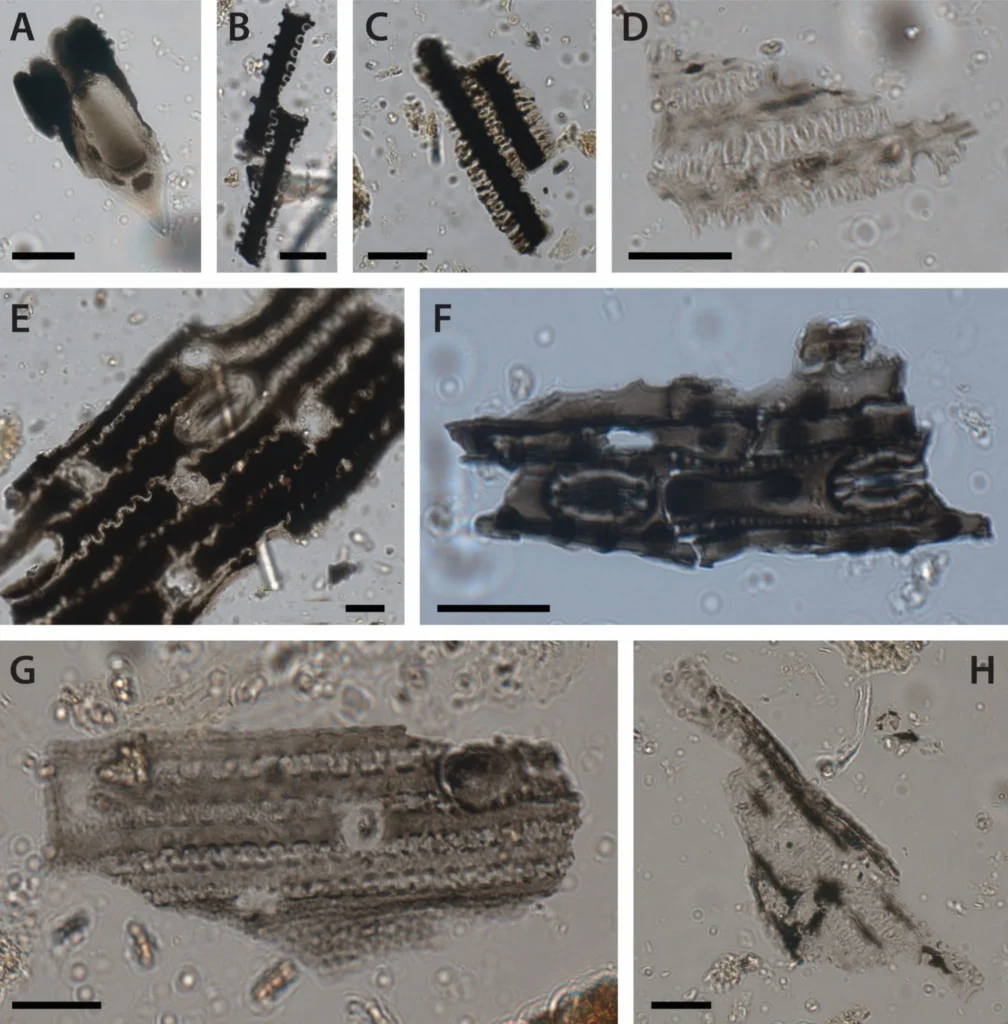
Phytoliths are almost invisible pieces of silica that form inside plants. Organic material normally decays, but these mineral “skeletons” can remain in the ground long after the original vegetation has disappeared.
Heat may blacken, distort or melt them, allowing archaeologists to identify plants exposed to fire thousands of years ago.
At Cloggs Cave, burnt phytoliths appeared in thin ash layers spread across ancient floor surfaces. Because they represented every part of the grass plant, the researchers concluded that whole grasses had been deliberately gathered outside and carried into the cave.
The fires appear to have been relatively cool rather than intense, wood-fuelled blazes. Woody ash was scarce, charcoal was often missing and only a limited number of phytoliths displayed severe heat damage.
The evidence instead points to low-temperature surface fires made from soft vegetation, possibly intended to produce ash, smoke or both.
The Possum Problem
The investigation faced an unusual complication: possums had also occupied the cave for thousands of years, leaving behind large quantities of remarkably well-preserved droppings.
Since possums eat grasses and other vegetation, some plant remains in the cave sediments could have passed through their digestive systems rather than being carried in by people.
Researchers therefore examined individual Common Brushtail Possum scats recovered during the excavation. Unburnt plant remains proved difficult to separate, but fire provided the decisive clue.
Blackened phytoliths were found throughout the archaeological sediments but were entirely absent from the possum samples. This made the burnt particles the clearest evidence that people had transported plants into the cave and set them alight.
The study nevertheless cautions that unburnt phytoliths probably represent a mixture of vegetation introduced by humans and animals.
More Than Ordinary Campfires
Cloggs Cave, located in GunaiKurnai Country in southeastern Australia, was apparently not an ordinary domestic shelter.
Previous excavations uncovered miniature fireplaces dating to approximately 11,000 and 12,000 years ago. Each contained a carefully trimmed Casuarina stick coated with animal or human fat.
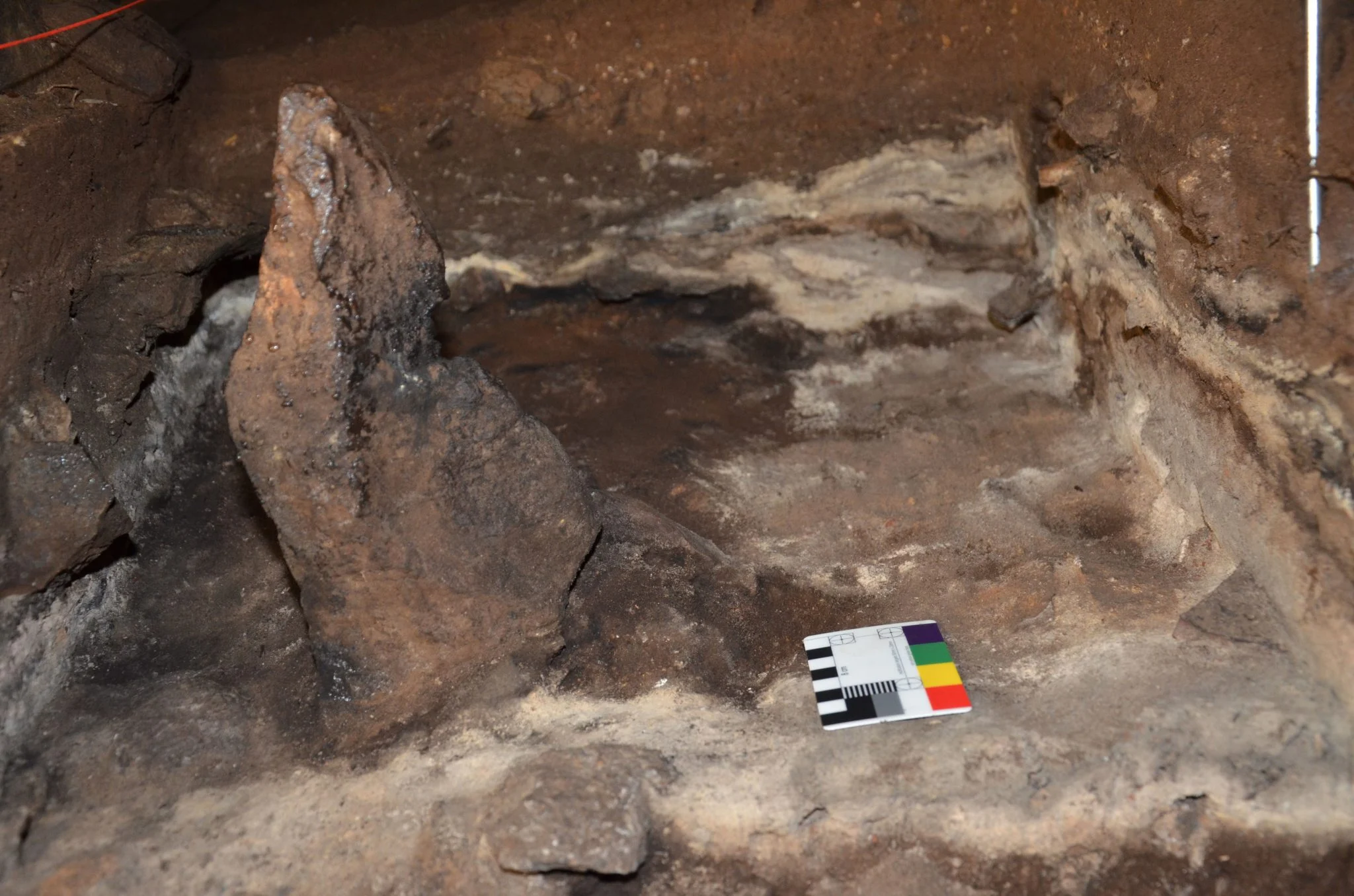
Another part of the cave held a standing stone surrounded by dozens of thin ash layers created through repeated burning between approximately 2,000 and 1,600 years ago.
Together with GunaiKurnai cultural knowledge and nineteenth-century ethnographic accounts, these discoveries have connected the cave with specialised practices involving healing, magic, cursing and spiritual activity.
The new phytolith research cannot identify a particular ceremony. However, it strengthens the evidence that plants, ash and carefully controlled fires played central roles in activities conducted inside the cave.
Comparable “cool” fires have long been used by First Nations communities to generate smoke for ceremonial and medicinal purposes. GunaiKurnai traditions also record ritual uses of ash and grass.
A Thousand Generations Preserved in Ash
The oldest securely dated evidence of human activity at Cloggs Cave comes from stone artefacts deposited between approximately 27,390 and 24,760 years ago. Human activity continued in the excavated section until around 1,460 years ago.
Burnt phytoliths appear through much of this long sequence, indicating that plants continued to be carried and used inside the cave over an extraordinary period.
What survives is not a spectacular object made from gold or stone, but something much smaller: microscopic traces of grass transformed by fire. Together, they preserve evidence of cultural practices extending across roughly a thousand generations.
doi: 10.3389/fearc.2026.1871928
Cover Image Credit: Bruno David, courtesy of GunaiKurnai Land and Waters Corporation