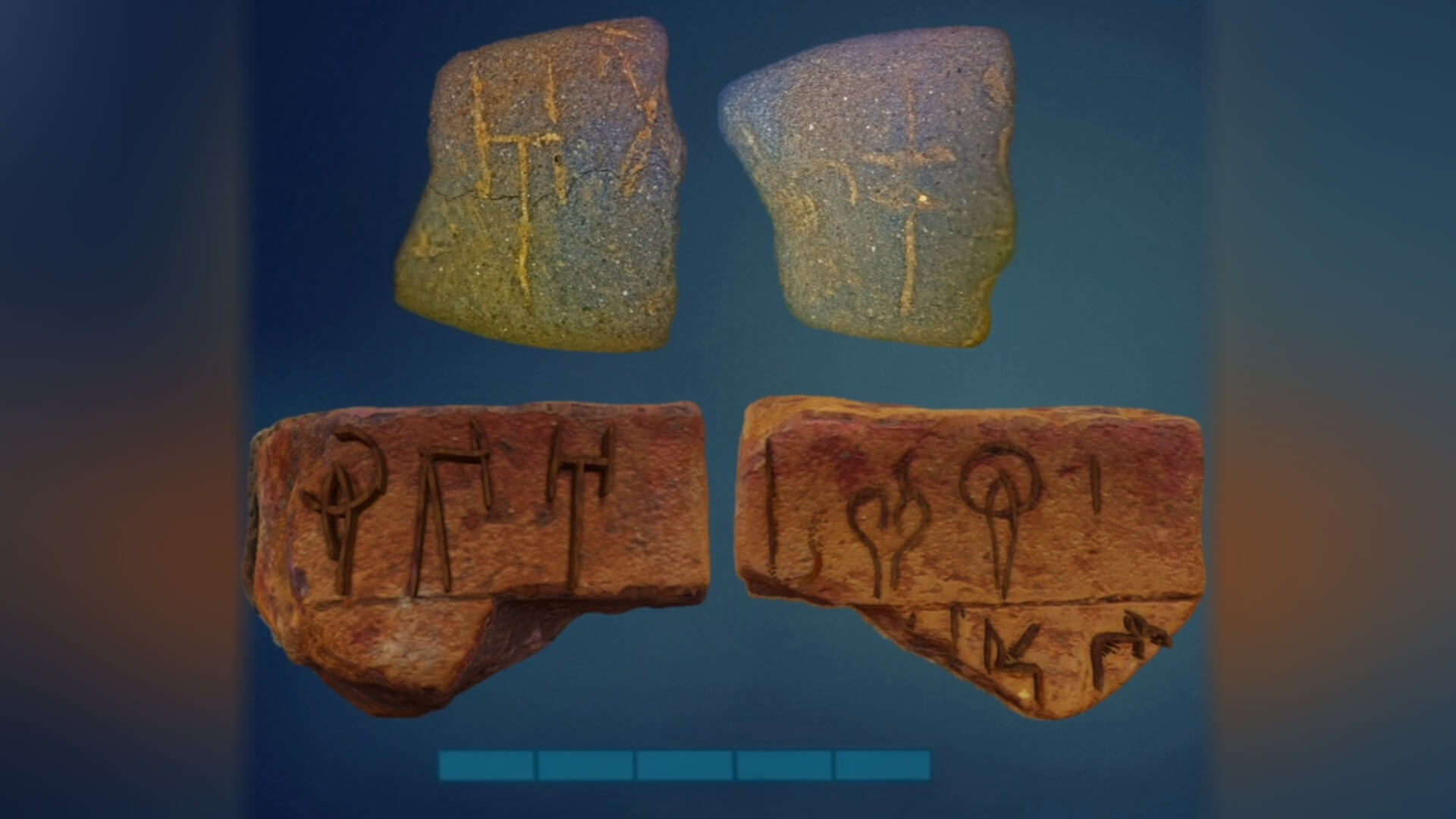
More than 3,300 years ago, the rulers of ancient Greece relied on clay tablets to keep track of people, land, goods, and economic obligations. Most surviving examples come from powerful royal palaces. But a fragment barely larger than a fingernail, discovered in the ruins of an ancient city, suggests that the political landscape of Mycenaean Greece was more complicated than historians once believed.
Archaeologists found the fragment at Iklaina, a Bronze Age settlement in southwestern Greece that may have governed its own territory before becoming part of the powerful Kingdom of Pylos. Although the writing survives only in fragments, the discovery strengthens evidence that administrative authority existed beyond the region’s dominant palace.
A Small Tablet With a Larger Story
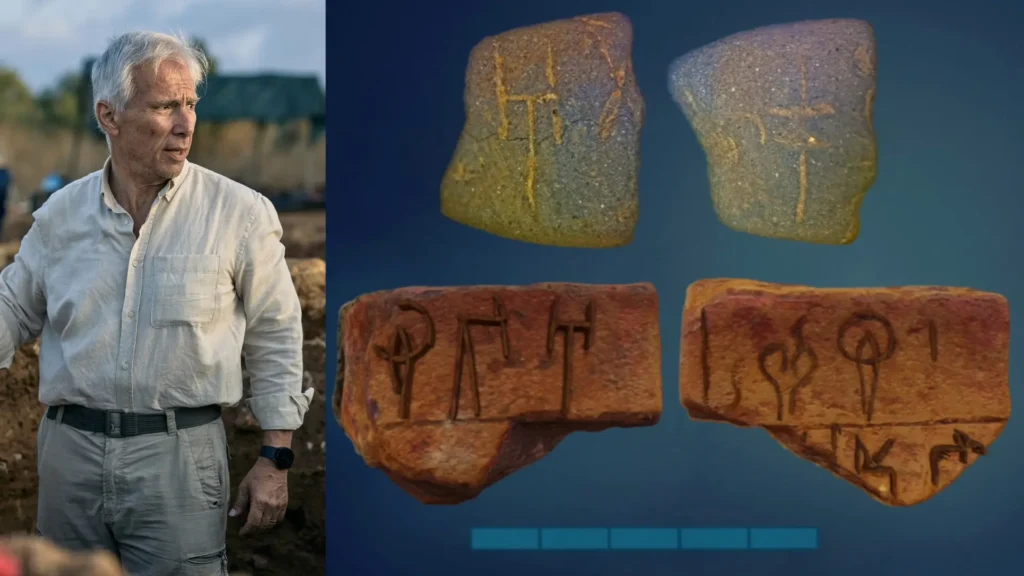
Archaeologist Michael Cosmopoulos of the University of Missouri–St. Louis led the excavation that uncovered the tablet in 2025. He presented the findings at the National Archaeological Museum in Athens on November 12, 2026.
Measuring approximately 1.3 centimeters in height, the clay fragment carries Linear B inscriptions on both sides. Linear B is the earliest known form of written Greek, which Mycenaean officials used primarily for administrative records rather than literature.
Only one syllabic sign survives on each face, accompanied by traces of other marks that may represent numbers. Researchers cannot reconstruct the original text, but its discovery at Iklaina is significant for another reason: it is the second Linear B tablet found there, following an earlier discovery in 2010.
The two objects suggest that written administration formed part of life in a city previously considered subordinate to the Palace of Nestor at Pylos.
The City That May Have Challenged Pylos
Iklaina was no ordinary village. Excavations have uncovered imposing stone architecture, elaborate wall paintings, drainage systems, and other features associated with organized urban life.
Among its most remarkable structures is the Cyclopean Terrace, a monumental complex built with massive stone blocks. Such construction required considerable labor and resources, suggesting that Iklaina once commanded substantial local authority.
For decades, scholars viewed the Kingdom of Pylos as a political system that developed around a dominant royal palace. Discoveries at Iklaina have complicated that picture.
In a statement released by the University of Missouri–St. Louis, Cosmopoulos explained that growing evidence supports a different possibility: several smaller, independent political centers may have existed before the Kingdom of Pylos brought them together.
Under this interpretation, Iklaina may have flourished as an independent center before the expanding Pylos kingdom absorbed it around the middle of the 13th century BCE.
Destruction, Rebuilding, and an Earlier Administration
The city’s architectural remains tell another part of the story. According to the 2025 excavation report published in Archaeology in Greece Online, archaeologists identified two settlement phases near Megaron Gamma.
A substantial destruction layer separated an earlier arrangement of scattered buildings from a later, more densely developed neighborhood. Burned soil, pottery, bricks, and animal bones marked this episode of destruction.
The same report indicates that Iklaina’s written administrative evidence predates the surviving archive from the Palace of Nestor by approximately 150 years.
This does not establish who controlled the city at every stage of its history, nor does it prove that Pylos caused its destruction. Yet the combination of early written records, monumental buildings, and changes in the settlement suggests that Iklaina played a larger political role than its later position within the Pylos kingdom might imply.
The newest tablet preserves only a handful of ancient signs. Its significance lies in the possibility that Iklaina’s inhabitants were already keeping their own records before the region became part of a more centralized kingdom.