A desert in Saudi Arabia has produced an unexpected clue about the hunting skills of early humans. Stone tools associated with a lakeside settlement around 125,000 years ago contain chemical traces linked to poisonous plants, suggesting that prehistoric hunters may have developed a surprisingly advanced way to bring down large animals.
The discovery challenges the familiar picture of Stone Age hunters relying solely on sharpened rocks and physical strength. Scientists now have evidence that some early communities may have combined stone weapons, plant-based substances, and detailed knowledge of their environment long before the emergence of agriculture or permanent cities.
A Deadly Secret Preserved on Stone
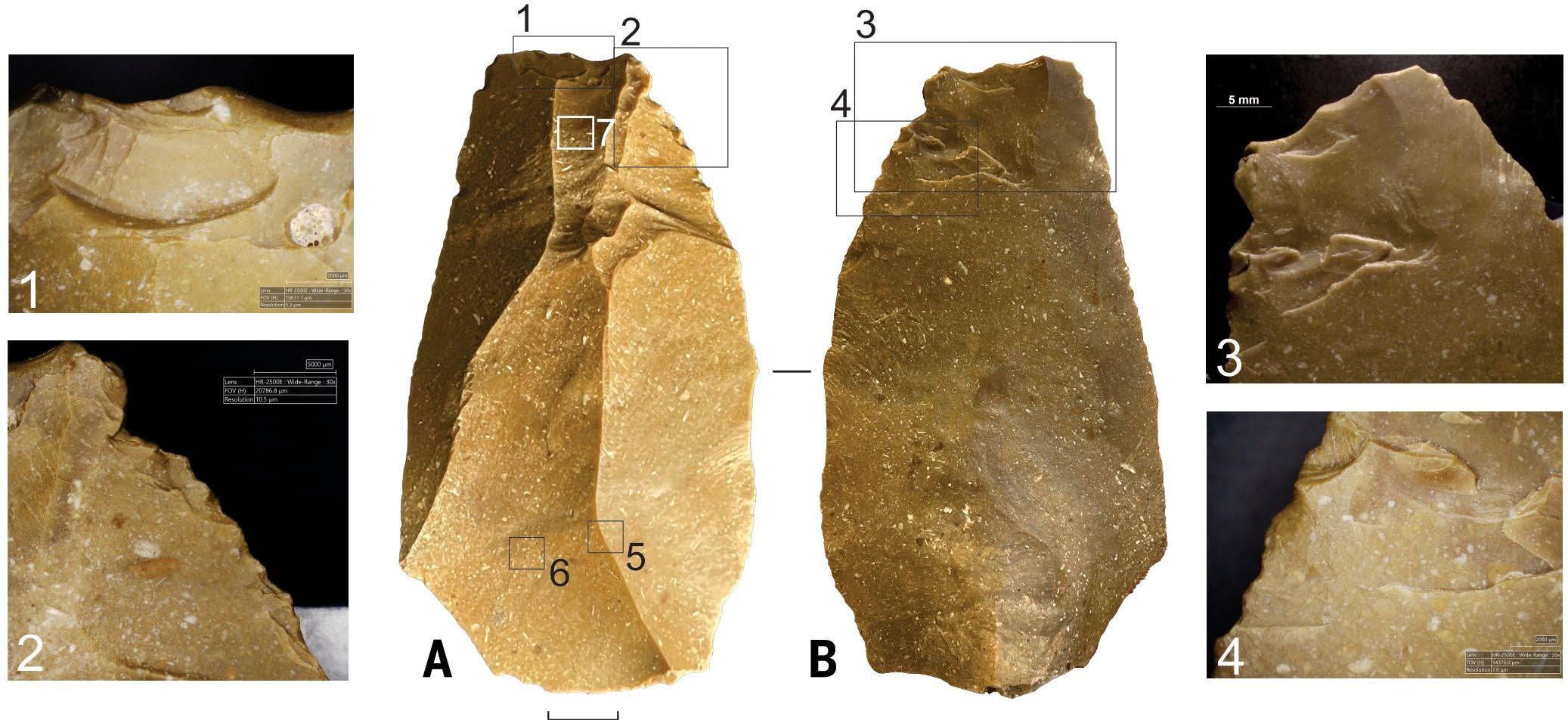
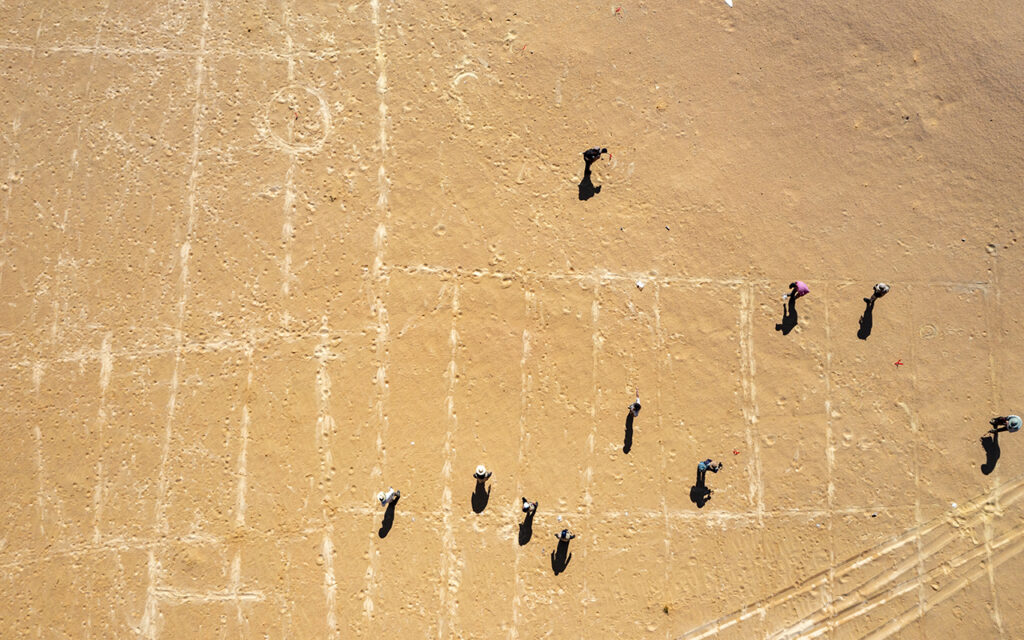
An international team led by archaeologist Chris Clarkson of Griffith University investigated ‘Uruq Aljelibah, an archaeological site in southern Saudi Arabia. Their research, published in Science, documents 5,511 stone artifacts and more than 500 animal fossils.
The most surprising findings came from the surfaces of ancient stone tools. Scientists examined 89 artifacts and identified organic residues on 75, including plant fibers, natural resins, and traces of animal material.
Some pointed tools displayed microscopic fractures consistent with impacts, suggesting that hunters used them as weapon tips. Chemical analysis also identified compounds associated with Acokanthera schimperi, a poisonous plant known for producing substances that affect the heart.
The combination raises the possibility that hunters deliberately treated their weapons with toxic plant materials. However, researchers have not established exactly how people prepared the poison or whether it delivered a lethal dose during hunting.
The findings could considerably extend the known history of this technology. Researchers previously reported plant poison on approximately 60,000-year-old stone arrowheads from South Africa, making the Arabian evidence potentially 65,000 years older.
The Desert Was Once a Wildlife Paradise
Today, towering dunes dominate much of southern Saudi Arabia. But when the prehistoric inhabitants of ‘Uruq Aljelibah occupied the region, a vast freshwater lake stretched across approximately 340 square kilometers.
The ancient Lake Mundafan supported vegetation and attracted large animals. Researchers identified fossils belonging to hippopotamuses, wild cattle, camels, gazelles, Arabian oryx, and ostriches, transforming our understanding of this now-arid landscape.
For early hunters, the lakeshore offered water, food, plants, and raw materials in one location. Concentrations of stone tools near animal remains suggest that people repeatedly visited the area to manufacture equipment and exploit its natural resources.
The researchers also found evidence that people fitted some stone tools onto wooden handles or shafts. Plant fibers and adhesive residues indicate that these implements involved several different materials, requiring planning and practical knowledge.
More Than a Simple Hunting Camp
The ancient inhabitants apparently understood plants well beyond their possible poisonous properties. Microscopic traces suggest that people cut vegetation, worked with fibers, and processed woody materials using specially shaped stone tools.
Such evidence matters because wooden handles, cordage, and other organic objects rarely survive across enormous stretches of prehistoric time. Their remaining traces on stone surfaces can therefore expose activities that archaeologists would otherwise struggle to identify.
Scientists dated the ancient lakeshore using sediment analysis and examined fossil hippopotamus teeth to help establish the site’s chronology. Although many stone artifacts came from exposed surfaces rather than sealed archaeological layers, the evidence places the main period of activity around 125,000 years ago.
No human fossils have emerged from the site, leaving the identity of its prehistoric inhabitants unresolved. Researchers cannot yet determine which human population made these tools or whether its knowledge spread to other regions.
Nevertheless, the discovery adds to growing evidence that Arabia supported substantial human activity during wetter prehistoric periods. Rather than serving only as a route between Africa and Asia, its ancient lakes and grasslands offered environments where people could hunt, gather plants, and develop complex technologies.
The Spanish National Research Centre for Human Evolution (CENIEH), which participated in the research, highlights the importance of these findings for understanding early human behavior.
What survives in the Saudi desert is more than a collection of broken stone tools. The chemical traces suggest that people living there may already have understood something remarkably powerful: a weapon’s effectiveness could depend not only on its sharpness, but also on what its maker applied to it.
Chris Clarkson et al., Poisoned hunting weapons, megafauna, and plant use at a 125,000-year-old Arabian paleo lakeshore. Science 394,746-751(2026).DOI:10.1126/science.aef9342