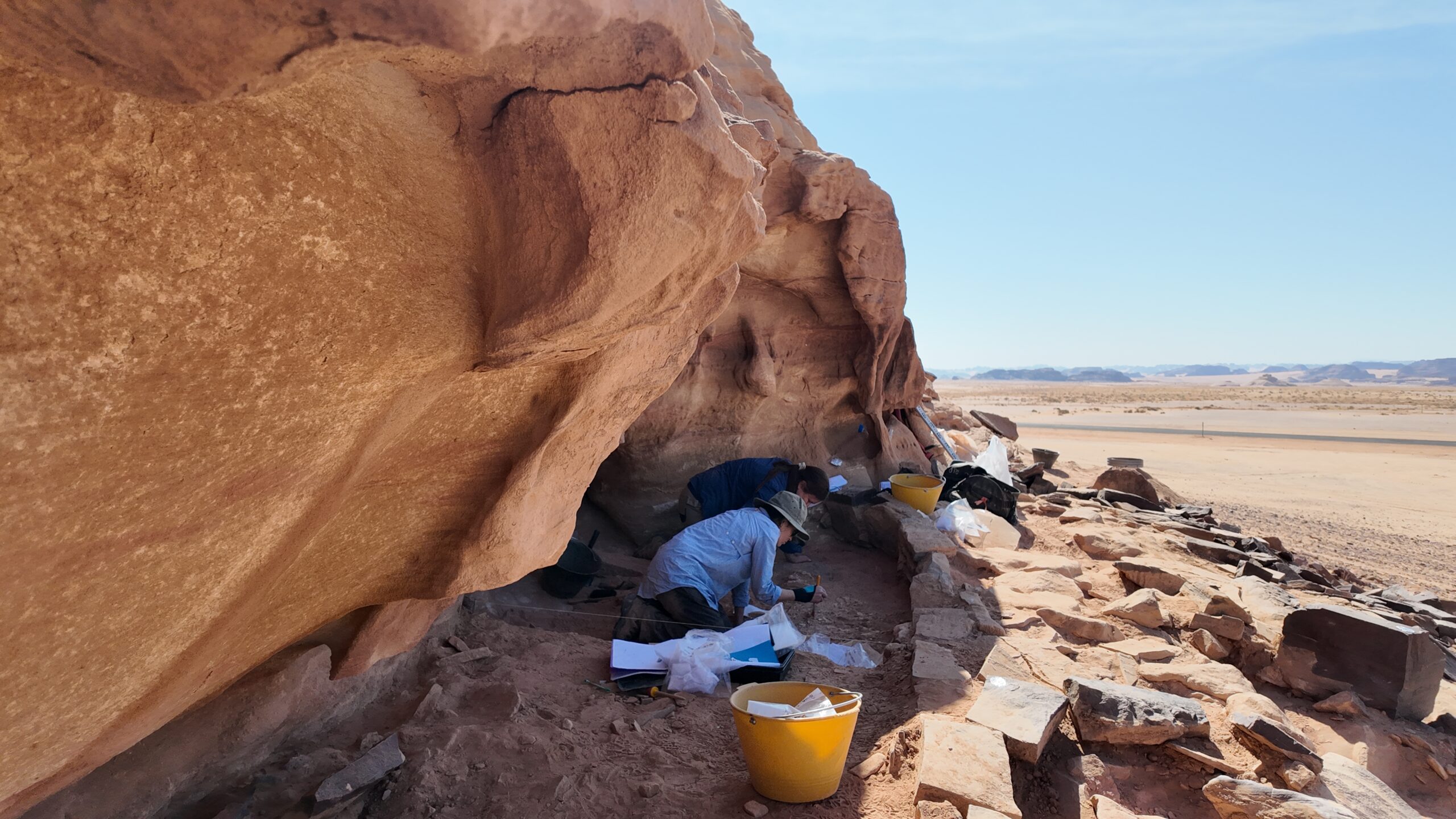
A major digital research project is working to document and analyze AlUla’s extraordinary collection of more than 25,000 ancient inscriptions, offering new opportunities to study the languages, societies, and cultural connections of northwestern Arabia. The initiative is continuing as archaeologists begin their 2026–2027 excavation season across AlUla and Khaybar in Saudi Arabia.
Scattered across sandstone cliffs, rocky outcrops, and ancient settlements, the inscriptions preserve traces of people who lived and traveled through the region over thousands of years. Some record names and personal messages, while others provide evidence of religious practices, political authority, and the languages once spoken in the Arabian Peninsula.
Bringing this extensive written heritage into a searchable digital research environment could help scholars examine connections between inscriptions that have previously been studied separately. Rather than treating individual texts as isolated records, researchers aim to understand how writing developed and circulated across the landscape.
Creating a Digital Record of Ancient Arabia’s Written Heritage
The AlUla Inscriptions Corpus Analysis Project (AICAP), conducted in collaboration with Ghent University in Belgium, is developing an annotated digital corpus of inscriptions documented during archaeological surveys undertaken by the Royal Commission for AlUla (RCU).
The project, which runs from 2024 to 2028, is designed to produce an online database combining written texts with archaeological and geographical information. According to Ghent University, the database will make the region’s inscription heritage more accessible to researchers and the public.
An important feature is its geographical dimension. By linking inscriptions to their original locations, scholars will be able to investigate relationships between written records, ancient routes, settlements, and surrounding landscapes.
This approach could reveal patterns in the distribution of languages, personal names, and cultural practices, while also helping researchers better understand how different communities interacted across northwestern Arabia.
The project goes beyond photographing or transcribing inscriptions. Its broader objective is to establish a research resource in which texts can be annotated, compared, and interpreted within their archaeological contexts.
Although more than 25,000 inscriptions have been recorded across AlUla, the announced total should not be confused with the number already processed or available online. The digital corpus remains under development.
New Archaeological Season Begins in AlUla and Khaybar
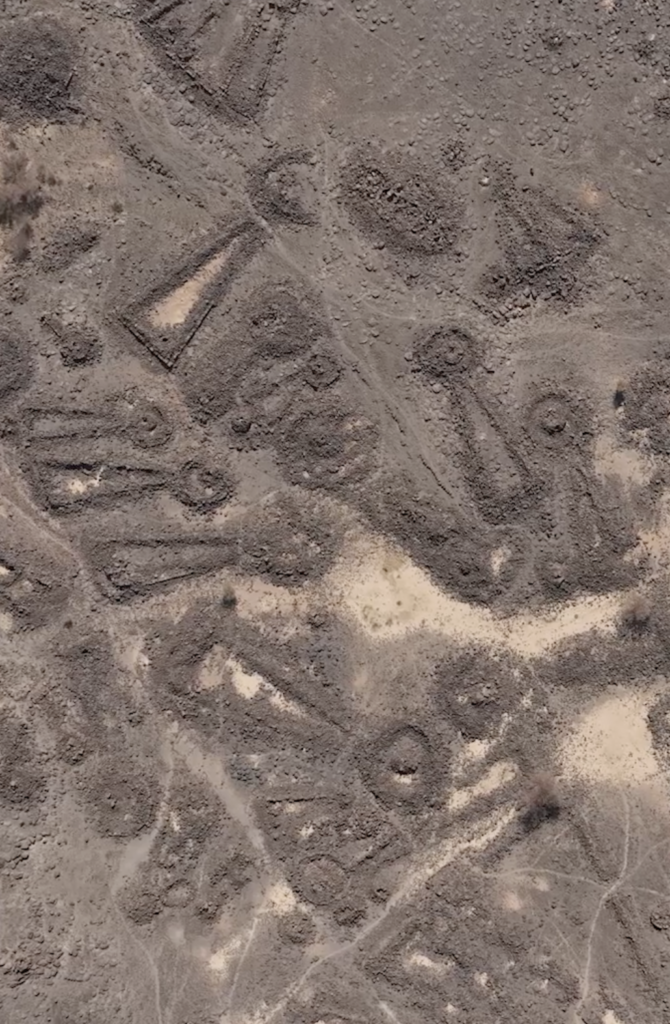
The renewed focus on written heritage coincides with the launch of the 2026–2027 archaeological season by the Royal Commission for AlUla. Saudi and international research teams are continuing excavations, surveys, conservation work, and specialist studies at several archaeological locations.
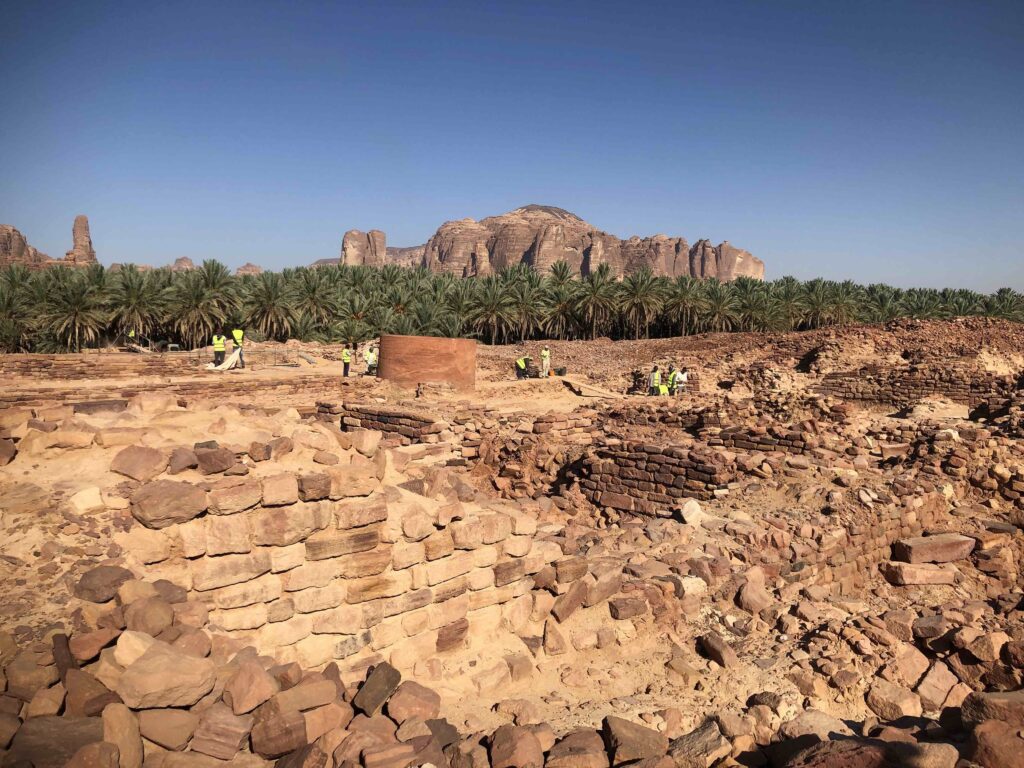
At Dadan, archaeologists are entering the second phase of a long-term research project examining residential and funerary areas. The ancient oasis was an important political and commercial center associated with the kingdoms of Dadan and Lihyan.
Research is also continuing at Hegra, the UNESCO-listed Nabataean site famous for its monumental rock-cut tombs. Current investigations extend beyond its funerary architecture to examine the settlement, ancient oasis, environmental evidence, and everyday life.
In nearby Khaybar, excavations at the Neolithic site of Al-Maṭḥana are accompanied by studies of ancient environments and the relationship between human communities and natural resources. Other investigations are examining historic pilgrimage routes, forts, and transport networks in southern AlUla.
Together, these projects provide a wider archaeological context for the region’s written heritage, connecting inscriptions with settlement history, movement, trade, and cultural change.
The development of AlUla’s digital inscription corpus represents a longer-term effort to make this substantial body of ancient evidence available for systematic study. As fieldwork continues, combining written records with archaeological and geographical data may offer a more detailed understanding of the communities that shaped northwestern Arabia’s history.