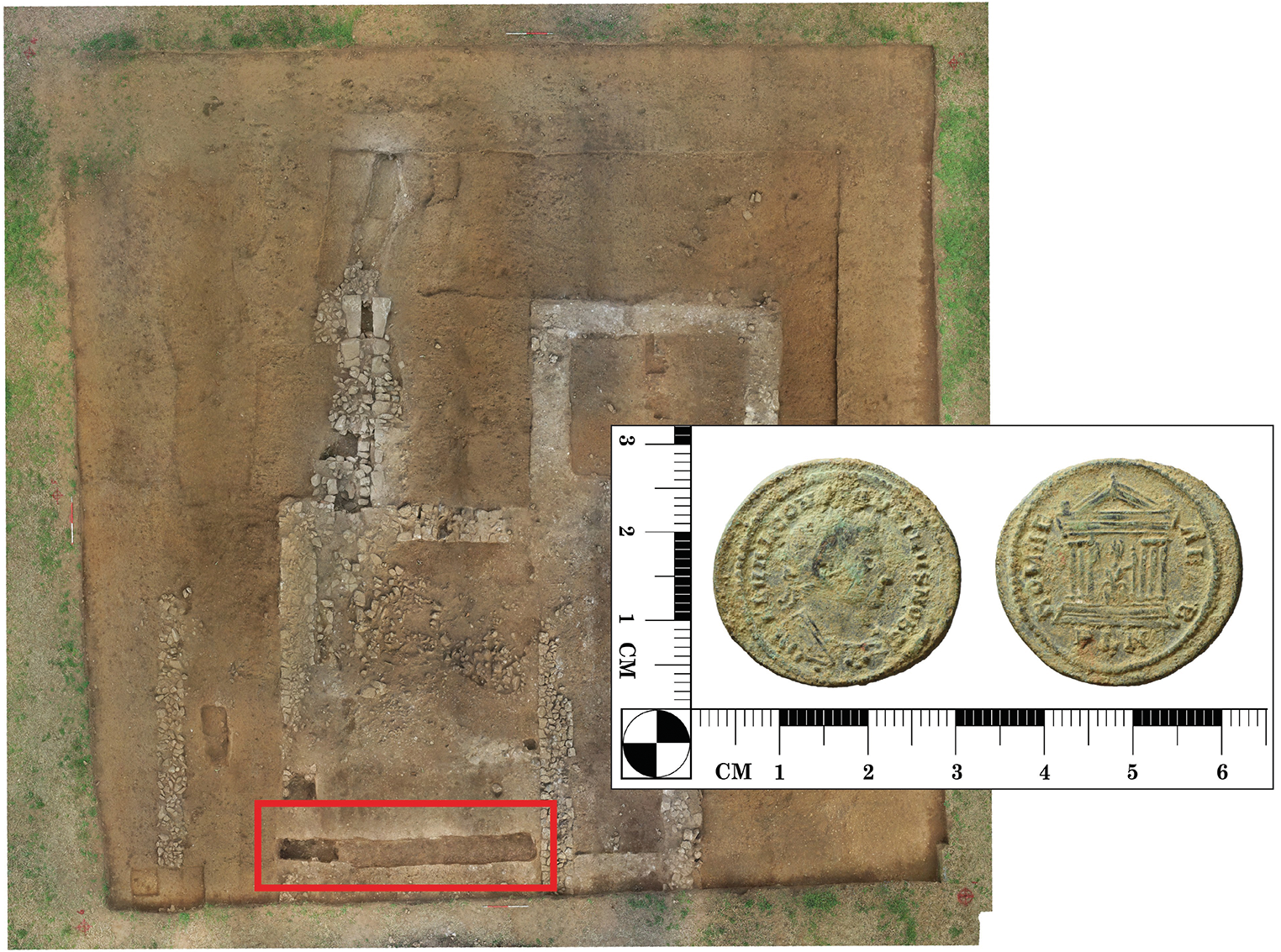
Archaeologists excavating a Roman villa near Wrexham have uncovered a sophisticated heating system, decorated rooms and evidence of an earlier settlement. The discoveries challenge the traditional picture of North Wales as a region dominated by Roman soldiers and industry, revealing a wealthier and more comfortable side of life on Rome’s western frontier.
A Roman villa with heated rooms, painted walls and surprising signs of luxury is changing what archaeologists know about life in North Wales nearly 2,000 years ago. Excavations at Rossett, near Wrexham, have revealed an extensive residential complex where wealthy inhabitants enjoyed comforts rarely associated with this part of Roman Britain. Even more intriguingly, a discovery beneath the villa suggests that people occupied the site long before its impressive stone buildings appeared.
The findings come from the first structurally confirmed Roman villa in North Wales, where researchers from the University of Chester and DigVentures recently completed another excavation season. Their discoveries, alongside a new study published in the journal Britannia, are challenging assumptions about the distribution of wealth and rural settlement along Rome’s western frontier.
A Roman Villa with Unexpected Luxuries
The most impressive discoveries emerged from a remarkably well-preserved building within the villa complex. Archaeologists uncovered intact Roman floor levels and remains of a hypocaust, an underfloor heating system that circulated hot air beneath rooms. Such installations required considerable investment and maintenance, suggesting that the people who occupied Rossett had substantial resources.
Fragments of painted wall plaster, pottery, coins and other objects add to the picture of a comfortable household. Researchers also identified evidence that the villa underwent several alterations, with rooms changing shape and function as successive occupants adapted the buildings to their needs.
One structure may even have served as a private bathhouse. Although further excavation must establish its precise function, the surviving floors and heating installations suggest that Rossett offered some of the amenities associated with prosperous Roman households elsewhere in Britain.
The evidence also points beyond the villa’s walls. Imported and regional ceramics show that its inhabitants participated in wider Roman trading networks rather than living in an isolated rural community.
A Discovery Beneath the Villa
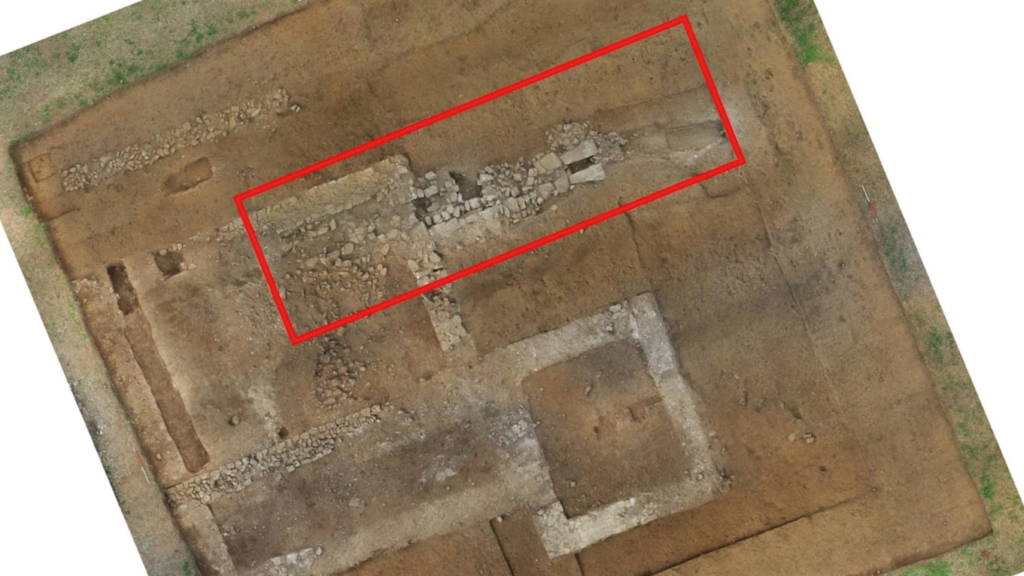
One of the season’s most intriguing finds was surprisingly ordinary: a complete quern stone, a tool used to grind grain into flour. What made it exceptional was its location.
Archaeologists recovered the stone from a layer beneath the villa’s stone-built structures, indicating that people were using the site before the wealthy Roman residence took shape. The discovery raises the possibility that the villa developed from an earlier agricultural settlement.
For excavation co-director Caroline Pudney of the University of Chester, the quern opens a new chapter in understanding the location’s history. Rather than representing a single period of occupation, Rossett preserves evidence of a landscape that changed over generations.
The newly identified phases also help explain why the complex continued to evolve. Its occupants modified buildings, reorganized spaces and invested in architectural improvements, leaving behind evidence of changing circumstances and priorities.
The Lead Ingot That Started Everything
The investigation began with a much smaller discovery in 2019, when a metal detectorist found a Roman lead ingot near Wrexham. The object prompted archaeologists to examine the surrounding landscape for evidence of Roman activity.
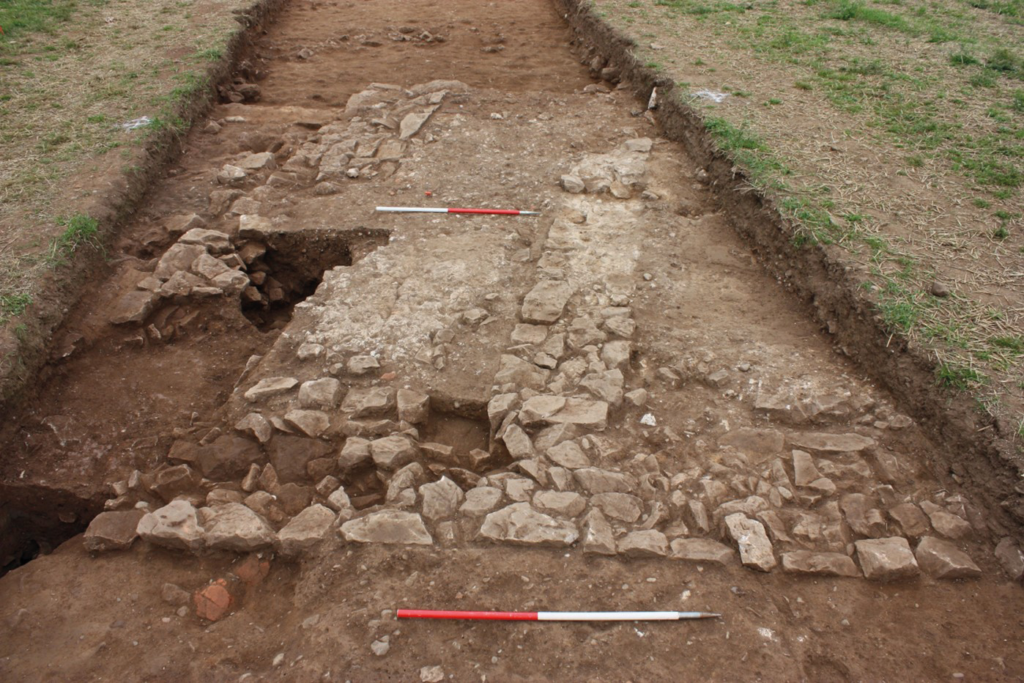
Geophysical surveys eventually revealed the outline of a substantial building at nearby Rossett. Excavations confirmed a winged-corridor villa, a style of rural residence featuring projecting wings connected by a corridor or veranda.
Further investigations uncovered limestone walls, Roman flooring, and building materials, including roof tiles stamped with the mark of Legio XX Valeria Victrix, the legion stationed at nearby Chester. Researchers believe the villa may have maintained economic connections with the Roman military, although the relationship remains uncertain.
The discovery matters because Roman archaeology in North Wales has traditionally emphasized forts, soldiers and industrial production. Rossett provides rare architectural evidence of a prosperous rural household, suggesting that civilian life in the region was more varied than surviving archaeological remains had previously indicated.
Rethinking Roman Life in Wales
The villa’s precise economic role remains unresolved. Quern stones, spindle whorls and other finds point toward agricultural activities, but archaeologists have not yet determined whether farming supplied the household, supported commercial production or helped sustain nearby military communities.
The team is now examining artifacts, environmental samples, and excavation records to reconstruct the site’s development. Further work could reveal additional buildings and clarify how the villa’s inhabitants acquired their wealth.
Pudney, C., & Grenter, S. (2026). In the Footsteps of Trebellius Maximus: Finding the Rossett Roman Villa and its Implications. Britannia, 1–35. doi:10.1017/S0068113X26100890