For nearly two millennia, the remains of a Roman community lay beneath the landscape of northeastern Wales, within sight of one of Roman Britain’s most important military strongholds. Across the River Dee stood Chester, once home to thousands of legionaries. Yet despite this proximity, archaeologists had found surprisingly little evidence of Roman settlement in this part of Flintshire.
That picture is changing following the discovery of a previously unknown Romano-British settlement at Mancot. Excavations have revealed houses, drainage systems, metalworking evidence, and decorative brooches, suggesting that the area supported a community of craftspeople and residents whose economic activities may have extended well beyond their immediate surroundings.
The discovery was made in December 2025 by archaeologists from Heneb: The Trust for Welsh Archaeology, during investigations ahead of a 300-home development. The organisation announced the findings on November 9, 2026.
A Settlement Overlooking a Roman Military Powerhouse
The location makes the discovery particularly intriguing. Mancot overlooks Chester, known in antiquity as Deva Victrix, where Roman troops established a major legionary fortress in the first century AD.
Founded in the AD 70s, the fortress became a base for Legio II Adiutrix and subsequently Legio XX Valeria Victrix. It occupied approximately 25 hectares and developed into one of the principal military centres of Roman Britain.
The presence of such an important fortress would have required supplies, skilled labour, transportation, and commercial exchanges. Civilian communities developed around major Roman military installations, providing goods and services to soldiers and residents.
Nevertheless, archaeological evidence from this part of Flintshire had remained relatively limited. The surrounding landscape was often interpreted as a largely undeveloped hinterland rather than an area of substantial settlement and production.
The discoveries at Mancot now complicate that interpretation.
Houses, Workshops and Colourful Roman Brooches
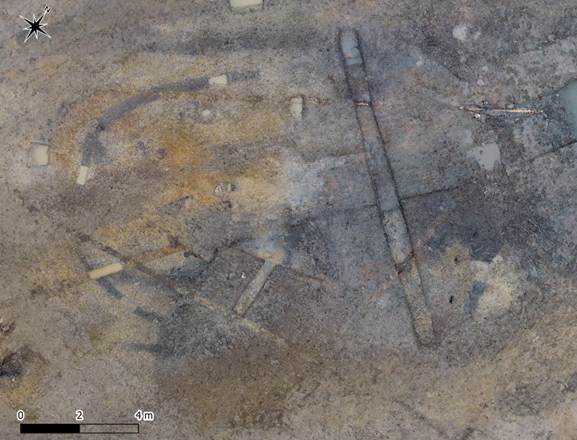
The excavations uncovered a settlement organised around property boundaries and drainage channels. Its earliest timber buildings may date to the closing stages of the Iron Age, suggesting that occupation could have begun before the region became fully integrated into Roman Britain.
By the third century AD, elongated, roughly rectangular buildings had replaced some of the earlier structures, indicating changes in the settlement’s layout.
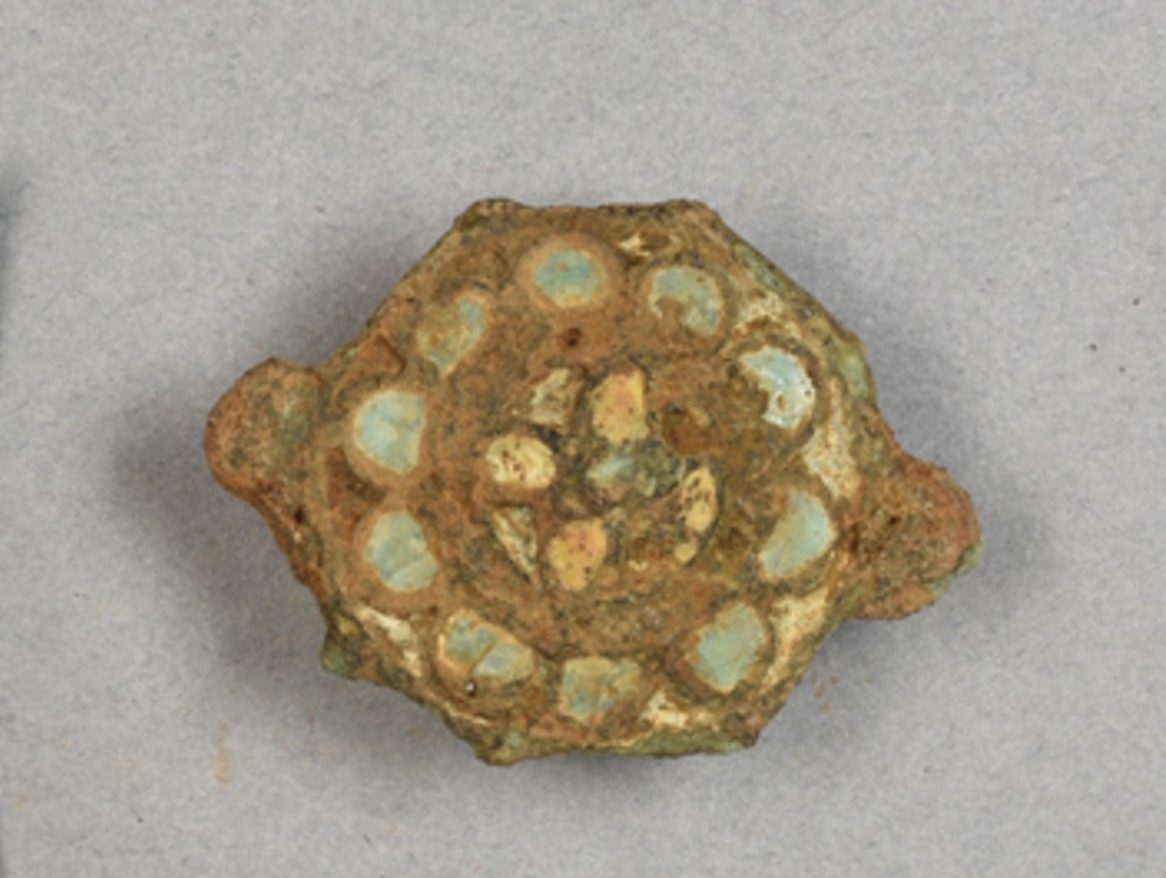
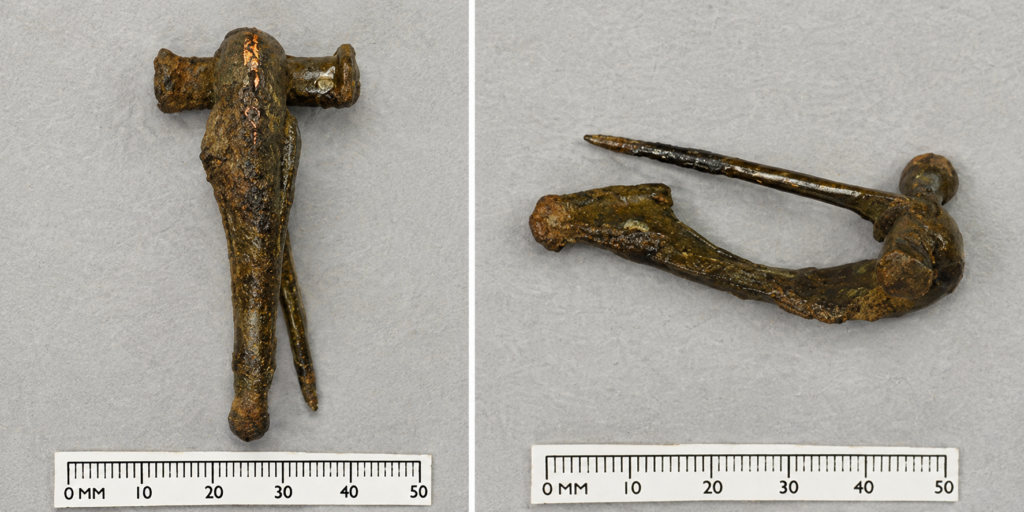
Among the most striking discoveries was an unusually large collection of Roman metalwork. Archaeologists recovered numerous brooches, including enamelled examples, together with casting moulds that provide compelling evidence of local manufacture.
These objects were much more than decorative accessories. Roman brooches fastened clothing, while their shapes, colours, and ornamentation allowed wearers to display personal taste and identity.
The moulds suggest that Mancot’s craftspeople produced different types of brooches rather than merely acquiring finished items from elsewhere.
Researchers believe that the settlement may have participated in a wider manufacturing and distribution network serving local communities and possibly Chester. However, the precise relationship between its workshops and the nearby military centre remains uncertain.
A Larger Roman Landscape Still to Be Understood
The settlement may be more extensive than the excavations initially revealed. Archaeologists believe its remains continue westward beneath present-day Big Mancot, meaning that the investigated area represents only part of the ancient community.
Other Romano-British discoveries across northeastern Wales are also contributing to a reassessment of the region’s history. Together, they suggest a landscape that may have supported more settlements, industries, and economic connections than the previously limited archaeological record indicated.
The recovered objects are undergoing conservation and detailed study before their planned transfer to Flintshire Museum Services, where they may eventually be displayed.