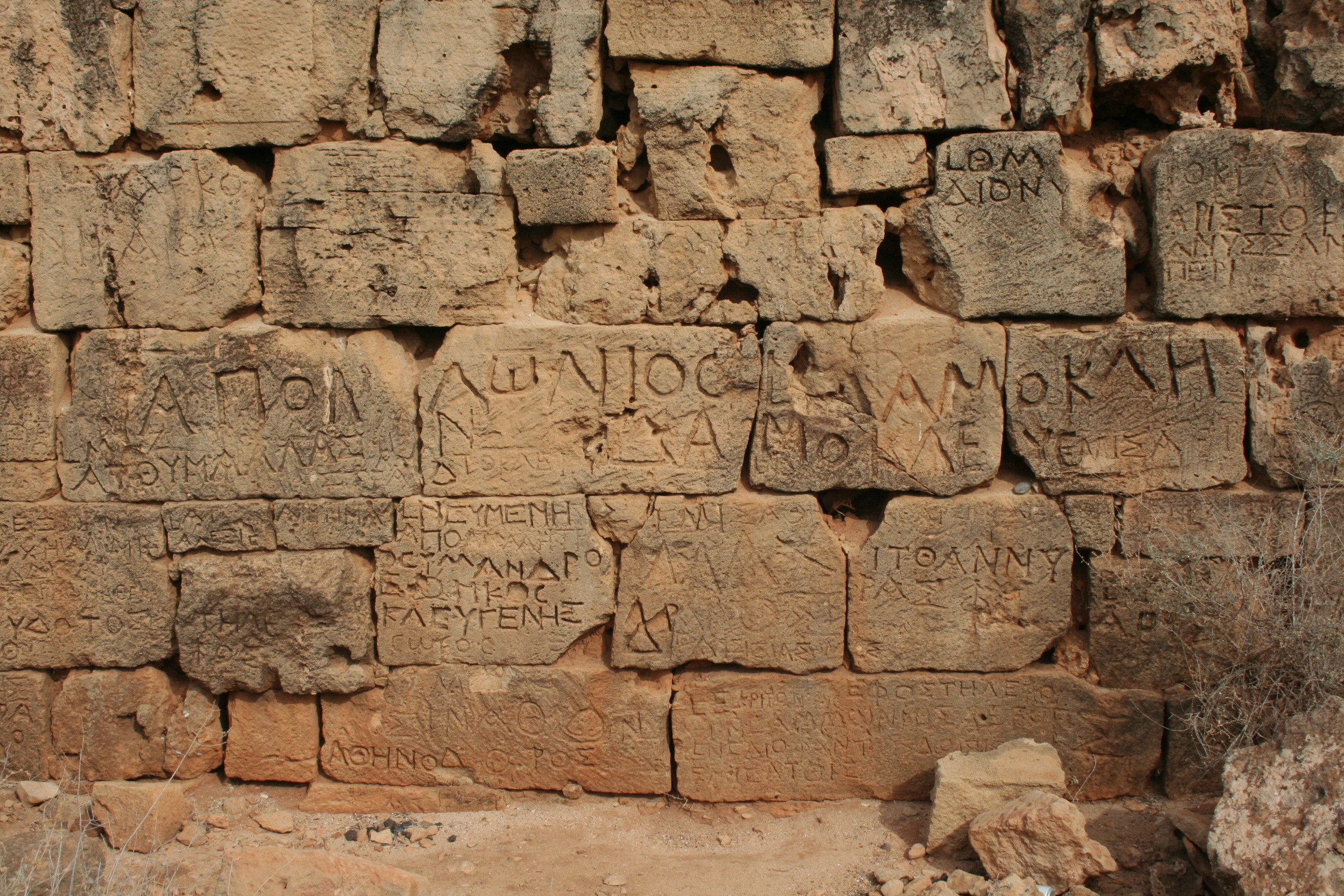
Carefully carved letters and monograms on a monumental gateway at the ancient city of Ptolemais may have served as far more than workshop marks. A new study suggests they formed a visible record of the people who built the structure, the teams responsible for individual stones, and perhaps the patrons who helped pay for the work.
Archaeologist Anna Urszula Kordas of the University of Warsaw documented 626 stonemasons’ marks on the Tauchira Gate, the best-preserved section of Ptolemais’ fortifications in modern-day Libya. Her analysis indicates that the symbols recorded an organized system of labor and financial accountability—and that many were deliberately left where the public could see them.
Marks Meant to Be Seen
The study identified 27 distinct types of marks, ranging from single Greek letters to ligatures and elaborate monograms. Their locations and carving styles revealed two fundamentally different groups.
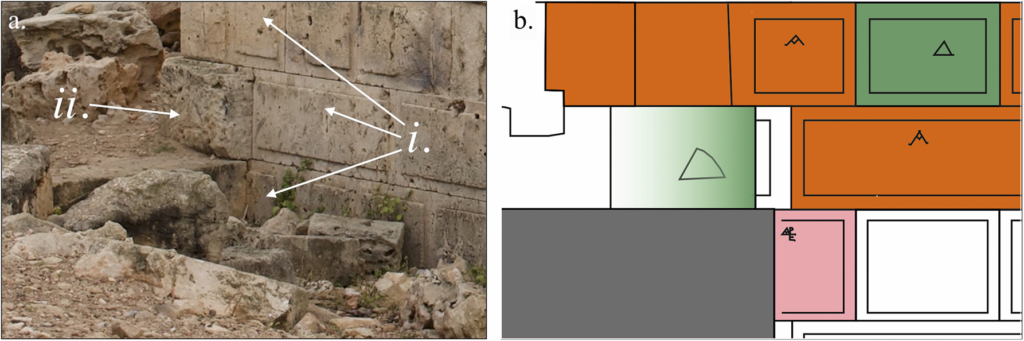
Large, roughly cut marks appear on unfinished blocks along the eastern sides of the towers. Some are upside down or placed without any consistent orientation, suggesting they were carved before the stones reached their final positions. These marks may have tracked quarrying, transport, productivity or payments during the earliest stages of construction.
The marks on the gate’s external façades are markedly different. They were neatly engraved at the center of finished, rusticated stone surfaces and never appear upside down. This indicates that they were added after the blocks had been installed and dressed—when the builders already knew precisely which surfaces would remain exposed.
Their visibility appears to have been intentional.
At most Greek construction sites, such marks disappeared when masons completed the final dressing of the stone. On the Tauchira Gate, however, they remained prominently displayed. Kordas describes the practice as unique among known Hellenistic fortifications, where comparable marks were generally removed or concealed during finishing.
Rather than being construction debris left behind by accident, the marks may have functioned as a permanent public acknowledgment of the workshops, labor teams or sponsors involved in the project.
An Ancient System of Accountability
The distribution of the symbols suggests that almost every finished façade block may originally have carried a mark. This would have allowed supervisors to identify which team had prepared a particular stone and to calculate payment or responsibility for the completed work.
In this sense, the symbols operated much like accounting records—or signatures embedded directly into the architecture.
The study identifies at least seven teams represented by successive Greek letter labels, including A, B, Γ, Δ, E, Z and H. Another 14 teams or individual stonecutters may have been represented by more complex monograms and abbreviated names.
One mark, conventionally read as AP/E, appears 92 times across the northern tower. Its frequency led Kordas to suggest that it may represent a workshop owner, contractor or sponsor rather than a single craftsman.
Several stones carry two different marks, potentially recording collaboration between workshops or the involvement of separate specialists at different stages of production. The same teams may have handled quarrying, transportation, placement and the final rustication of the blocks.
The limestone probably came from a quarry less than 500 meters from the gate. Instead of fully finishing the stones at the quarry, workers appear to have transported them largely unprocessed and completed the detailed surface work after installation.
Public Money and Private Patrons
The marks may also preserve evidence of how the project was financed.
The simple letter-label system could reflect teams or contractors selected through public tenders and paid from civic funds. The more elaborate monograms, which became increasingly common as construction progressed, may indicate the participation of workshop owners or private benefactors.
Kordas connects this possibility with the Greek practice known as epidosis, a voluntary contribution made toward public needs. Such donations could take the form of money, materials or even skilled workers supplied by wealthy citizens.
By placing monograms prominently on finished stones, the city may have publicly credited those who helped finance the gate. The visible marks could also have encouraged competition among patrons, each seeking recognition through contributions to a major civic monument.
The result was not merely a defensive structure. It may also have been a public display of civic organization, skilled labor, and elite generosity.
A Gate Rebuilt Under Ptolemy VIII
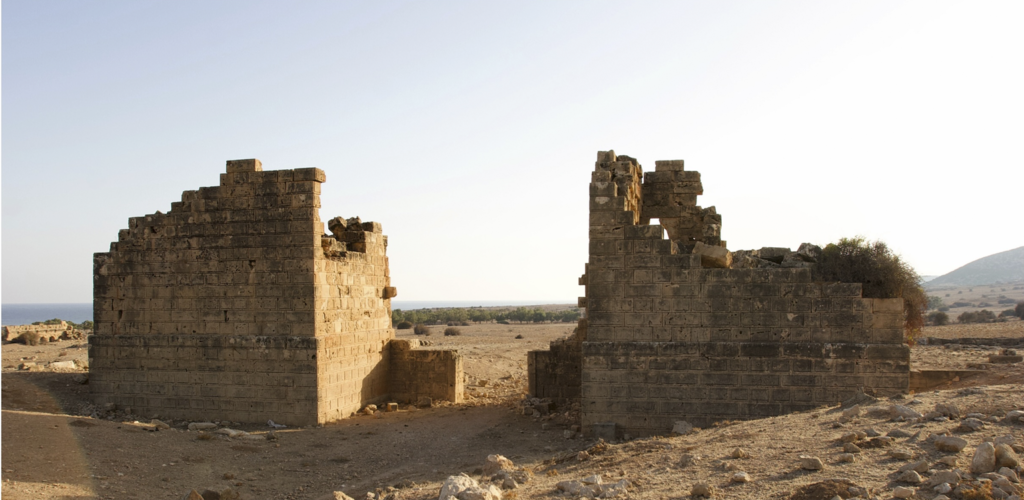
The Tauchira Gate consists of two monumental towers flanking a gateway approximately 3.5 meters wide. Each tower measures roughly 10 by 7.75 meters at its base and survives to a height of about 10 meters. Architectural evidence indicates that these towers were added during a later remodeling of an older defensive structure rather than forming part of the city’s original walls.
The arrangement of the marks also overturns an earlier suggestion that the two towers were built one after the other. Several symbols appear on both towers, while other team marks alternate between them, indicating that construction probably proceeded in parallel and within a relatively short period.
Letter forms and comparisons with dated inscriptions from Cyrenaica place the remodeling in the second century BCE. A graffito left by a visitor from Rhodes provides further chronological evidence. Kordas ultimately argues that the work most likely took place during the reign of Ptolemy VIII Physcon.
Ptolemais stood on the Mediterranean coast of Cyrenaica, a region settled by Greeks and later incorporated into the Ptolemaic kingdom of Egypt. The settlement had served as the harbor of inland Barka from at least the fourth century BCE and developed into a planned city with monumental public buildings and wealthy residences during the Hellenistic and Roman periods.
More than two millennia later, the marks on its gate preserve something rarely visible in ancient architecture: not simply how a monument looked, but how a building site functioned—and how the people behind the work expected to be remembered.
Kordas, A. U. (2026). Life on a Hellenistic Construction Site: Stonemasons’ Marks on the Tauchira Gate at Ptolemais in Cyrenaica. European Journal of Archaeology, 1–22. doi:10.1017/eaa.2026.10038
Cover Image Credit: Public Domain