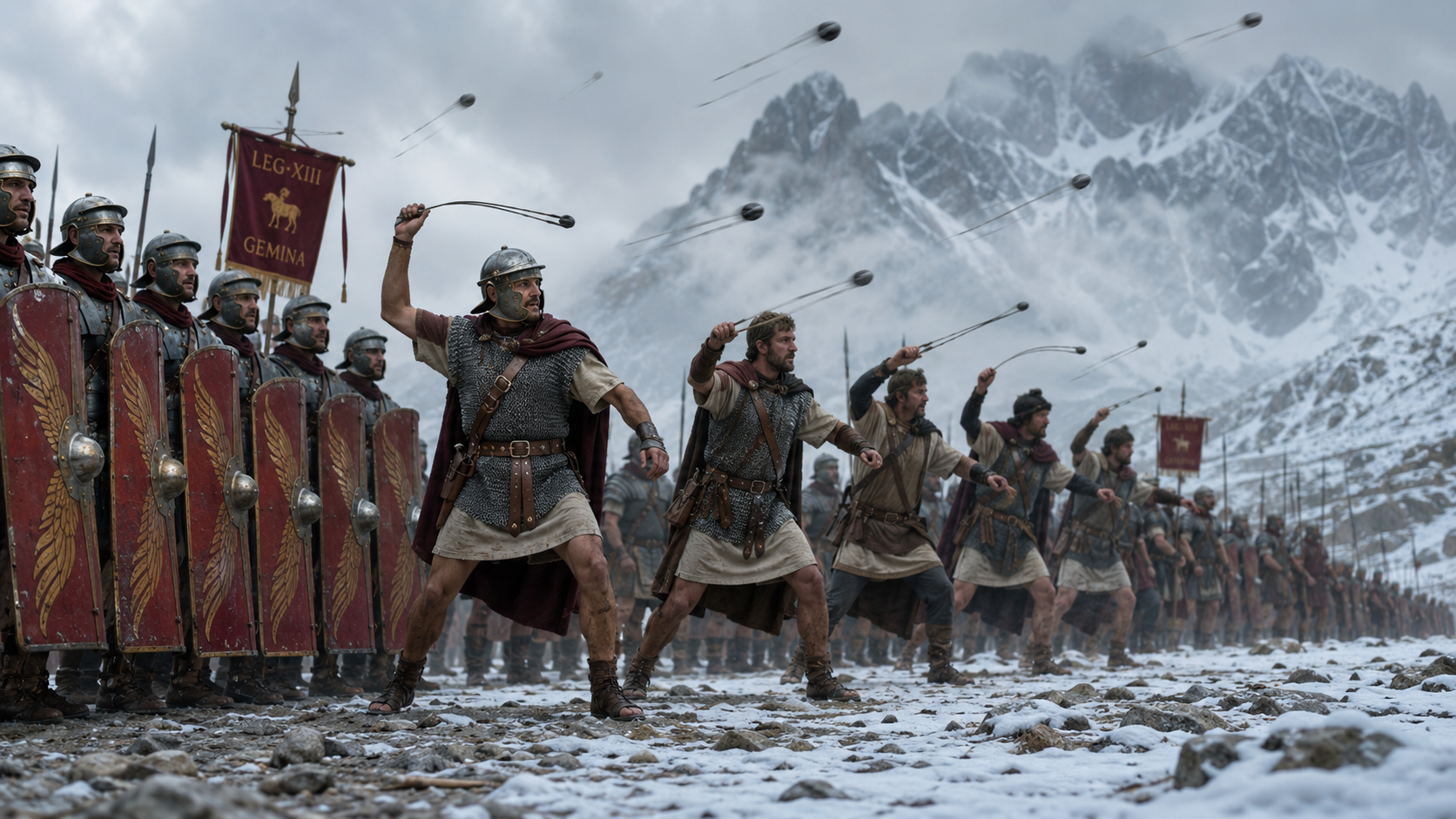
Scientists trace lead slingshot bullets from a Swiss battlefield back to Spanish mines, uncovering new clues about Emperor Augustus’ lost Alpine campaign.
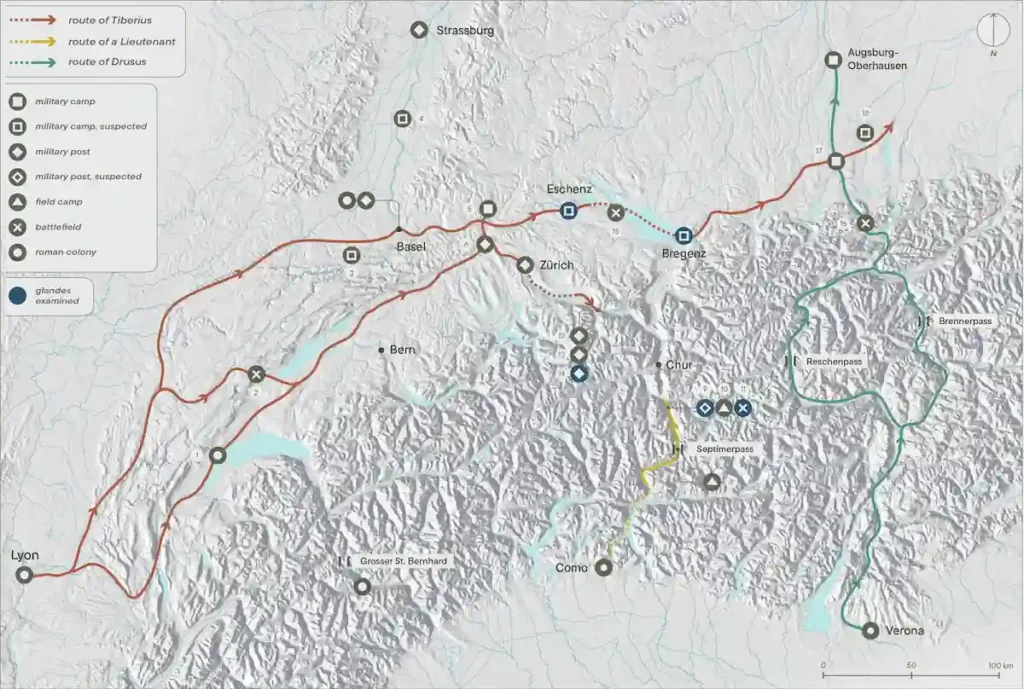
For centuries, historians knew about two of the three army routes Emperor Augustus used to conquer the Alps in 15 BCE. The third — a mysterious “middle route” through the mountains of Switzerland — was almost a total blank in the history books. Now, a new archaeological study is filling in that gap, using an unusual detective tool: the chemical fingerprint of ancient lead bullets.
The Battle Behind the Mystery
In the summer of 15 BCE, Augustus’ stepsons Tiberius and Drusus led Roman forces to crush the Alpine tribes and connect Rome’s territories in Gaul and Italy. Ancient writers such as Strabo and Velleius Paterculus described two of the three marching columns in detail — but stayed almost completely silent about the third, thought to have been commanded by Lucius Calpurnius Piso Pontifex.
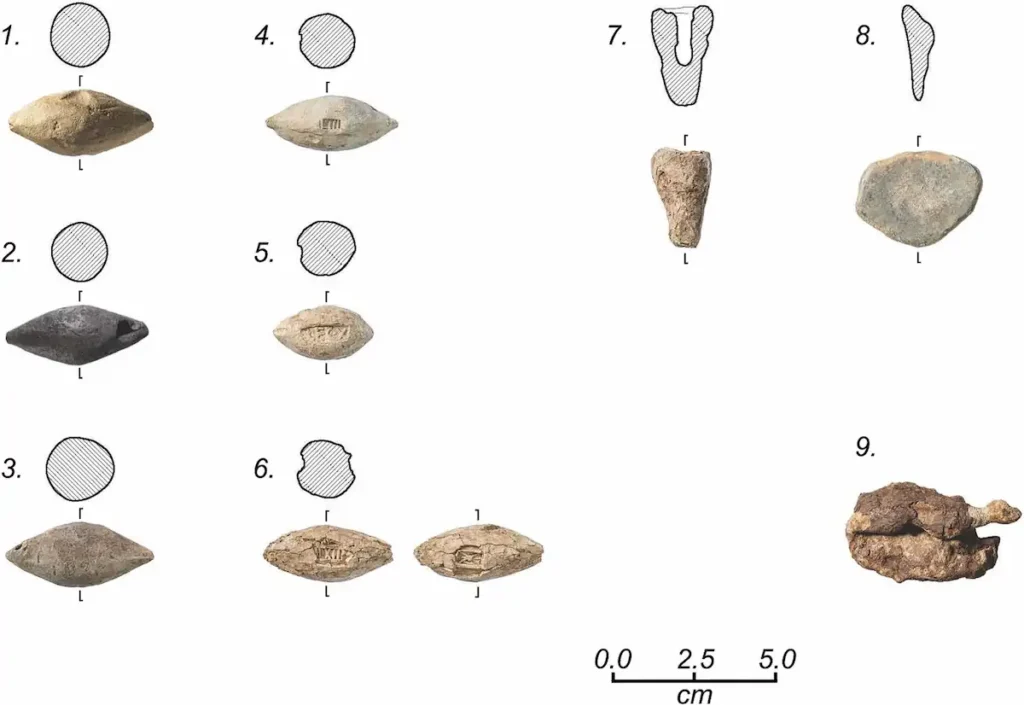
That changed after 2002, when archaeologists began uncovering a Roman conflict landscape near the Crap Ses Gorge in Switzerland’s Surses Valley. Excavations there have since revealed a marching camp, a battlefield, weapons, over 80 Roman coins, and — most intriguingly — around 500 lead slingshot projectiles, known as glandes, many stamped with the names of the IIIrd, Xth, and XIIth Roman legions.
What Lead Isotopes Can Tell Us
To figure out where the Roman military sourced the metal for these projectiles, researchers from the University of Southampton and the University of Basel analyzed the lead isotope composition of 40 slingshot bullets and two lead plummets from Crap Ses, alongside seven similar projectiles found further north at Brigantium (modern Bregenz, Austria) and Tasgetium (modern Eschenz, Switzerland).
Lead isotope analysis works because different ore deposits around the ancient world carry subtly different isotopic “signatures,” almost like a chemical barcode. By matching the isotope ratios of an artifact to known mining regions, scientists can trace where the raw metal actually came from — even 2,000 years later.
The results were striking. The projectiles from Crap Ses formed a clear, tightly linked chemical cluster, distinct from the bullets found at Brigantium and Tasgetium. This means the two groups of slingshot ammunition were made from entirely different batches of lead, sourced from different regions.
Following the Lead — Literally
The Crap Ses projectiles mainly matched ore from the Almería-Cartagena Volcanic Belt in southeastern Spain, a major Roman mining district in the 1st century BCE, with an additional contribution possibly from central-southern Spain’s Ossa Morena/Central Iberian Zones, the Iberian Pyrite Belt near Huelva, or France’s Massif Central. The bullets from Brigantium and Tasgetium, meanwhile, pointed to a separate lead stock — likely from those same central-Spanish or southern French sources, but crucially not mixed with the Cartagena lead used at Crap Ses.
The researchers also noted that the Crap Ses projectiles were smaller, individually stamped with legion names, and produced from a single, consistent metal supply — evidence of a centralized, organized production effort built specifically for this campaign. The Brigantium and Tasgetium bullets, by contrast, were heavier, unstamped, and chemically distinct, suggesting they came from a different weapons supply chain entirely.
Rewriting the Roman Marching Route
Because the isotopic signatures of the northern and southern find-sites don’t match, the study argues it’s unlikely that the same Roman military unit carried its original ammunition stock all the way from Crap Ses to Lake Constance. Instead, the more likely explanation is that a different Roman army group — possibly Tiberius’ western column — was responsible for the finds at Brigantium and Tasgetium. Alternatively, the same troops could have simply run out of their original ammunition and been resupplied with a new batch of lead bullets during the campaign.
Either way, the study is the first to seriously test whether lead isotope “fingerprinting” of Roman slingshot ammunition can be used to trace military marching routes — and the results suggest it can, at least when combined with archaeological context.
A Window Into Roman Military Supply Chains
Beyond solving a niche historical puzzle, the discovery highlights just how sophisticated and centralized Roman military logistics were more than 2,000 years ago. A single campaign force could be supplied with weapons manufactured from a common batch of imported Spanish lead, while different legions elsewhere in the empire drew from entirely separate supply chains.
The findings, published in the Journal of Archaeological Science: Reports, add fresh weight to the theory that the Surses Valley battlefield really was the long-lost middle route of Augustus’ Alpine conquest — even if, as the researchers are careful to note, the case isn’t fully closed yet. Further isotope testing of slingshot bullets tied to Tiberius’ confirmed western route could finally settle the question of who marched where, and when, during Rome’s final push into the Alps.
Standish, C. D., Flück, H., Gerling, C., Gut, R., Milton, J. A., Reitmaier, T., & Schwarz, P.-A. (2026). Supplying the Augustean conquest of the Alps—Investigating the origins of Roman slingshot projectiles by lead isotope analysis. Journal of Archaeological Science: Reports, 74, Article 105939. https://doi.org/10.1016/j.jasrep.2026.105939