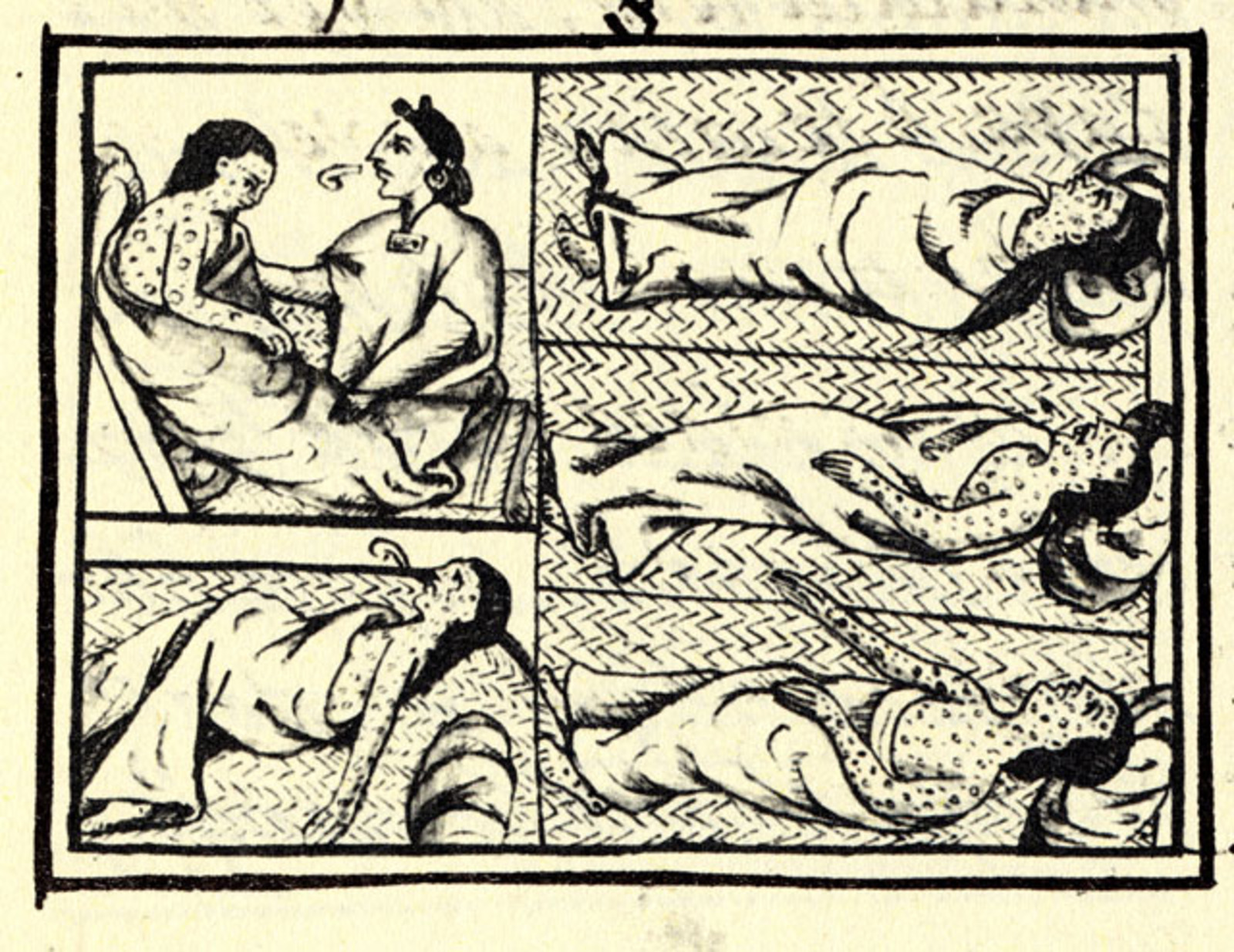
Millions died. Almost no bodies were ever found.
That is the puzzle at the heart of a new archaeological study examining one of history’s most devastating epidemics: the smallpox outbreaks that swept through Native American communities following European contact. According to a paper just published in the Journal of Anthropological Archaeology, the physical evidence for this catastrophe — mass graves, cemeteries, skeletal remains bearing the marks of the disease — is almost entirely missing from the archaeological record.
The research team, led by Alex Garcia-Putnam of the University of New Hampshire and including scholars from New York University, the Smithsonian Tropical Research Institute, and the University of Kansas, set out to reconcile two very different pictures of the same event. Colonial-era writings paint smallpox as an unstoppable killer that could empty entire towns within days. But when researchers go looking for the graves that should have resulted, they come back nearly empty-handed: fewer than 20 individuals across the whole of the Americas have ever been confirmed, through physical remains, to have died of smallpox.
A Letter From the Plains
One document at the center of the study is an 1831 letter from U.S. Indian Agent John Dougherty, describing what he witnessed while visiting Pawnee villages during a smallpox outbreak in present-day Nebraska. He wrote that the dying were so numerous that villagers “had ceased to bury their dead” — bodies were left in rivers, in cornfield pits, dragged off by dogs, and torn apart by wolves and vultures.
Similar scenes appear again and again across the continent in the sources the team reviewed: homes burned over the bodies of the dead in British Columbia, corpses left on open ground near Hudson Bay, and Yurok communities in California abandoning their villages entirely rather than continue burying the dead. Taken together, these accounts describe a level of destruction that should be highly visible archaeologically. It isn’t.
Three Explanations, None Simple
The study lays out three possible reasons for this gap between written history and buried evidence, and argues that all three were likely happening at once, in different places:
There was no one left to dig graves: In the deadliest outbreaks, mortality may have been so extreme that normal burial practices simply broke down, leaving bodies exposed rather than interred.
The graves are still out there: The Americas cover an immense area compared to Europe, and mass burial sites may remain undiscovered, paved over, or destroyed by centuries of development and shifting rivers.
Time and geography destroyed the evidence: Highly acidic soils in parts of Mexico and Central America break down bone quickly, while poorly documented excavations from earlier centuries may have destroyed context without anyone recognizing what they’d found.
Even in regions with excellent conditions for preserving skeletal remains — coastal Peru, the Pacific Northwest — confirmed smallpox burial sites are essentially nonexistent. The only well-documented case tied directly to a specific outbreak comes from an 1853 epidemic in Honolulu, Hawaii.
Building a Better Way to Look
Rather than leaving the mystery unresolved, the authors propose a four-part checklist future excavations can use to identify a burial site as smallpox-related: precise dating tied to known outbreak periods, skeletal signs of physical stress, demographic patterns that suggest the disease didn’t kill entirely at random, and — the strongest evidence of all — traces of the virus’s own DNA preserved in bone or tissue.
The researchers are careful to note that none of this challenges the historical reality of the devastation colonization brought to Indigenous peoples of the Americas. Instead, they argue, the missing graves are themselves a kind of evidence: pointing to a system of violence, disease, and social collapse so total that even the dead could not always be recorded.
Source: Garcia-Putnam, A., Snyder, T.J., Tasa, G.L., Smith-Guzmán, N.E., & Shield Chief Gover, C. (2026). “Exploring archaeological evidence for historic smallpox epidemics in the Americas.” Journal of Anthropological Archaeology, 83, 101778.