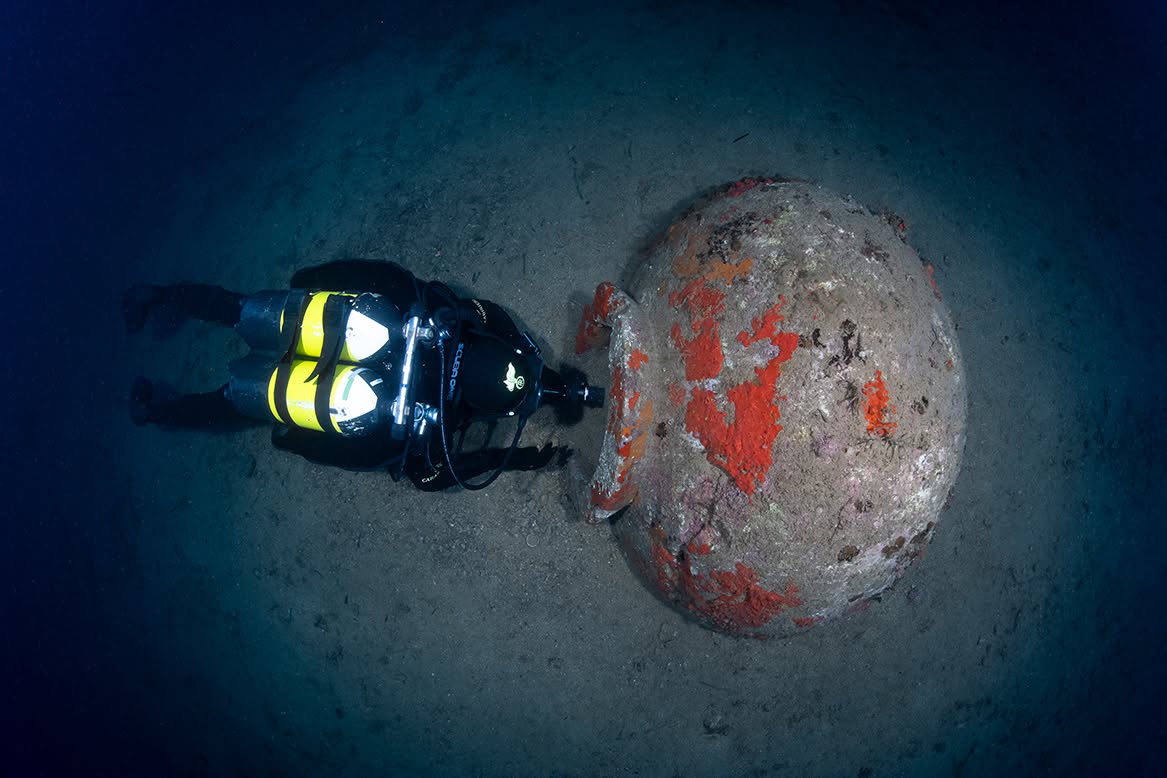
The blue waters surrounding Italy’s Elba Island have revealed two intriguing archaeological finds: a massive Roman dolium and the remains of a wooden vessel whose age and identity are still unknown.
The discoveries were made during underwater surveys led by the Soprintendenza Archeologia, Belle Arti e Paesaggio for Pisa and Livorno, together with specialist Carabinieri cultural heritage and diving units.
For archaeologists, the finds offer another glimpse beneath a stretch of sea that has carried ships, cargoes and travelers for more than two thousand years.
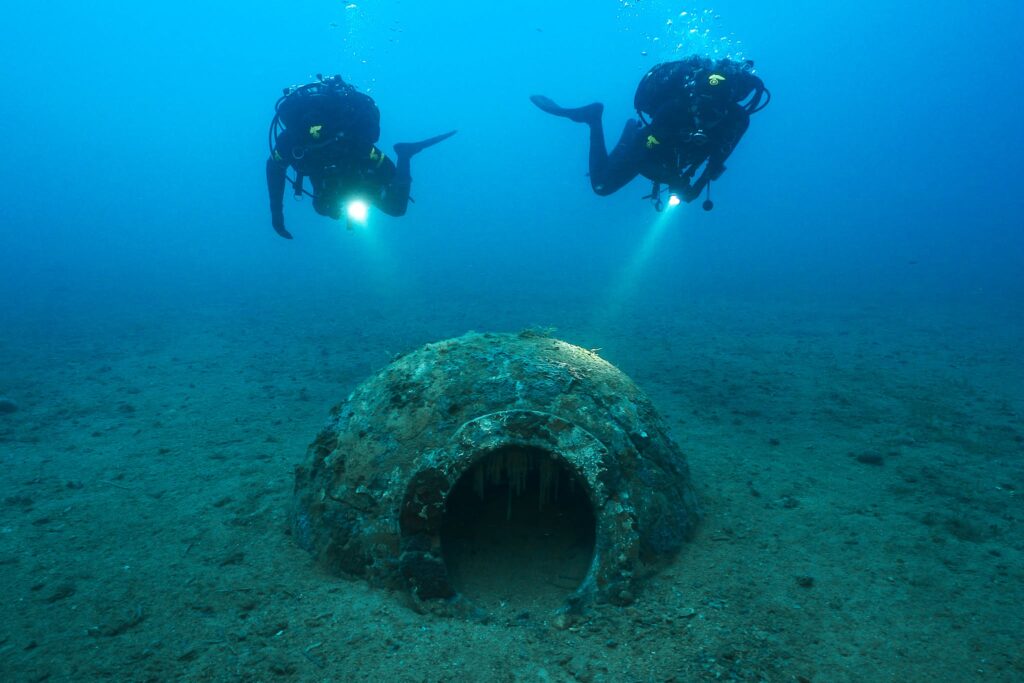
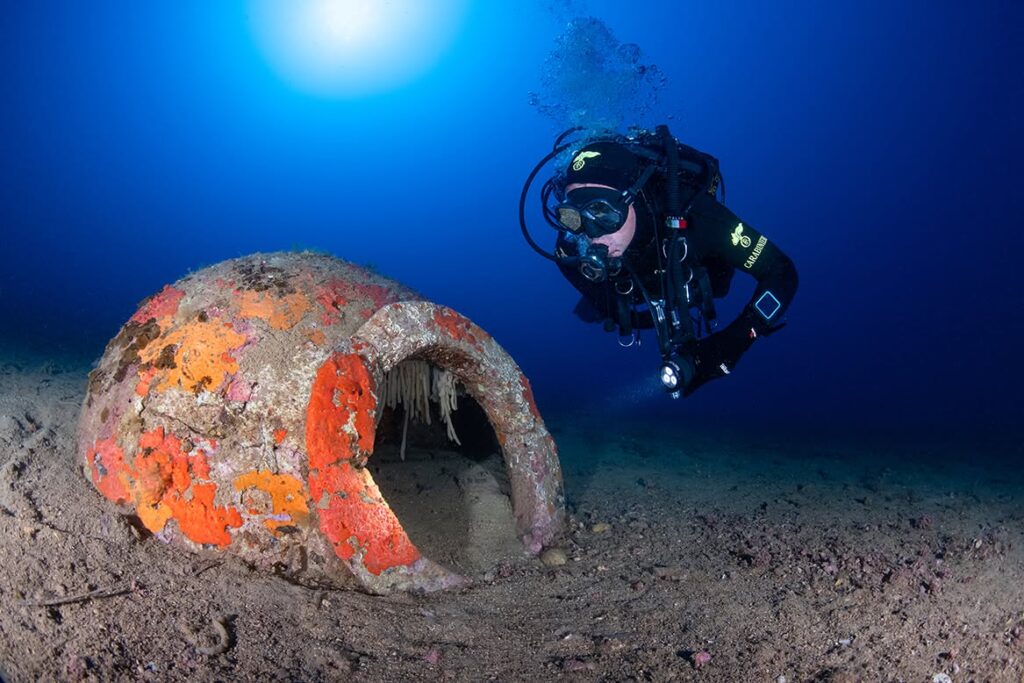
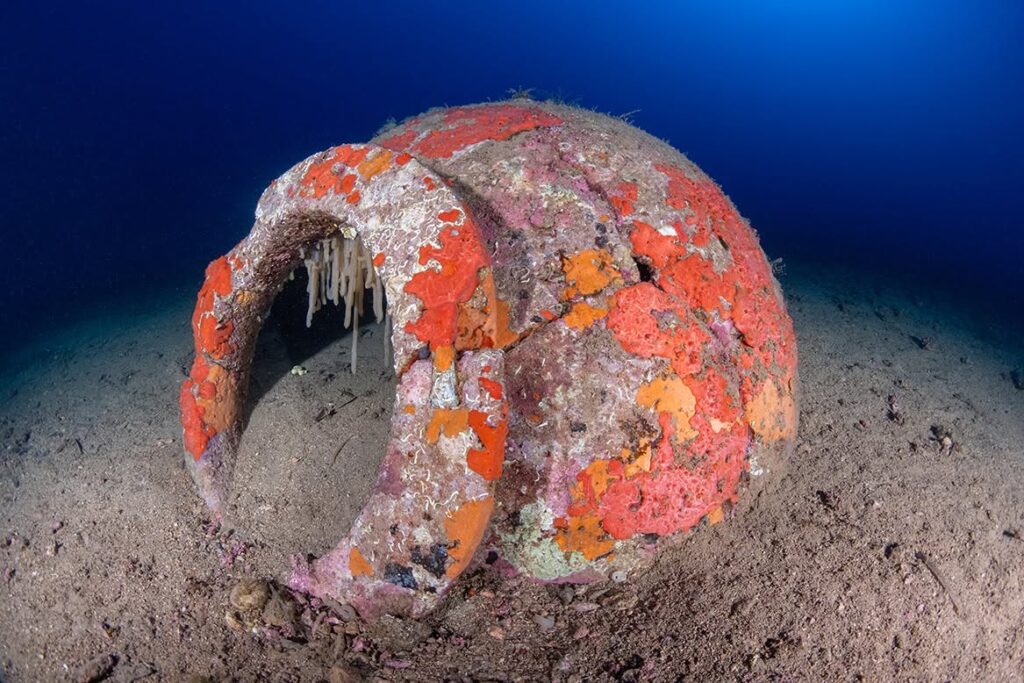
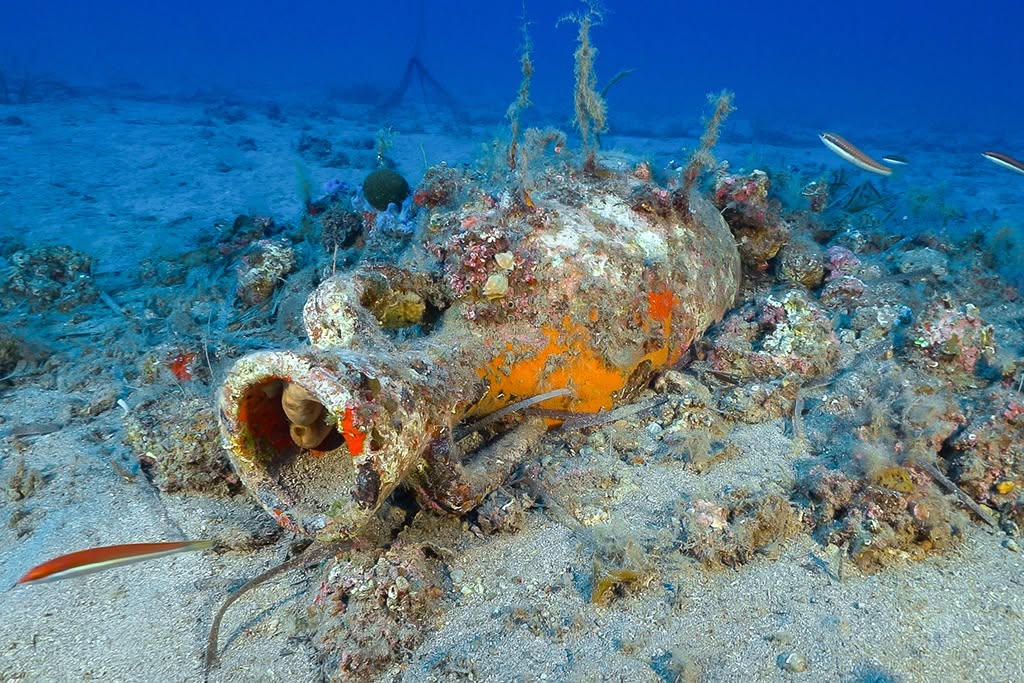
The most immediately recognizable object is a Roman dolium, a huge terracotta container used to store and transport products such as wine, olive oil and grain.
Dolia were very different from the amphorae commonly associated with Roman trade. Amphorae were relatively portable and could be loaded and unloaded individually. A dolium, by contrast, could hold hundreds or even thousands of liters.
Some large Roman examples had capacities of around 2,000 liters, roughly equivalent to the contents of about 75 standard amphorae.
On certain Roman merchant vessels, these enormous containers were placed directly inside the hull and used almost like permanent tanks. Ships equipped in this way are generally known as navi a dolia or dolia carriers.
A clue to Rome’s wine trade
According to the Soprintendenza, the newly discovered dolium may be associated with this specialized form of maritime transport, particularly active between the 1st century BC and the 1st century AD.
These ships were especially suited to carrying bulk wine along the major commercial routes of the Tyrrhenian Sea.
That possibility gives the Elba discovery particular significance. The island sits just off the Tuscan coast, close to maritime routes linking central Italy with Corsica and the wider western Mediterranean.
But archaeologists are not yet calling the site a Roman dolia shipwreck.
Only one dolium has so far been identified, and its relationship to the nearby wooden remains remains uncertain.
A wooden wreck hidden beneath the seabed
The second discovery is more mysterious.
Divers documented a wooden structure measuring about five meters long and two meters wide. Much of it is obscured by marine mucilage, making it difficult to examine in detail.
Even so, archaeologists have identified surviving hull planking, structural timbers and numerous bronze nails.
The construction has not yet been securely dated. The Soprintendenza currently places it within a broad period extending from Late Antiquity to the Middle Ages.
That means the Roman dolium and the wooden vessel may have nothing to do with one another.
They could belong to the same wreck, to separate maritime incidents centuries apart, or even to different phases of activity at the site.
Elba’s long relationship with the sea
Elba has always occupied a strategic position in the northern Tyrrhenian.
Long before Roman rule, the island was famous for its iron deposits, which were exploited by the Etruscans and closely connected with the major metallurgical center of Populonia on the mainland.
Under Rome, the island’s economy became increasingly diverse. Mining continued, but agriculture, wine production, coastal estates and maritime commerce also played major roles.
Its surrounding seabed preserves the other side of that history.
Ancient shipwrecks and scattered cargoes have previously been documented around Elba, including the well-known Roman wreck discovered off Procchio in 1967.
The latest finds add another chapter to that maritime landscape.
Archaeologists will return in autumn
The monitoring program began in May 2026 and covers waters between the Piombino Channel and the Tuscan Archipelago.
Officials have not revealed the exact location of the new discoveries, helping protect the site from disturbance or looting.
A second underwater campaign is planned for autumn 2026.
Exploratory archaeological tests are expected to clarify the size, date and nature of the wooden remains—and, crucially, whether they have any connection to the Roman dolium lying nearby.
Until then, Elba’s newest underwater mystery remains unresolved.
Soprintendenza archeologia, belle arti e paesaggio per le province di Pisa e Livorno