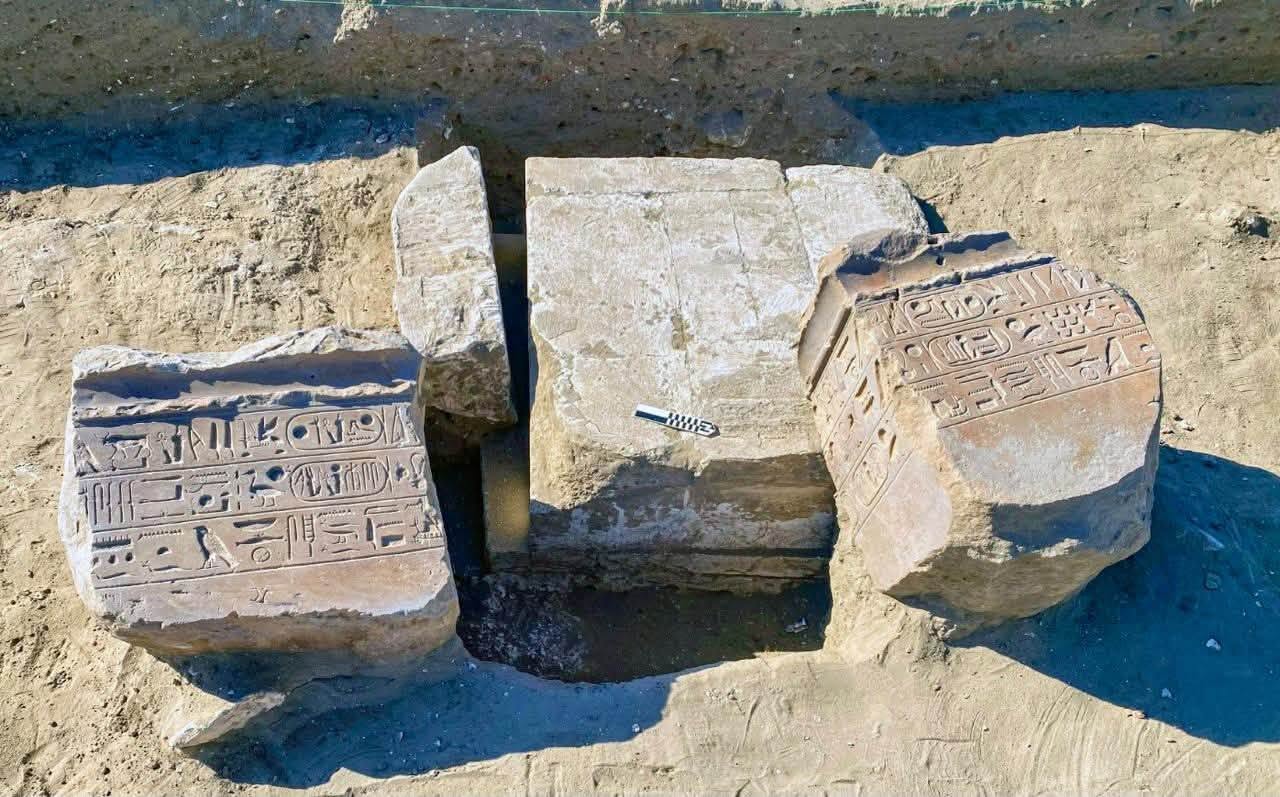
Archaeologists excavating Tell Abu Seifi in northeastern Egypt have uncovered a massive sandstone lintel bearing the titles of Ramesses II and an inscription referring to “Horus, Lord of Mesen,” adding significant new evidence to a nearly 140-year-old debate over the location of the lost ancient Egyptian city of Mesen.
The discovery was made by an Egyptian archaeological mission working at Tell Abu Seifi in Qantara East, Ismailia Governorate, near the Suez Canal. According to Egypt’s Ministry of Tourism and Antiquities, the new evidence strengthens the hypothesis that the site may be connected with Mesen, an ancient settlement known from Egyptian texts but whose precise location has remained uncertain.
The newly discovered lintel is a large sandstone architectural element, surviving as one half broken into two pieces. It is inscribed on three sides with the royal titles of Ramesses II, who ruled Egypt during the 13th century BC. More importantly for archaeologists, the inscription refers to restoration work carried out on a statue of “Horus, Lord of the City of Mesen.”
That reference could prove crucial because Mesen was closely associated with the cult of Horus on Egypt’s northeastern frontier.
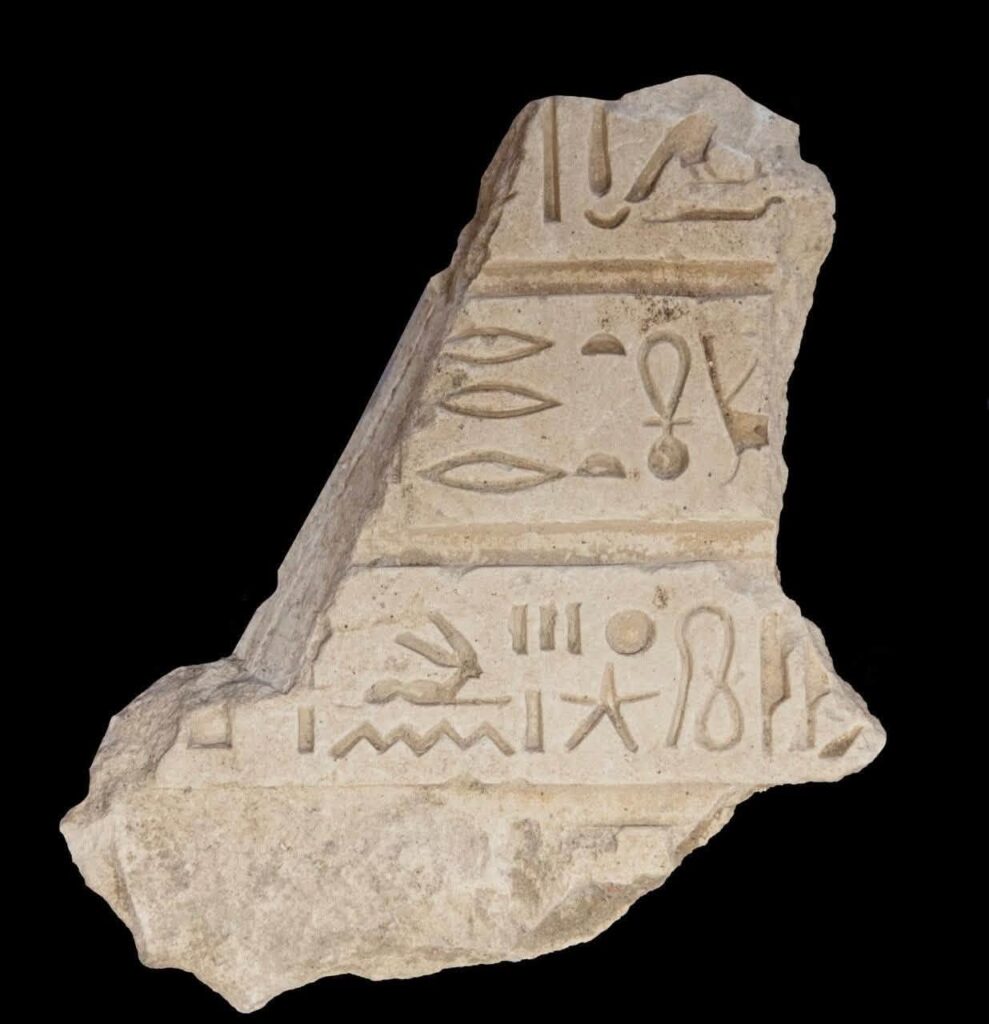
Ramesses II and an inscription referring to “Horus, Lord of Mesen,” adding significant new evidence to a nearly 140-year-old debate over the location of the lost ancient Egyptian city of Mesen. Credıt: Egypt’s Ministry of Tourism and Antiquities
A mystery that began in the 19th century
The search for Mesen at Tell Abu Seifi has a much longer history than the latest excavation.
In 1887, British Egyptologist Francis Llewellyn Griffith carried out limited excavations at Tell Abu Seifi and discovered several monuments from the Ramesside period. Among them was a block of Ramesses II bearing different epithets of Horus, including “Horus, Lord of Mesen.”
Those inscriptions led some early Egyptologists to place Mesen somewhere near Tjaru, also known as Sile, the great frontier settlement guarding Egypt’s northeastern approaches.
There was, however, a major problem with that interpretation. Later excavations suggested that Tell Abu Seifi was primarily occupied during the Persian, Ptolemaic, and Roman periods, with little evidence at the time for a substantial settlement there during the reign of Ramesses II. Researchers James K. Hoffmeier and Stephen O. Moshier therefore proposed that the Ramesside blocks found at Tell Abu Seifi may have been transported from nearby Tell Hebua, which has been identified with ancient Tjaru.
The identity of Mesen consequently remained unresolved.
Egyptological research has proposed several possibilities: Mesen may have been a settlement close to Tjaru, another name for Tjaru itself, an earlier name for the frontier city, or possibly the name of a temple or cult center devoted to Horus. A Greco-Roman sarcophagus discovered at Qantara East further illustrates the close relationship between the two names, referring to its owner as a priest of “Horus, Lord of Mesen, Lord of Sile.”
The newly found inscription therefore does not settle the debate by itself, but it gives archaeologists fresh evidence from the site that can now be examined alongside the older discoveries.
A temple on Egypt’s military frontier
The current excavation has also substantially changed the archaeological interpretation of Tell Abu Seifi itself.
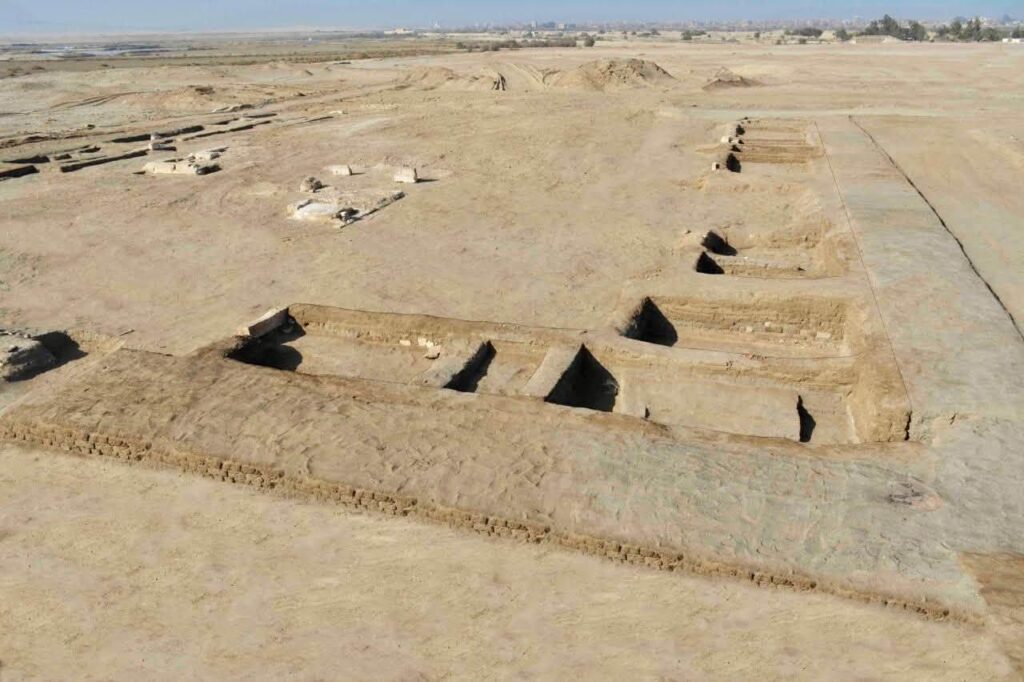
A massive mud-brick structure with gateways, internal rooms and several construction phases was previously interpreted as part of the temple. Archaeologists now believe it was actually the outer enclosure wall surrounding the temple complex, providing a clearer picture of the site’s original layout.
The mission also identified two successive stone-paved roads leading from outside the fortified area toward the temple. The earlier road dates to the Ptolemaic period, while a narrower Roman road was later constructed above it.
Within the temple complex, excavators found a series of storage rooms on the northern side and larger service rooms to the south, leading toward the sanctuary. The temple appears to have reached its architectural peak during the Ptolemaic period.
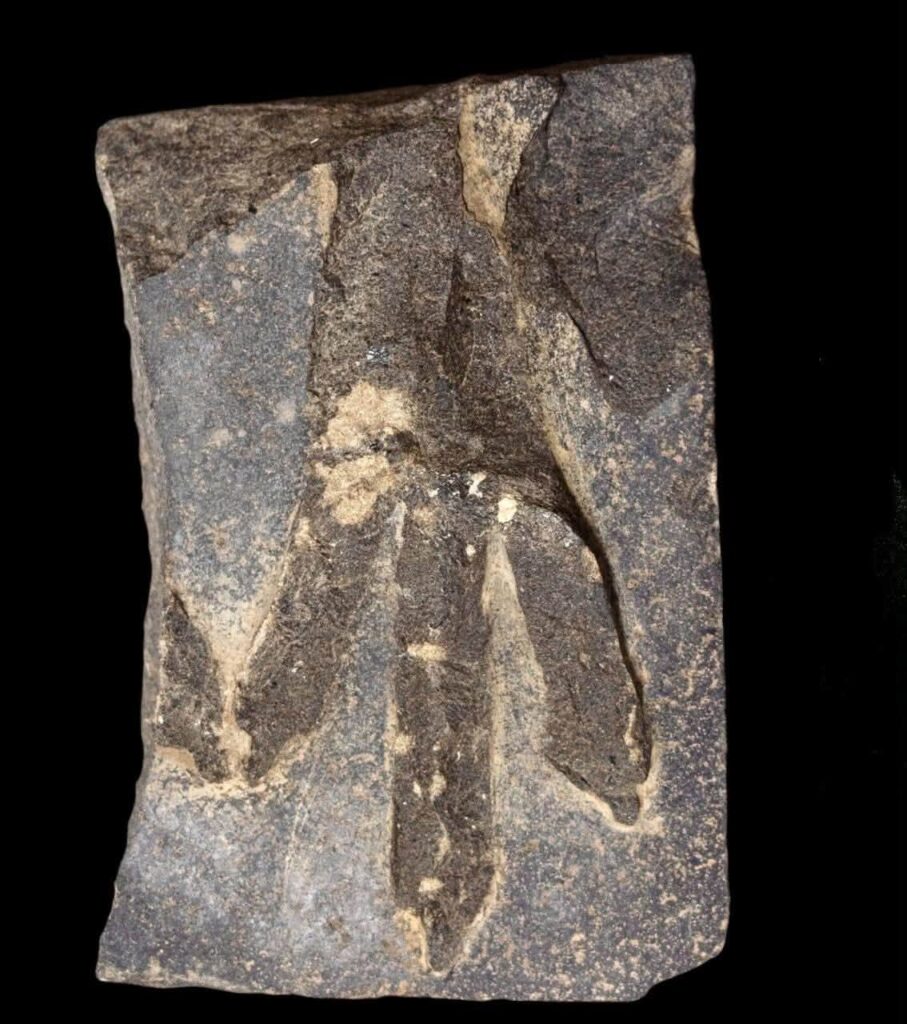
Among the other finds is part of a schist statue dating to Egypt’s 26th Dynasty, depicting a military scribe holding a damaged naos, or small shrine. Archaeologists also recovered a headless and footless Late Period statue, the basalt torso of a royal statue and fragments of falcon sculptures made from basalt and limestone.
From sacred center to Roman fortress
Tell Abu Seifi occupied a strategically important position along the Way of Horus, the military and administrative corridor that connected Egypt’s eastern Delta with northern Sinai and ultimately Canaan. New Kingdom control of this route depended on fortified settlements, administrative centers and supply stations that enabled Egypt to move soldiers and resources across its eastern frontier.
The latest discoveries show that Tell Abu Seifi continued to be important long after the pharaonic period. During the third century AD, parts of the site were transformed into a Roman military castrum, while in the Late Roman period the area was increasingly exploited for building materials.
Two large circular lime kilns were eventually constructed directly over corners of the temple sanctuary. The kilns contained limestone exposed to intense burning, evidence of a final industrial phase in which parts of the ancient religious complex were dismantled and converted into lime.
For archaeologists, however, the most consequential question now lies much deeper in the site’s history. If further excavations can demonstrate that the Ramesside monuments belong to Tell Abu Seifi itself rather than having been transported there in antiquity, the discovery could substantially strengthen the identification of the site with Mesen.
The Ministry of Tourism and Antiquities has emphasized that this identification remains a hypothesis rather than a final conclusion. Excavations will continue in future seasons in search of architectural and epigraphic evidence capable of resolving the question.
After more than a century of debate, Tell Abu Seifi may finally be providing new clues to the location of one of ancient Egypt’s long-lost cities.