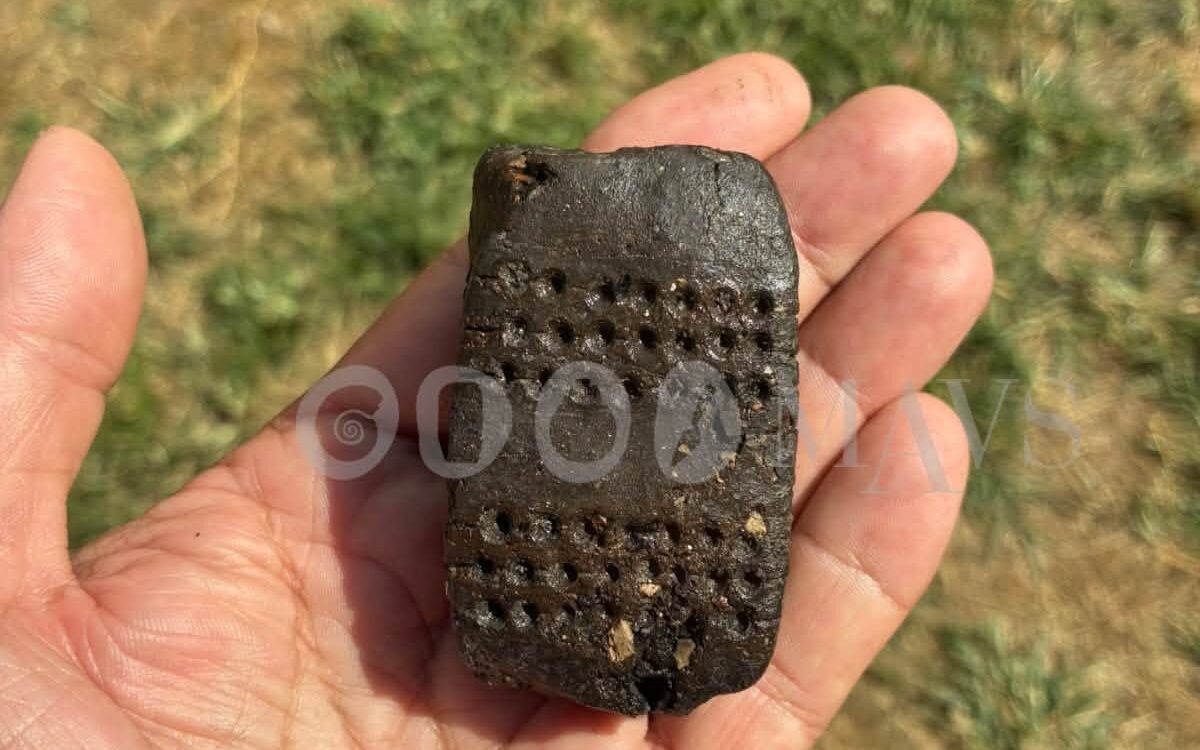
Archaeologists excavating the Bronze Age settlement of Lucone di Polpenazze in northern Italy have uncovered an object that has puzzled researchers for decades: an intact enigmatic clay tablet covered with carefully arranged marks.
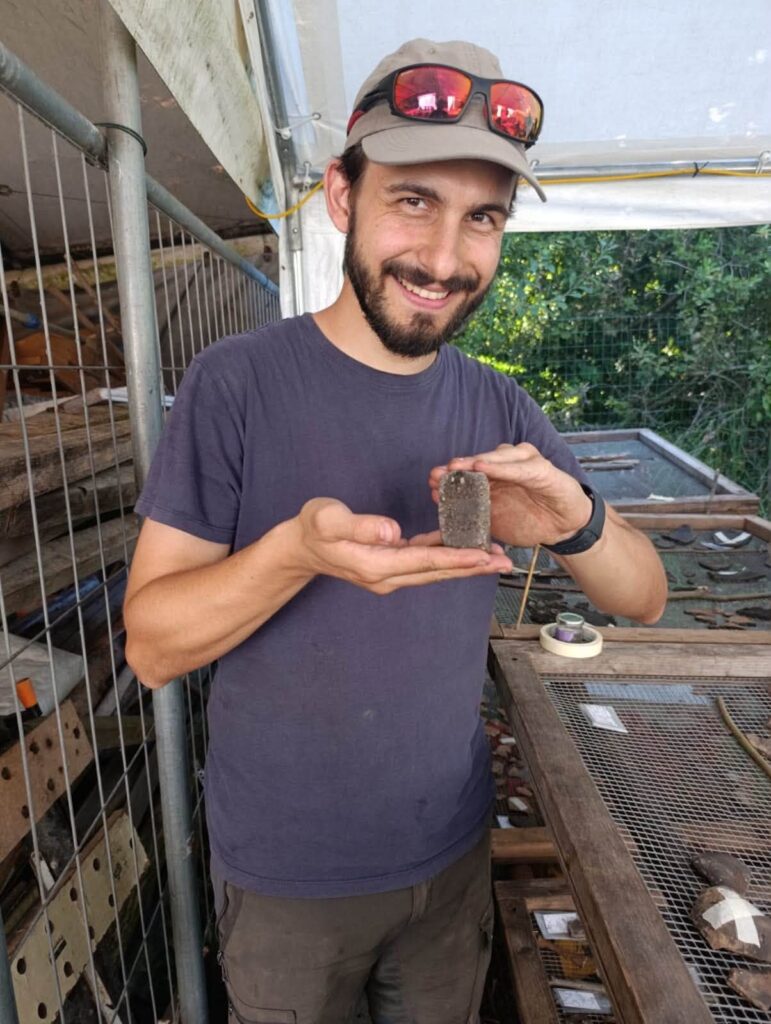
The discovery was made during the 2026 excavation season at Site D, where a charcoal-rich layer identified as US 1015 produced the small artifact. It is the first enigmatic tablet found at Lucone since 2019 and only the third recovered from Site D. Across the wider Lucone plain, however, the total has now reached 21 examples, making the area the richest known source of these unusual prehistoric objects.
That concentration matters because no one can yet say with certainty what the tablets were actually used for.
A Bronze Age object no one has deciphered
Known in Italian archaeology as tavolette enigmatiche, the objects are generally made of clay and decorated with combinations of incised lines, dots, circles, squares and other impressions. In German-language archaeology they are often called Brotlaibidole, or “bread-loaf idols,” because of the rounded shape of many examples.
They are sometimes described as tablets, but they are not written documents in the Mesopotamian sense. No known alphabet or writing system has been identified on them.
Instead, their surfaces appear to preserve repeated combinations of symbols. Similar objects have been found across northern Italy, Central Europe and parts of southeastern Europe, suggesting that the people who made them may have shared some form of visual code during the Early and Middle Bronze Age.
Researchers have offered almost every imaginable explanation. The tablets may have functioned as calendars, counting devices, ritual objects, identity markers or records connected with trade. Some scholars have suggested a link with the movement of metals and other valuable commodities across prehistoric Europe.
None of these ideas has been proven.
That is precisely what makes the new Lucone find so interesting. An intact object recovered from a secure archaeological layer can potentially reveal more than isolated or damaged examples held in older collections.
Why Lucone is different
Lucone di Polpenazze lies west of Lake Garda in Lombardy and was once home to a prehistoric pile-dwelling community. Excavations have revealed several settlement areas built around a wetland basin, where waterlogged conditions helped preserve materials that normally disappear from archaeological sites.
At Lucone D, dendrochronological analysis of wooden remains indicates that construction began around 2034 BCE, placing the settlement firmly within the Early Bronze Age.
A major fire later destroyed part of the village, but the disaster had an unexpected archaeological consequence. Burned structures collapsed into wet ground, helping preserve wood, plant material, textiles and other traces of everyday life. Researchers have consequently been able to study not only buildings but also food production, craft activities and the domestic routines of people living there roughly 4,000 years ago.
The site is also part of UNESCO’s Prehistoric Pile Dwellings around the Alps, a network of exceptionally preserved prehistoric settlements spread across several European countries.
Could Lucone hold the key?
The 21 tablets from the Lucone plain now form an unusually large group from a single archaeological landscape. That gives researchers something they rarely have with enigmatic objects: enough examples to compare their shapes, symbols and contexts systematically.
If particular marks repeatedly appear in certain buildings or alongside specific materials, patterns may eventually emerge. Those patterns could help determine whether the tablets were linked to trade, measurement, ritual activity or something archaeologists have not yet considered.
For now, the newly discovered tablet remains exactly what its modern name suggests: enigmatic.
But with Lucone producing more examples than any other known site, this quiet Bronze Age settlement near Lake Garda may be one of the best places to solve a mystery that has survived for four millennia.