Tiny parasite eggs preserved in medieval graves in Sudan have given researchers an unusual window into what people ate, how they lived, and even what the climate may have been like in the Nubian Desert around 1,000 years ago.
Anthropologists from Lomonosov Moscow State University and collaborating Russian institutions examined soil samples from people buried at the medieval Muslim cemetery of Derahieb, an important trading and gold-mining settlement in what is now northeastern Sudan. The researchers identified intestinal parasite eggs in 10 of 26 individuals, with tapeworms of the genus Taenia by far the most common.
The findings, published in the journal Antiquity, suggest that beef formed part of the local diet and may also provide indirect evidence that the region was significantly wetter during the 9th–11th centuries CE than it is today.
Parasites preserved beside the dead
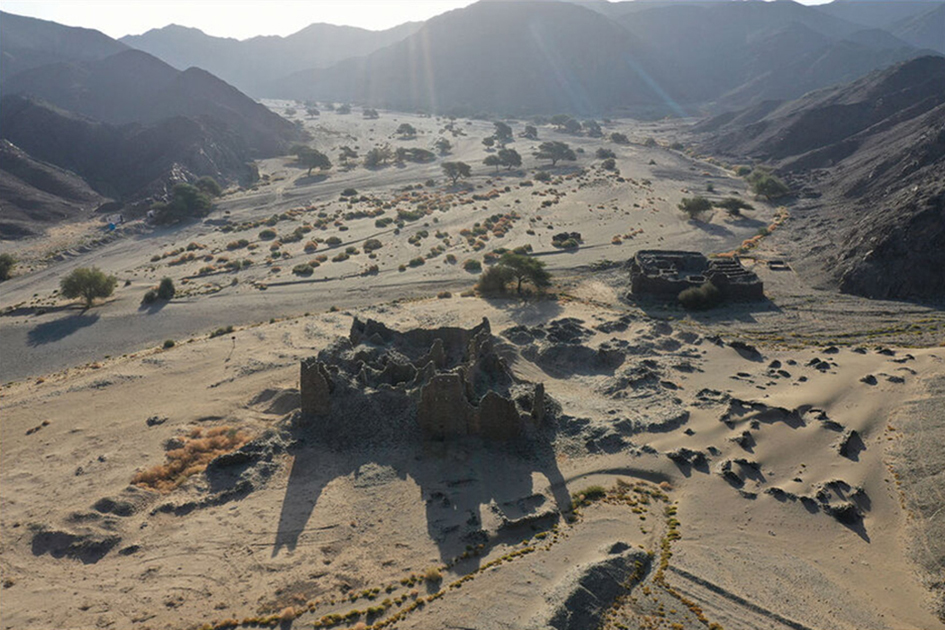
Derahieb lies in the upper reaches of Wadi Allaqi and is generally identified with Al-Allaqi, a settlement mentioned in medieval Arabic sources. Between the 9th and 11th centuries, the town stood at the center of a major gold-producing region of the Nubian Desert and connected routes used by traders and pilgrims.
Researchers collected 50-gram soil samples directly from the surfaces of the sacral bones of 26 people buried in the site’s southern cemetery. Because the sacrum lies close to the intestines, soil around it can preserve microscopic traces of intestinal parasites long after soft tissues have disappeared.
The team rehydrated, sieved and centrifuged the samples before examining them under a microscope. Control samples taken farther away from the skeletons contained no parasite eggs, strengthening the case that the remains represented infections suffered by the individuals during life rather than later contamination of the graves.
Helminth eggs appeared in 10 of the 26 samples, or 38.5 percent. Eggs belonging to Taenia tapeworms occurred in nine individuals, giving a prevalence of 34.6 percent. Researchers also detected Ascaris lumbricoides, or roundworm, in three samples and Trichuris trichiura, commonly known as whipworm, in one.
The infections affected adults and children as well as males and females.
Tapeworms point to beef consumption
The high frequency of Taenia eggs offered researchers an important clue to the diet of Derahieb’s inhabitants.
Humans can acquire intestinal Taenia infections by eating undercooked meat containing larval cysts. Two important species are associated with pork and beef: Taenia solium, the pork tapeworm, and Taenia saginata, the beef tapeworm.
Because the cemetery population followed Muslim burial practices, and Islamic dietary rules prohibit pork, researchers consider T. saginata the more likely source of the infections. Archaeozoological evidence supports that interpretation: excavations at Derahieb have produced cattle remains but no pig bones.
This means that some inhabitants were probably eating beef that had not been cooked sufficiently to kill the parasite larvae.
The discovery is particularly striking because cattle husbandry is extremely difficult around Derahieb today. Modern Beja pastoralists in the surrounding desert primarily keep camels, goats and sheep because the landscape lacks enough pasture and reliable water to sustain large numbers of cattle.
That contrast led researchers to consider a broader possibility: medieval Derahieb may have existed in a substantially wetter environment.
A greener Nubian Desert?
Evidence from the parasite eggs appears to fit other clues suggesting that local environmental conditions differed from those of the modern Nubian Desert.
The presence of Ascaris and Trichuris is particularly significant because both are soil-transmitted helminths. Their eggs need suitable moisture conditions in the soil before they can become infectious. Their survival and transmission therefore suggest that people at Derahieb had regular contact with relatively moist environments, perhaps around wells or buildings where water was frequently used.
Historical and archaeological evidence points in the same direction.
The 11th-century geographer al-Bakri reportedly described Al-Allaqi as being known for pomegranates, while archaeologists have also recovered grape seeds from one of the cemetery burials. Both crops require considerable access to water, especially in such an arid environment.
Combined with the evidence for cattle, the parasite data strengthen the possibility that the region supported more vegetation and had greater access to water during the medieval period.
Researchers are careful, however, not to treat the parasites alone as a direct climate record. Instead, they provide another independent line of evidence that can be compared with animal remains, plant finds and historical descriptions.
Parasites may also explain poor childhood health
The study also offers a glimpse into the health problems faced by Derahieb’s population.
Researchers recorded cribra orbitalia in 54.5 percent of the individuals examined, a skeletal condition characterized by porous lesions in the roof of the eye sockets and often associated with anemia or other physiological stress. Of those showing the condition, 85 percent were children younger than seven.
Intestinal parasites can interfere with nutrition and, depending on the infection, contribute to anemia and physical stress. The researchers therefore suggest that parasitic disease may have been one factor affecting childhood health and potentially contributing to mortality, although other causes cannot be excluded.
Microscopic evidence reconstructs a lost community
Helminths have accompanied humans for thousands of years, and their durable eggs can remain preserved in archaeological soils long after most biological evidence has disappeared. By identifying particular parasite species, paleoparasitologists can reconstruct aspects of diet, sanitation, animal contact and environmental conditions that conventional artifacts may not reveal.
Africa produced some of the earliest evidence for ancient parasitic disease more than a century ago, yet its paleoparasitological record remains far less extensively studied than those of Europe and the Middle East. Medieval Nubian populations are particularly poorly represented.
The Derahieb study helps narrow that gap. What began with microscopic eggs buried beside human remains has produced evidence for beef consumption, intestinal disease, sanitation conditions, and potentially a wetter medieval landscape in one of today’s harshest desert regions.
For archaeologists trying to reconstruct everyday life in medieval Nubia, even parasites can become historical witnesses.