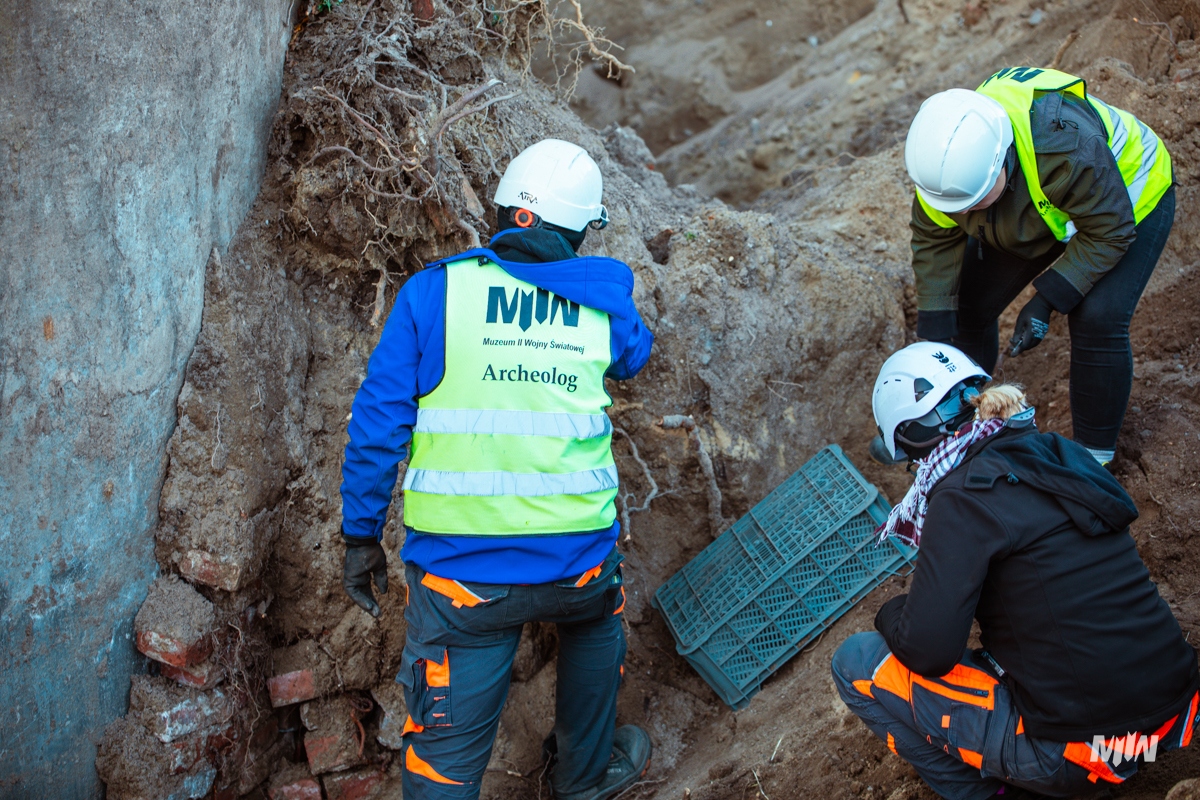
Nearly 87 years after the opening battles of World War II, archaeologists in Poland may have found the remains of a soldier who died defending Westerplatte, where some of the war’s first fighting took place. Human bones discovered beside a historic military bunker were accompanied by a Polish bayonet and uniform buttons, raising hopes that a long-missing defender may finally be identified.
The discovery was made on November 5, 2026, during construction work for the new Westerplatte Museum in Gdańsk. Archaeologists from the Museum of the Second World War were monitoring excavations when they encountered the remains approximately 2.5 meters below the present ground surface.
A Bayonet and Uniform Buttons Beside the Bones
The bones were found just half a meter from the northern wall of a reinforced concrete bunker built in 1911. Known as the “Fort” position, the structure became an important Polish defensive post during the German assault on Westerplatte in September 1939.
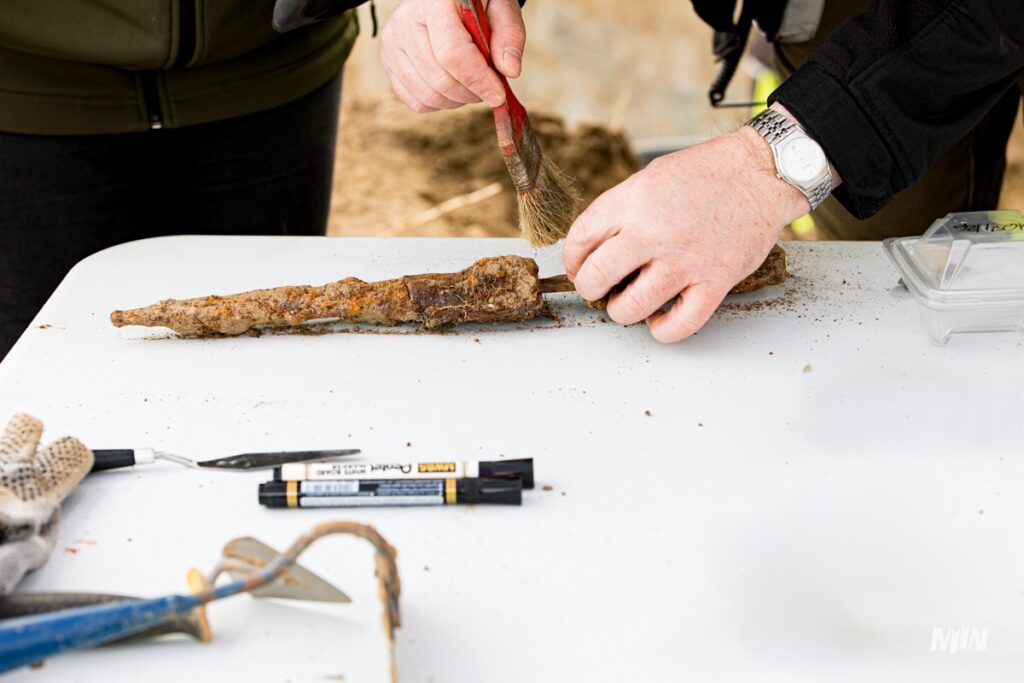
Nearby, archaeologists recovered a Polish Model 1929 bayonet, its scabbard, remnants of the leather attachment used to fasten it to a military belt, and two Polish uniform buttons of a type worn by enlisted soldiers during the 1920s.
These objects, together with the location of the discovery, suggest that the remains could belong to a Polish soldier killed during the fighting.
A Soldier Missing Since September 1939
Researchers are investigating whether the bones belong to Mieczysław Krzak, a Polish legionnaire believed to have died near the Fort position during the night of September 2, 1939.
Filip Kuczma, head of the museum’s Archaeology Department, explained that the location and accompanying objects point toward Krzak, whose burial place has been sought for five years. However, he stressed that only genetic testing can confirm or rule out the identification.
Museum director Professor Rafał Wnuk also urged caution, emphasizing that it remains too early to determine whose remains have been found. Identifying Krzak would represent an important achievement for the archaeologists investigating Westerplatte.
Seven Days That Marked the Beginning of World War II
On September 1, 1939, German forces attacked the Polish Military Transit Depot at Westerplatte, beginning a battle that became one of Poland’s most enduring symbols of resistance.
Although heavily outnumbered and subjected to bombardment and repeated assaults, the Polish defenders held their positions for seven days before surrendering on September 7.
The battle subsequently became a defining episode in Polish national memory. Yet the fate of some of the soldiers killed during the fighting has remained unresolved for generations.
Earlier archaeological investigations at Westerplatte recovered the remains of seven defenders who were subsequently identified. Historical records suggest that the remains of two additional soldiers may still lie somewhere on the peninsula.
DNA Testing Could Finally Establish His Identity
The discovery has been reported to the regional heritage authorities and the prosecutor of Poland’s Institute of National Remembrance.
Specialists will recover and examine the remains under the prosecutor’s supervision, with an anthropologist participating in the work. Genetic analyses at the Pomeranian Medical University in Szczecin will help establish the person’s identity and investigate the circumstances of death.
For the archaeologists, the discovery represents more than another collection of wartime artifacts. If the remains are confirmed as those of Mieczysław Krzak, they could finally resolve the fate of a soldier who disappeared during one of World War II’s earliest battles.