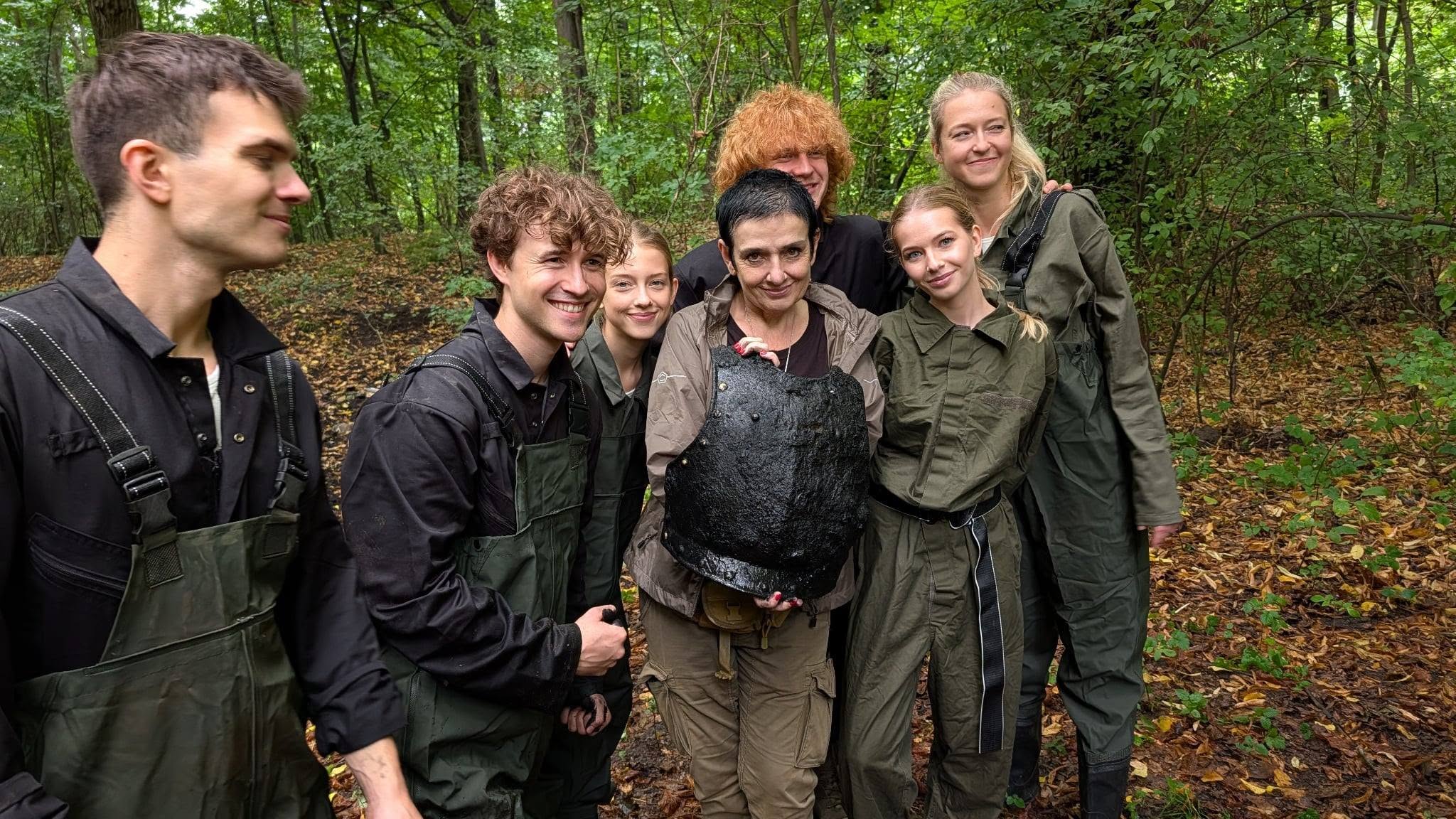
They went into the mud looking for the kind of treasure usually found in an adventure story. Instead, at a historic palace in southwestern Poland, a group of searchers and young actors found something very real: a 19th-century cavalry cuirass hidden beneath the silt of a palace moat.
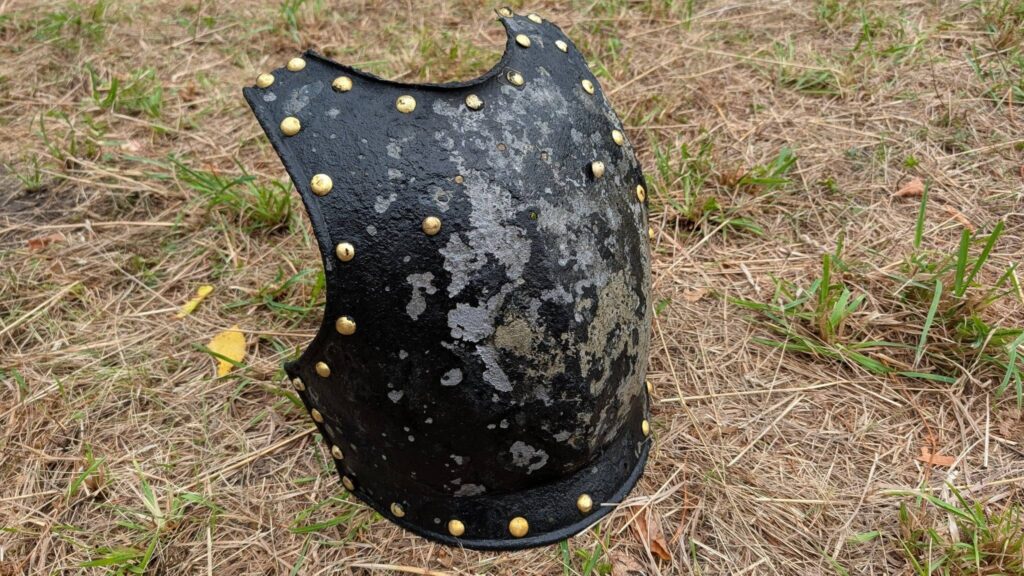
The discovery was made at Pielaszkowice Palace in Lower Silesia, where Wiesław Andrysiak of the DRACO History Explorers Association searched through mud that reportedly reached as high as his waist. According to the Muzeum Domu Śląskiego w Ziębicach, the armour is a 19th-century German guard cuirass and will join the museum’s collection after conservation.
For a treasure hunt that began partly as preparation for a film, the result was unexpectedly serious.
A real treasure hunt in a very muddy moat
The cuirass formed part of the protective equipment worn by heavy cavalrymen. Made of metal and fitted across the torso, such armour was designed to protect soldiers from sword cuts and lance thrusts while giving cuirassiers their unmistakable battlefield appearance.
At Pielaszkowice, however, the armour had spent decades or perhaps far longer in a very different environment. The palace moat had filled with thick mud and sediment, creating the kind of place where lost, discarded or deliberately dumped objects could remain hidden for generations.
The search team also recovered fragments of decorative sculptures and metal fittings linked to the residence, including pieces associated with the palace itself. Together, the finds suggest the moat may hold more than one chapter of the estate’s past.
The palace already had a connection to Napoleon
Pielaszkowice Palace, historically known as Pläswitz, is no ordinary country residence. In 1813, during the Napoleonic Wars, the site became associated with an armistice between Napoleon’s forces and the allied Russian and Prussian armies.
That history makes the discovery of cavalry armour here especially striking, although the cuirass should not automatically be treated as a Napoleonic relic. The museum identifies it more broadly as a 19th-century German guard cuirass, and further study may eventually narrow its date and military affiliation.
The moat may also contain material from a much later conflict. The palace was looted during the final months of the Second World War, and objects from the residence were reportedly thrown toward or into the water. Local residents later recovered valuable porcelain, but much of what disappeared into the moat may have remained there.
The fictional treasure hunt suddenly became real
The expedition itself had a cinematic beginning. Writer and journalist Joanna Lamparska and the Hi! History team organised the search while actors from a new adaptation of Kornel Makuszyński’s Satan from the Seventh Grade joined experienced explorers in the field.
The novel revolves around a mystery involving treasure linked to a soldier from Napoleon’s defeated army. The plan was to give the cast a taste of genuine treasure hunting before filming similar scenes.
Then the mud produced an actual piece of military history.
The cuirass will now undergo conservation before entering the collection of the Muzeum Domu Śląskiego w Ziębicach. And if a substantial piece of cavalry armour could survive unnoticed in the moat, the question now is obvious: what else might still be waiting beneath the mud?