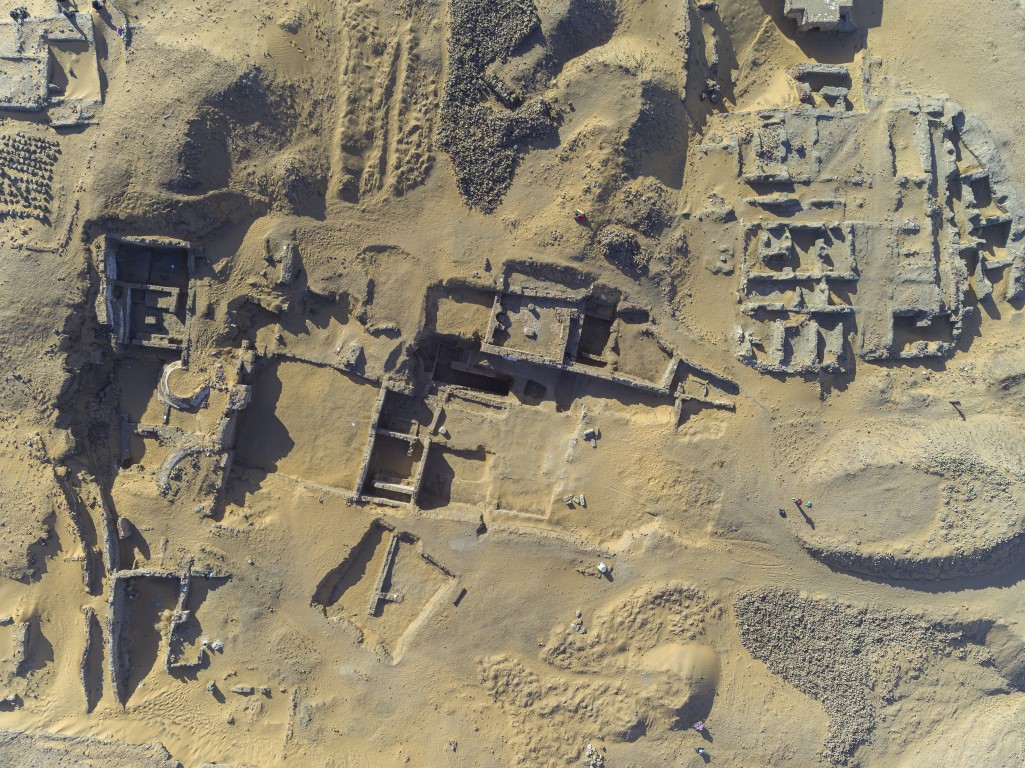
Beneath the sands of Old Dongola in northern Sudan, archaeologists are uncovering a medieval church so enormous that its excavation director compares it to the White House in Washington, D.C. New discoveries inside the monumental building, including a grand staircase and the remains of its original floor, are raising the possibility that it once served as one of the most important cathedrals of Christian Nubia.
Known as the Great Church of Jesus, the structure stands in the former capital of Makuria, a powerful Christian kingdom that flourished along the Nile during the Middle Ages. A joint Sudanese-Polish expedition led by Professor Artur Obłuski of the University of Warsaw’s Polish Centre of Mediterranean Archaeology is investigating its extraordinary dimensions and possible religious significance.
A Church on an Extraordinary Scale
The building measures approximately 47 metres wide and 57 metres long, while researchers cautiously estimate that it may once have stood 21 metres high. Yet much of the church remains buried, and archaeologists have reached its original floor in only one area.
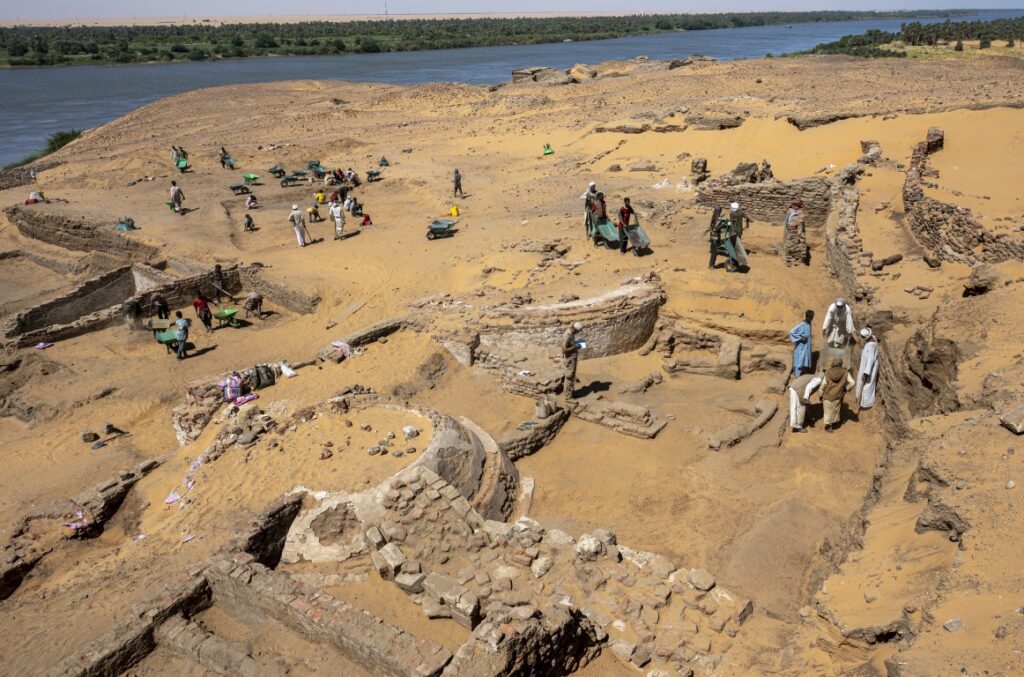
Recent excavations exposed a monumental staircase leading into the church and massive buttresses supporting its apse. Nearby walls still rise to about 11 metres, offering a sense of the enormous structure that once dominated this part of the city.
“This was a building larger than the famous White House in Washington, DC – and we are planning to excavate it!” Obłuski said.
The archaeologist hopes the next excavation season will establish the building’s full dimensions. Reaching its deepest levels, however, will require unusually extensive excavation work and substantially greater resources.
Could This Have Been Nubia’s Cathedral?
The discoveries are prompting researchers to reconsider the religious importance of Old Dongola’s monumental architecture. Until now, another church outside the city’s fortifications has generally been regarded as its cathedral.
Obłuski believes the Great Church of Jesus may have occupied a more influential position. He compares its potential architectural importance to that of Hagia Sophia in Constantinople, which helped shape religious architecture far beyond its own city.
For Nubia, the Great Church of Jesus may have played a similar role, influencing how later churches were designed and constructed. Whether it actually served as a cathedral remains uncertain, but its size and prominent position make the question increasingly significant.
Another Church, Painted Walls and Ancient Prayers
The excavation also produced an unexpected discovery: a smaller church on the upper floor of a structure adjoining the enormous building.
Although its walls survive to a height of only about one metre, researchers recovered enough painted plaster to fill six large shelving units. The fragments suggest that the interior once carried extensive religious decoration, much of which has disappeared from the surviving walls.
Among the debris were fragments bearing carefully written Greek inscriptions. Expedition epigrapher Dr. Agata Deptuła identified them as passages from biblical canticles, including part of the prayer of Hannah, the mother of the prophet Samuel. The letters measure only about half a centimetre in height.
First identified in 2021, the Great Church of Jesus has yielded only a fraction of its architectural history. As excavations continue, the building may force historians to reconsider not only the location of Old Dongola’s cathedral but also the influence of its religious architecture across medieval Nubia.