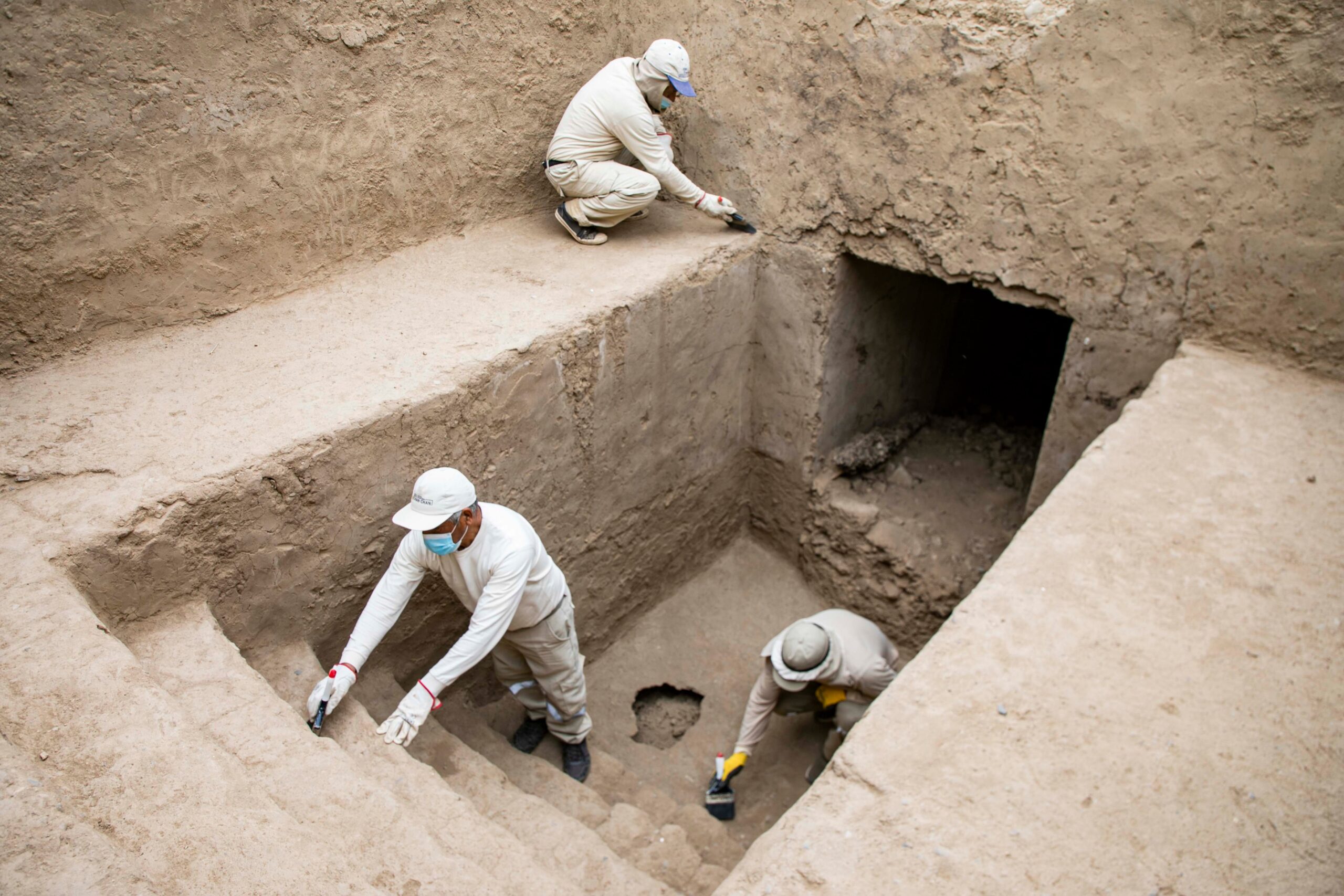
Archaeologists working at Chan Chan in northern Peru have uncovered a nearly intact Chimú funerary platform containing the remains of 38 people, along with metal objects, shell ornaments and other grave goods that had remained underground for more than 600 years.
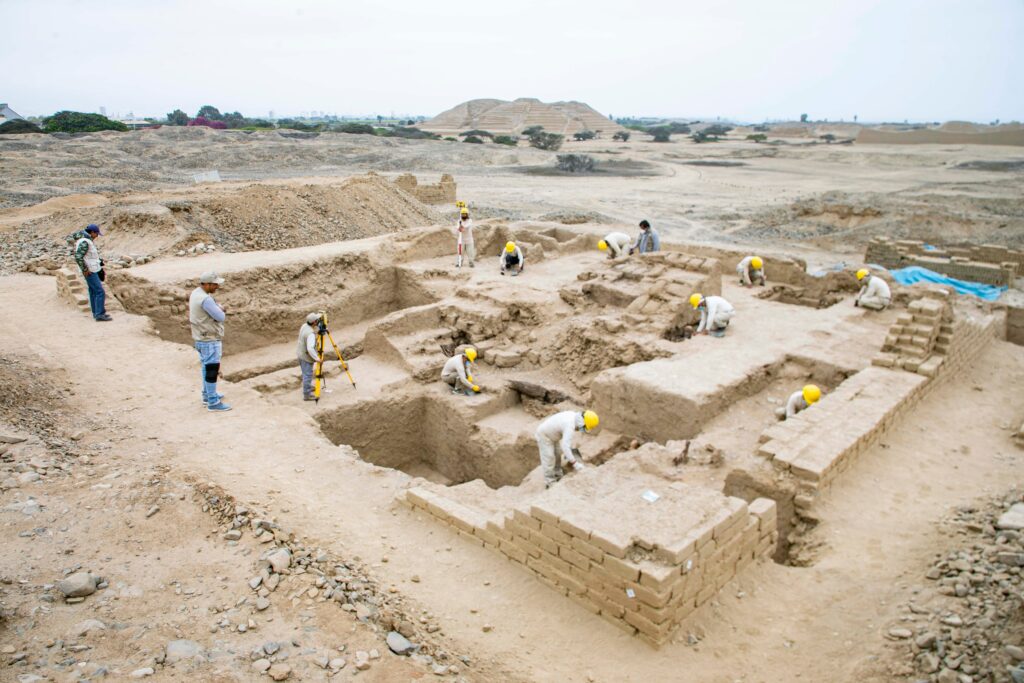
The discovery was made inside Utzh An, formerly known as the Gran Chimú Palace, the largest of the walled compounds at Chan Chan. Peru’s Ministry of Culture announced the find following archaeological research and conservation work carried out by the Chan Chan Archaeological Complex Special Project.
What initially appears to be a single burial structure is far more complex. The platform contains a central chamber and two long lateral chambers, each with a different funerary arrangement.
A chamber reached by descending underground
Archaeologist Jorge Meneses, who leads the investigation, said the central chamber measures about 1.2 meters wide and five meters deep. A staircase descends approximately 2.5 meters from the entrance into the chamber, where archaeologists also identified a wall niche.
Inside lay the remains of an individual accompanied by numerous objects made from shell and metal. Their concentration around the burial is one of the reasons researchers associate the context with a person of elevated social standing.
The two side chambers are considerably longer, each measuring roughly eight meters in length and 1.5 meters in width. They descend about 3.5 meters below the working surface.
Yet their contents were strikingly different.
One chamber contained no human remains but held weapons and metal emblems. In the other, archaeologists have so far documented 20 individuals. Together with 18 additional burials discovered elsewhere within the platform, the total has reached 38.
One burial does not follow the usual Chimú pattern
Among the individuals, one burial has attracted particular attention because the body was placed fully extended at the bottom of a chamber.
According to Meneses, this position differs from the funerary arrangements more commonly associated with Chimú burials, in which bodies were often placed flexed or seated in a flexed position.
The unusual treatment does not yet explain who the person was or why the burial differed from the others. But because the funerary complex has survived in unusually good condition, archaeologists can study the relationship between the bodies, architecture, and objects largely in the positions in which they were originally deposited.
That context may ultimately prove more valuable than any individual artifact.
A window into the elite of Chan Chan
Chan Chan was the capital of the Chimú kingdom, which dominated much of Peru’s northern coast before its incorporation into the Inca Empire in the 15th century.
At its height, the enormous earthen city was organized into monumental walled compounds containing ceremonial spaces, residences, storerooms, reservoirs and funerary platforms. UNESCO describes Chan Chan as the largest city of earthen architecture in pre-Columbian America and notes that its carefully divided urban plan reflects the highly hierarchical organization of Chimú society.
Utzh An itself has long been recognized as an important part of that political and ceremonial landscape. Earlier investigations had already identified funerary areas within and around the compound, suggesting that burial activity continued there even after some parts of the complex changed function.
The newly uncovered platform now provides a much more concentrated archaeological record.
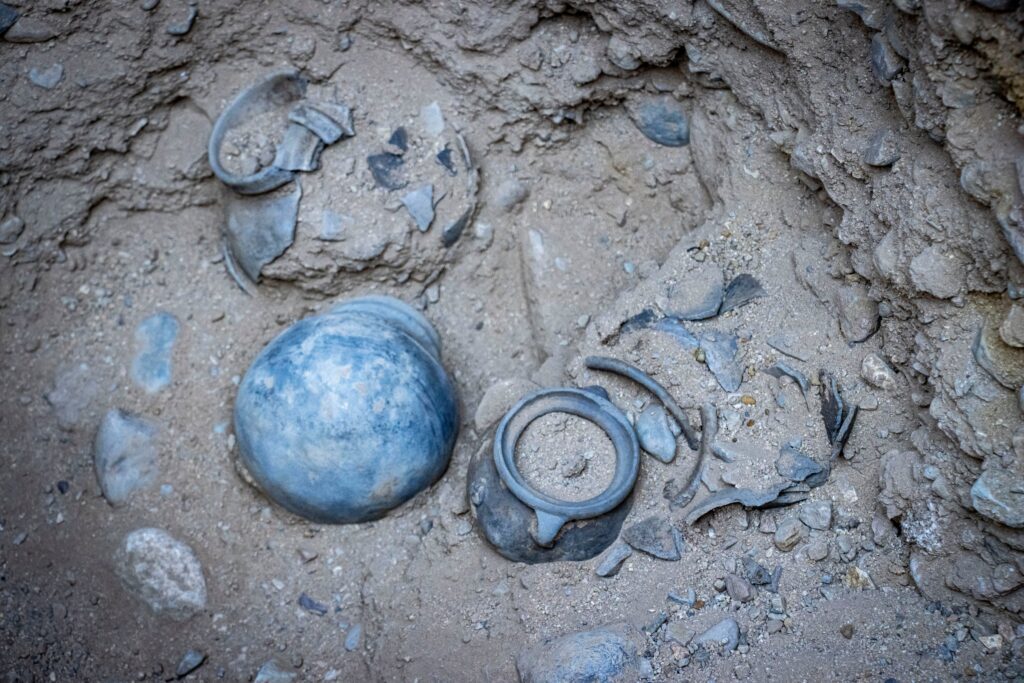
Weapons, metal insignia, shell objects and carefully organized burial chambers indicate that those interred here occupied an exceptional social context. Researchers, however, will need further study of the human remains and associated objects before determining the identities, relationships or precise roles of the 38 individuals.
For now, the significance of the discovery lies in something unusually rare at a major archaeological site: an elite Chimú funerary space that survived largely undisturbed for centuries, preserving not only its dead but the arrangement of the world that was constructed around them.