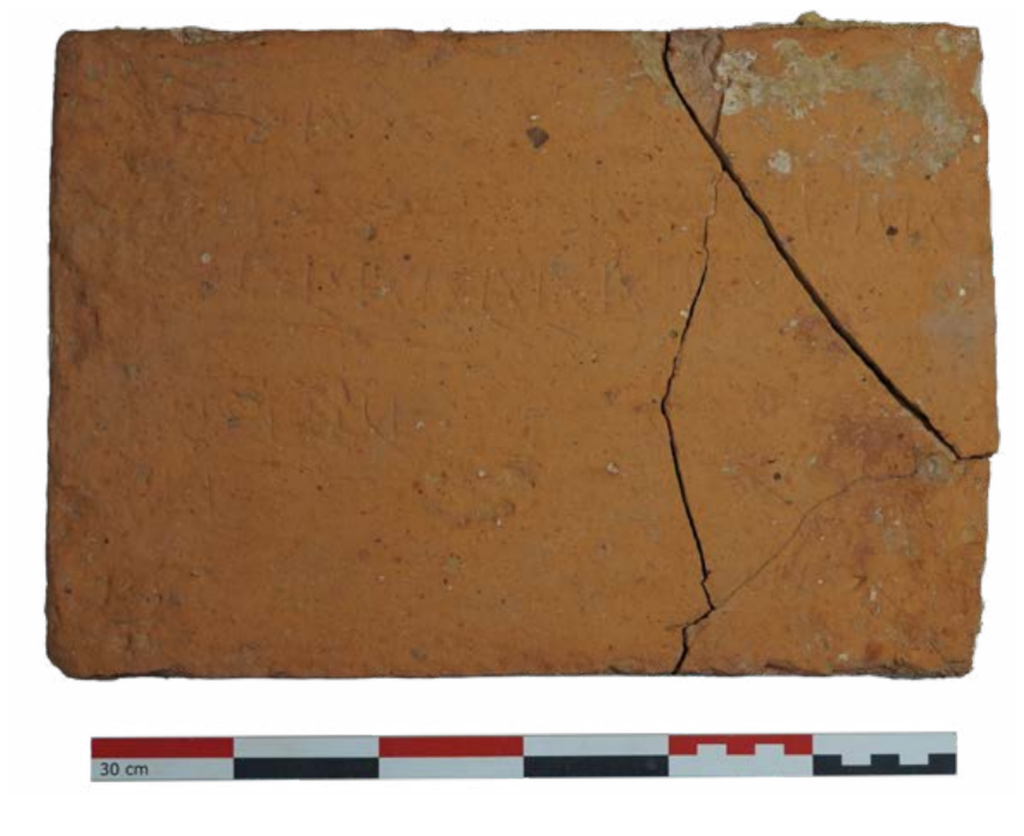
A few scratched marks on a floor tile from a Roman villa in Luxembourg may preserve something unexpectedly personal: the working account of an ancient craftsman.
Archaeologists excavating the Gallo-Roman villa at Buschdorf, in the country’s Helperknapp municipality, uncovered an inscribed floor slab during work in 2025. Luxembourg’s National Institute for Archaeological Research, or INRA, says the inscription probably represents an account made by a tiler connected with the workshop that produced the building material.
It is a small find compared with the walls, heating installations and graves uncovered across the site. Yet it may offer one of the most direct glimpses into the people who actually built and maintained the villa.
Someone changed the heating system
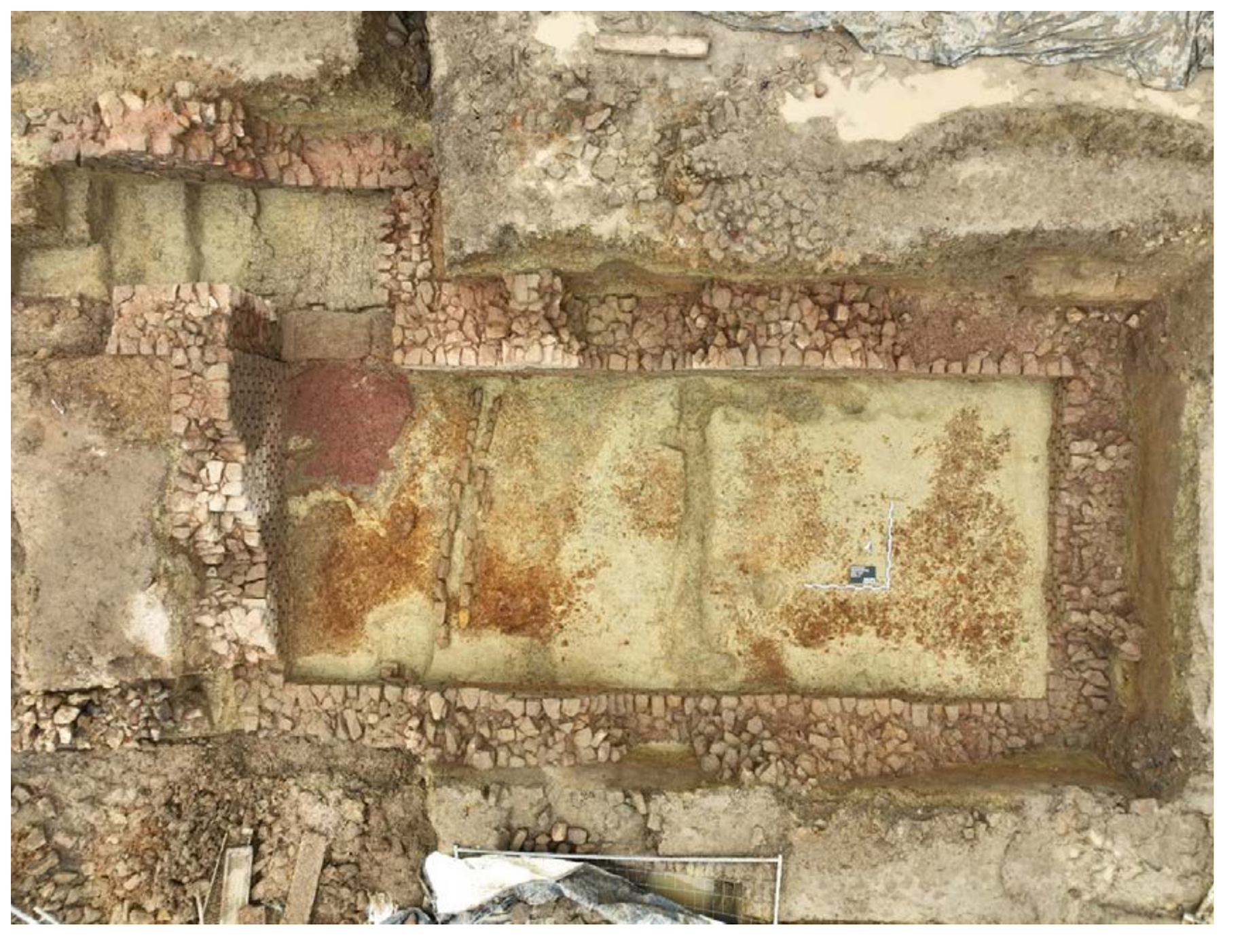
The discovery came from a newly opened section of the Buschdorf “Helperterwee” excavation, where archaeologists exposed part of the Roman villa with preserved floor levels and remains of a hypocaust.
Hypocausts carried hot air beneath floors and sometimes through wall cavities, allowing wealthy Roman buildings to heat rooms without open fires. But the Buschdorf system did not remain unchanged.
Archaeologists found that its original small supports, or pilae, had later been moved against the walls of the room. Builders then replaced the earlier arrangement with a channel-based hypocaust system. The modification suggests that the villa underwent substantial alterations during its lifetime rather than following one fixed architectural plan.
INRA notes that numerous architectural changes can be seen throughout the structure, showing that its internal organization evolved over time.
And somewhere within that history of renovations, one tile acquired an inscription.
A craftsman’s numbers rather than a grand Roman text
There is no monumental dedication here, no emperor announcing a victory and no carefully carved epitaph.
INRA’s interpretation is much more ordinary, and perhaps more interesting.
The inscribed floor slab may contain “a tiler’s account” from the production workshop. The report does not yet provide a full transcription or explain exactly what was being counted, so it would be premature to turn the markings into a detailed story about wages, quantities or deliveries.
But the proposed interpretation opens a window onto an aspect of Roman architecture that finished villas rarely reveal: the organization of the people producing their building materials.
Roman construction required enormous quantities of standardized material, from roof tiles and bricks to the components needed for underfloor heating. Behind an elegant villa stood workshops, craftspeople, transport and calculations.
A hastily marked account, if that interpretation is confirmed, belongs to that less glamorous world of ancient building work.
Romans left the villa, but the story did not end
Buschdorf has already shown that its history stretches beyond the period when the villa functioned as a Roman residence.
Excavations in 2024 helped archaeologists clarify the plan of the complex and understand how it was dismantled after Antiquity. Investigators also found evidence that people later used the ruins as a Merovingian burial ground. Some graves were cut directly into Roman floors and walls.
The 2025 campaign added more burials. Several Merovingian graves appeared within the demolition layers of the villa, and INRA says the human remains will undergo anthropological study.
That creates an unusual sequence at Buschdorf. A Roman villa was constructed, heated, altered and eventually abandoned. Generations later, people returned to the ruined building and buried their dead among its remains.
Between those larger historical chapters lies the inscribed tile: a modest object that may record nothing more dramatic than a craftsman keeping track of his work.
Yet that may be precisely what makes it compelling. Archaeology often reconstructs Roman life through villas, roads and monuments. At Buschdorf, a few marks on a piece of building material may bring us closer to the person standing behind them nearly two millennia ago.
Luxembourg’s National Institute for Archaeological Research (INRA)