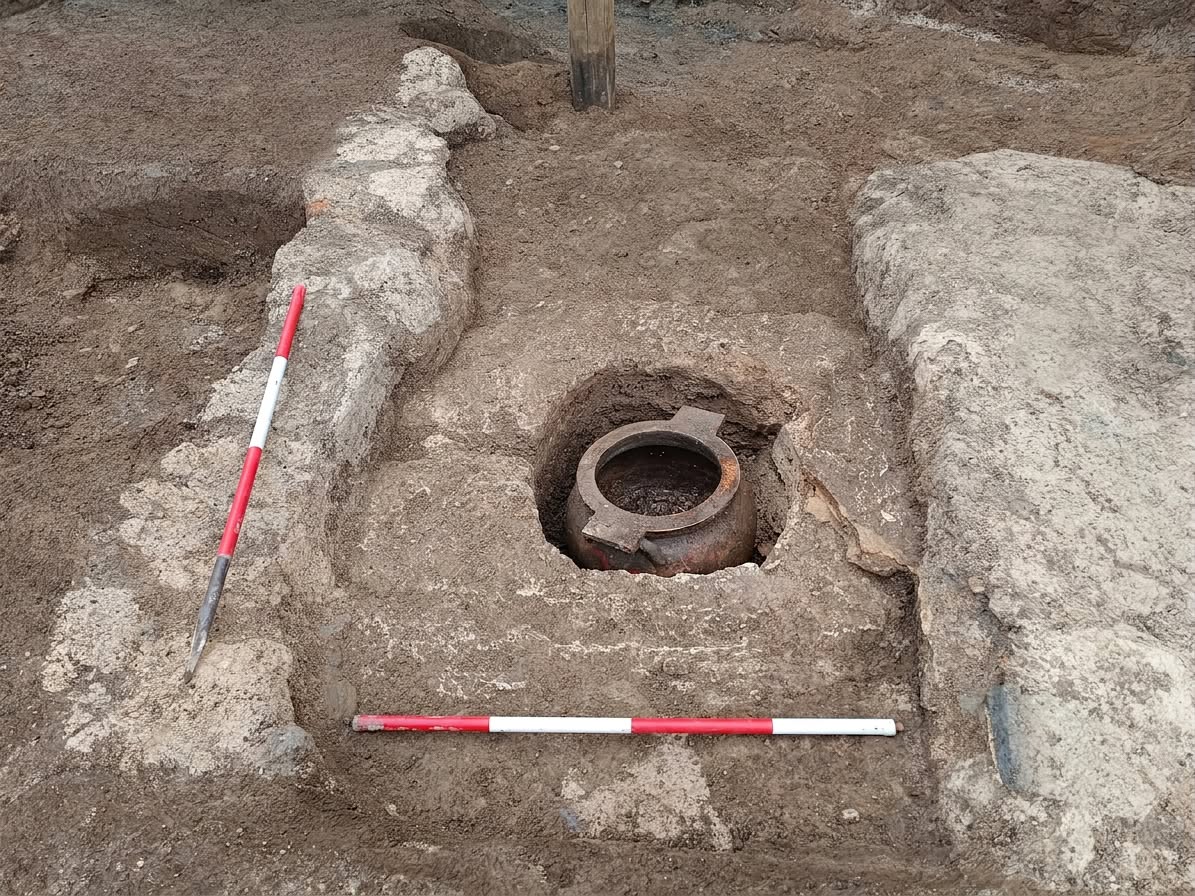
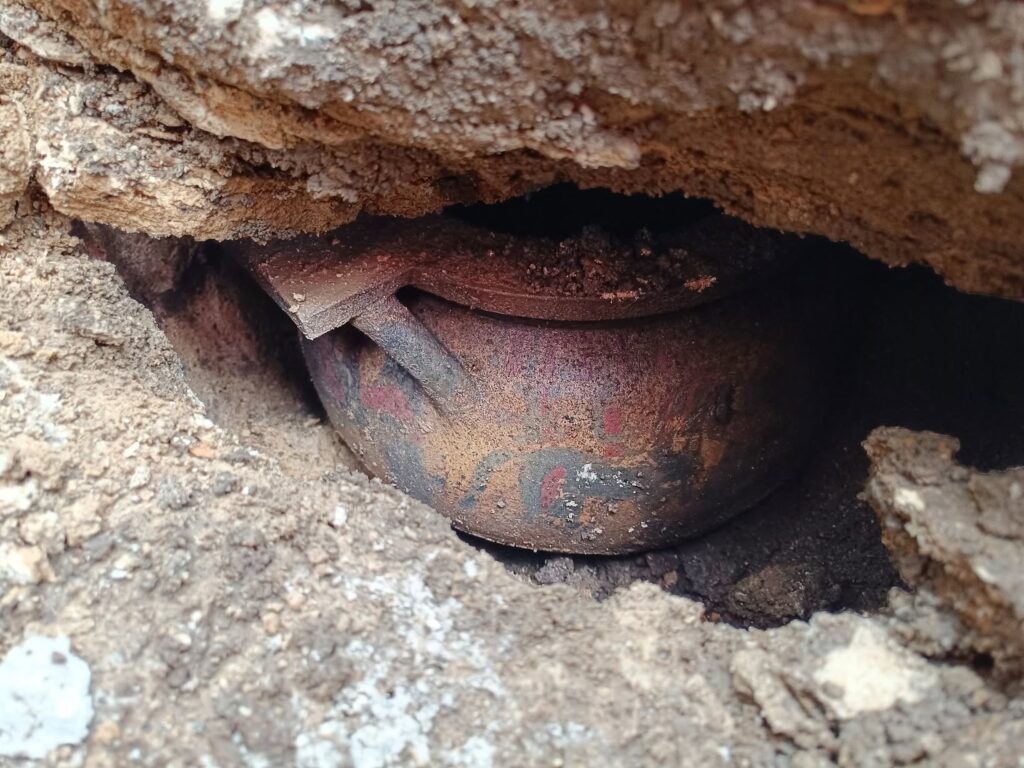
A ceramic vessel made in ancient Corinth more than 2,600 years ago has emerged from an unusual tomb in southern Italy, still carrying traces of the imagery that once decorated its surface. But archaeologists quickly realized that this was not simply another imported Greek pot placed beside the dead.
The large krater had become the tomb itself in miniature. Inside were the cremated remains of a person whose burial appears to have been carefully designed to signal wealth, connections and social standing.
A Greek vessel hidden inside stone
The discovery was made at Pontecagnano Faiano, near Salerno, during archaeological investigations conducted before the construction of a private building complex. Excavations exposed part of the ancient settlement’s western necropolis, including four graves dating to the first half of the 6th century BCE.
One burial, identified as Tomb 10188, immediately stood apart. Archaeologists found the figured Corinthian krater enclosed within a compact structure made of travertine blocks and originally sealed beneath a stone slab.
The arrangement belongs to a burial form known as a “cube tomb.” Although similar graves are known elsewhere in northern Campania, they are exceptionally uncommon at Pontecagnano.
Only two other examples had previously been identified there.
Credit: Ministero della Cultura – Soprintendenza ABAP di Salerno e Avellino
A wine vessel given a very different purpose
Kraters were among the most recognizable objects of the ancient Mediterranean drinking world. They were large vessels used to mix wine and water during the symposium, a social ritual closely associated with banquets, conversation, and elite display.
In Tomb 10188, however, the krater had been given a far more intimate role. It held the cremated bones of the deceased.
That choice was probably significant. Rather than placing an expensive imported object beside the dead as a prestigious possession, the mourners made it the physical container of the burial itself.
Its origin adds another dimension. The vessel was produced in Corinth and transported across the Mediterranean before eventually reaching the Etruscan community at Pontecagnano, providing another glimpse of the commercial and cultural contacts that connected Campania with the Greek world.
A burial that spoke about status
According to the Soprintendenza Archeologia, Belle Arti e Paesaggio di Salerno e Avellino, the combination of cremation, the stone tomb structure, the imported krater and its figured decoration points toward a person of elevated social standing.
The message of the burial may therefore have been clear to anyone who witnessed the funeral. The deceased was associated not only with costly objects, but also with a Mediterranean culture of drinking, exchange and elite social behavior.
For archaeologists, the discovery is particularly valuable because Tomb 10188 is only the third cube tomb known from Pontecagnano. The other two, Tombs 1840 and 9954, are already displayed at the National Archaeological Museum “Gli Etruschi di frontiera.”
From the necropolis to the museum
The newly recovered objects have now been transferred to the museum for preliminary study and conservation. Archaeologists expect the material from the excavation to be presented to the public after the first phase of research and restoration is completed.
For the moment, one image tells much of the story: a painted Corinthian vessel appearing through the earth, protected for more than two and a half millennia inside a rare stone tomb—and still holding the remains of the person for whom it was chosen.
Soprintendenza Archeologia Belle Arti e Paesaggio di Salerno e Avellino