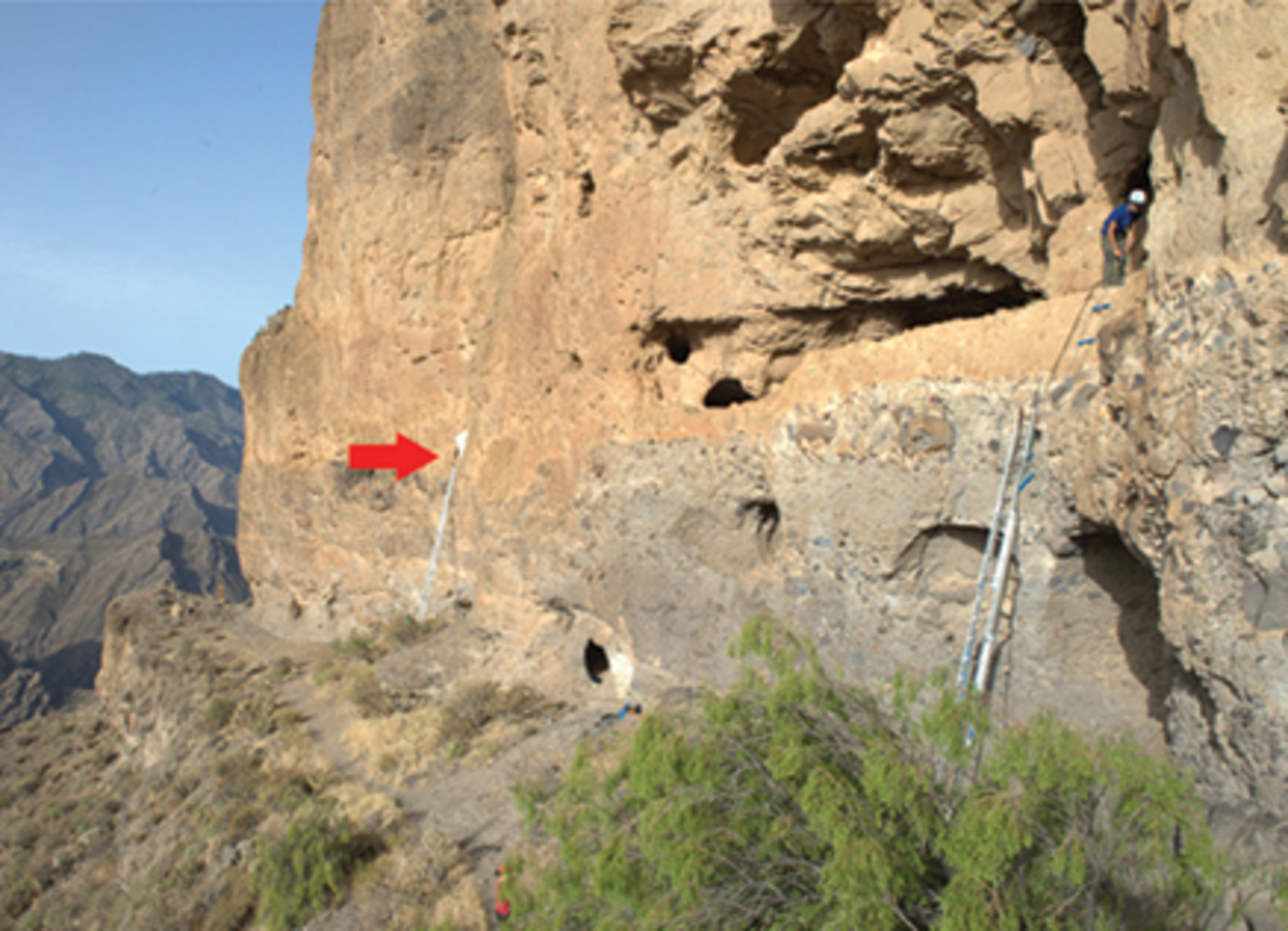
For more than a thousand years, a cave high on Gran Canaria’s Acusa plateau kept the details of an unusual burial practice sealed inside. Now, the clues have come not from weapons, jewellery or inscriptions, but from thousands of insects preserved in the sediment.
Researchers studying the Cruz de la Esquina burial cave recovered more than 8,000 arthropod remains. Their analysis suggests that Indigenous communities placed bodies inside the cave soon after death, challenging the idea that the dead may have been left outside for prolonged drying before burial.
The study, published in Antiquity, focuses on archaeoentomology, the use of insect remains to reconstruct past human activity. In funerary settings, insects can reveal when a body began decomposing, whether it lay outdoors or underground, and whether people moved it after death.
The insects arrived early
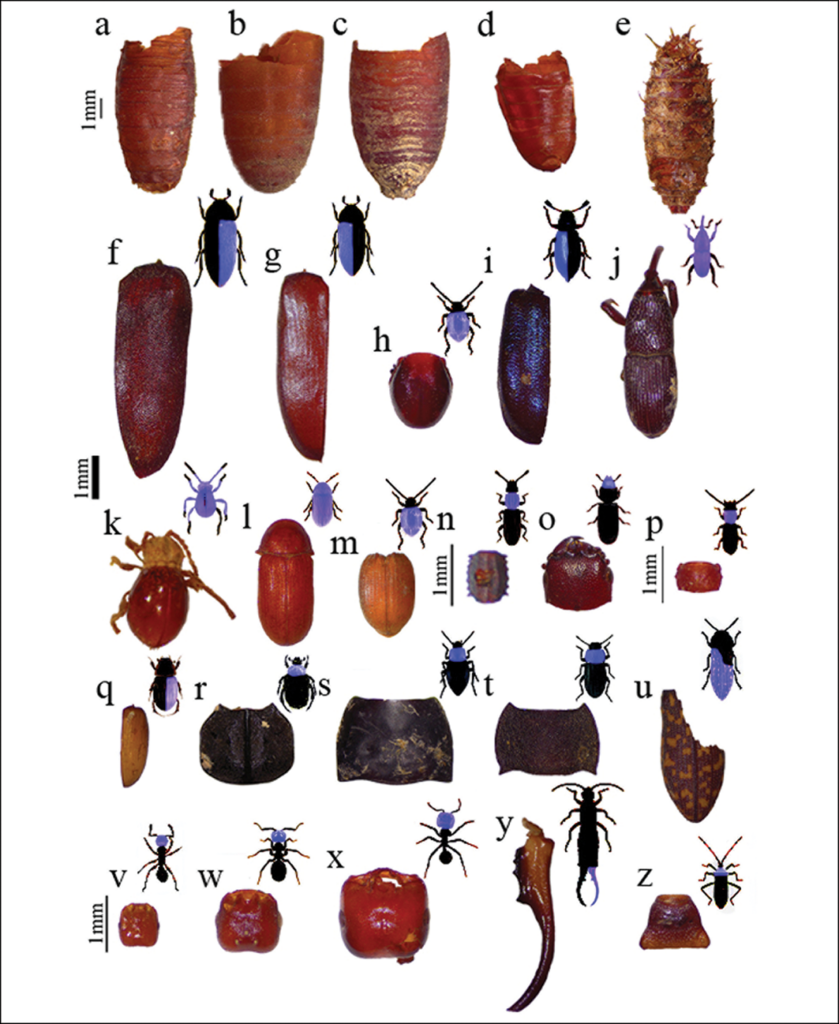
The team recovered 8,173 arthropod remains from Cruz de la Esquina and identified 8,082 of them. Many belonged to flies and beetles that colonise corpses at specific stages of decomposition, creating a biological timeline of what happened after death.
Blowflies and flesh flies proved especially important because they usually reach a body very early. More than 1,000 pupal remains from these groups indicate that the dead entered the cave shortly after death and decomposed there rather than arriving only after a long period of outdoor exposure.
Later-stage beetles complete the picture. Together, the species suggest that decomposition continued inside the cave, with no entomological evidence for prolonged external desiccation.
That finding matters because researchers have debated whether Indigenous Canary Islanders exposed bodies to sunlight before placing them in burial caves. The new study does not settle every funerary practice across the archipelago, but at Cruz de la Esquina the evidence points clearly toward rapid deposition after death.
Then the cave revealed another secret
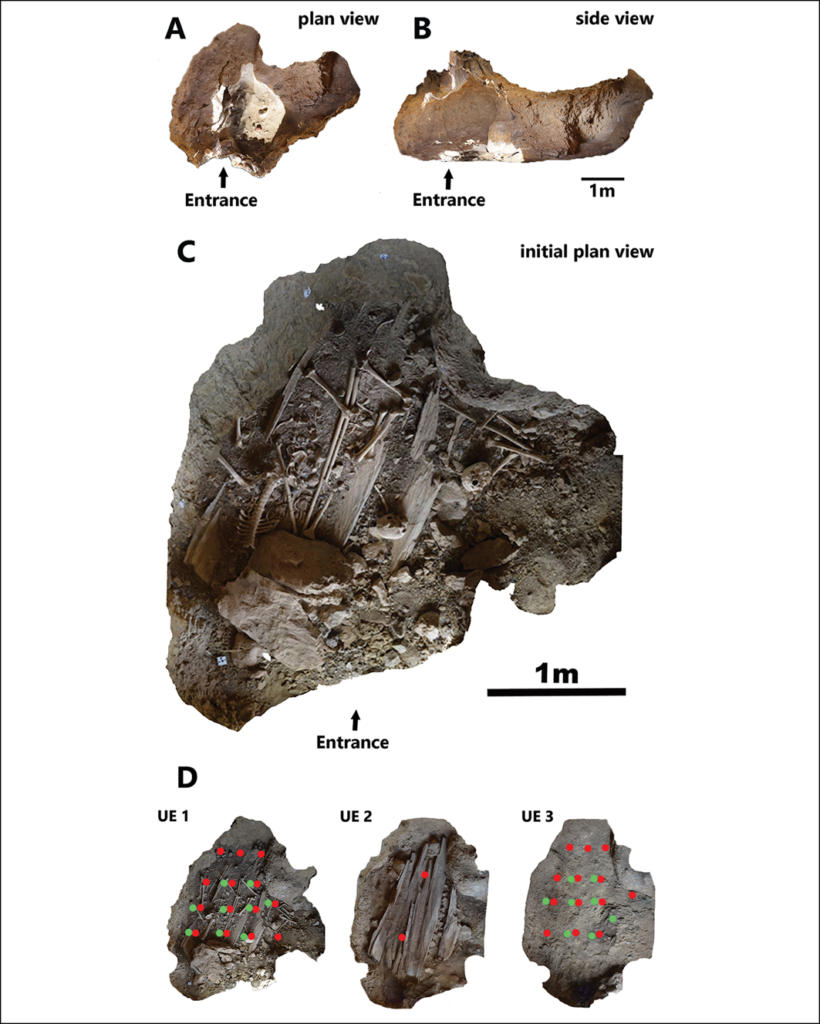
The insects also uncovered something researchers were not looking for at first: the burial chamber had an earlier life.
Around 21 percent of the identified insects belonged to species associated with stored food, while storage pests appeared in 76 percent of the sediment samples. That pattern strongly suggests that people used the cave as a granary before converting it into a place for the dead.
One of the clearest indicators was Sitophilus granarius, the granary weevil. Because the flightless insect spreads mainly when humans move infested grain, archaeologists use it as a strong marker of cereal storage.
Radiocarbon dates support the sequence. A barley seed dates to AD 660–770, while human remains and funerary insects fall broadly within the seventh to ninth centuries; a granary weevil from the burial platform dates to AD 772–974.
The researchers think the change happened quickly. People may have built the wooden burial platform over traces of cereals that still remained on the cave floor, allowing grain pests to survive even after the chamber became a burial space.
At Cruz de la Esquina, insects preserved two stories at once: how the dead entered the cave, and what the cave had been before them. Tiny remains, in this case, preserved a surprisingly detailed record of both life and death.
Henríquez-Valido, P., Huchet, J.-B., Morales, J., & Rodríguez-Rodríguez, A. (2026). Buried in the pantry: using archaeoentomology to assess cave reuse at the pre-Hispanic site of Cruz de la Esquina. Antiquity, 1–18. doi:10.15184/aqy.2026.10407