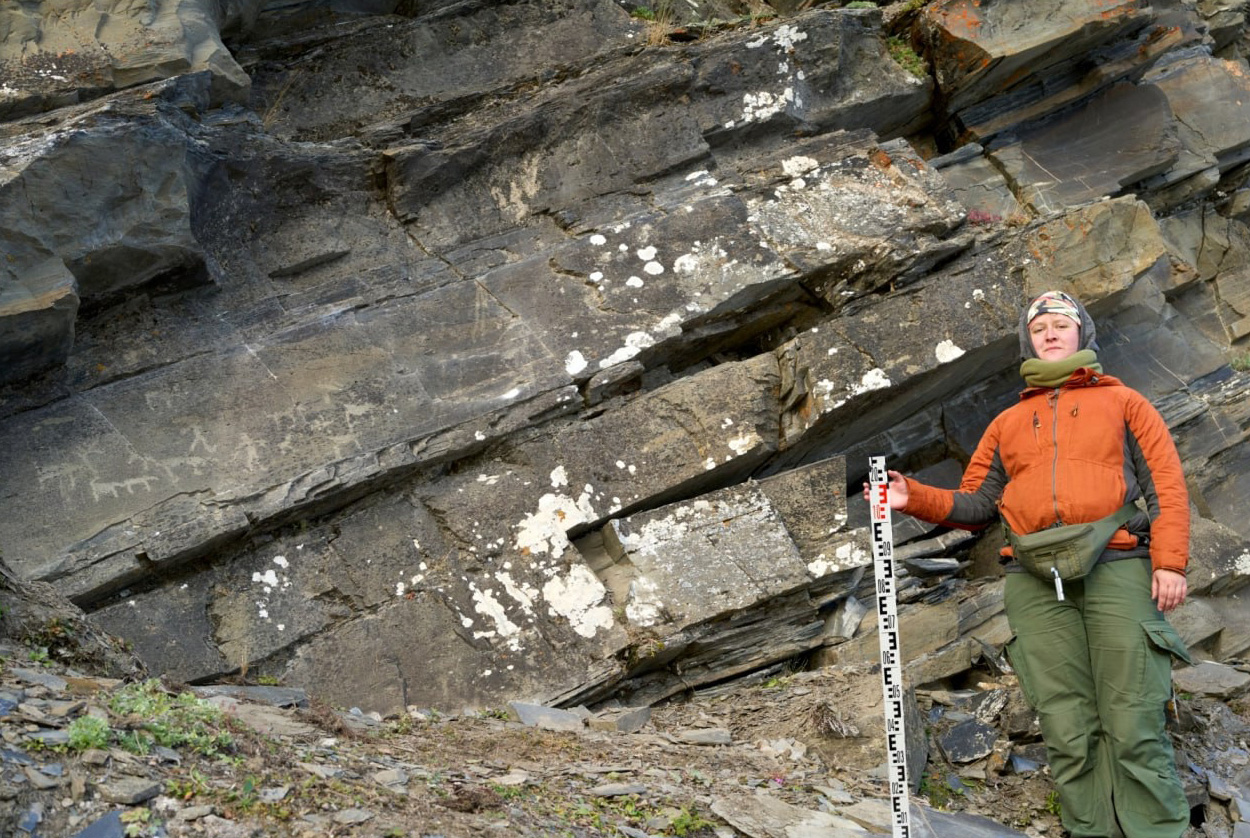
Far beyond the Arctic Circle, in one of the most difficult archaeological landscapes in Eurasia, researchers have uncovered new traces of a prehistoric world carved into stone. During a 2026 expedition along the Pegtymel River in Chukotka, archaeologists documented 31 previously unknown petroglyph surfaces and identified a new rock-art locality.
Chukotka lies at Russia’s far northeastern edge, across the Bering Strait from Alaska. The Pegtymel petroglyphs stretch along rocky cliffs in this remote region, where access remains difficult and fieldwork often requires specialized equipment.
Researchers from the Institute of Archaeology of the Russian Academy of Sciences returned to the area in August with a clear goal: to complete the digital documentation of every known petroglyph at Pegtymel.
Their work did more than finish a long-running recording project.
A landscape larger than expected
The team focused first on the main Keeneikuul locality, where researchers have studied the rock art for decades. Some panels sit on steep and difficult sections of cliff, forcing the team to use climbing equipment to reach them safely.
As archaeologists mapped the area and cleared partially buried rock blocks, they found additional decorated surfaces in places once considered empty. The number of known petroglyph surfaces at Keeneikuul has now reached 680.
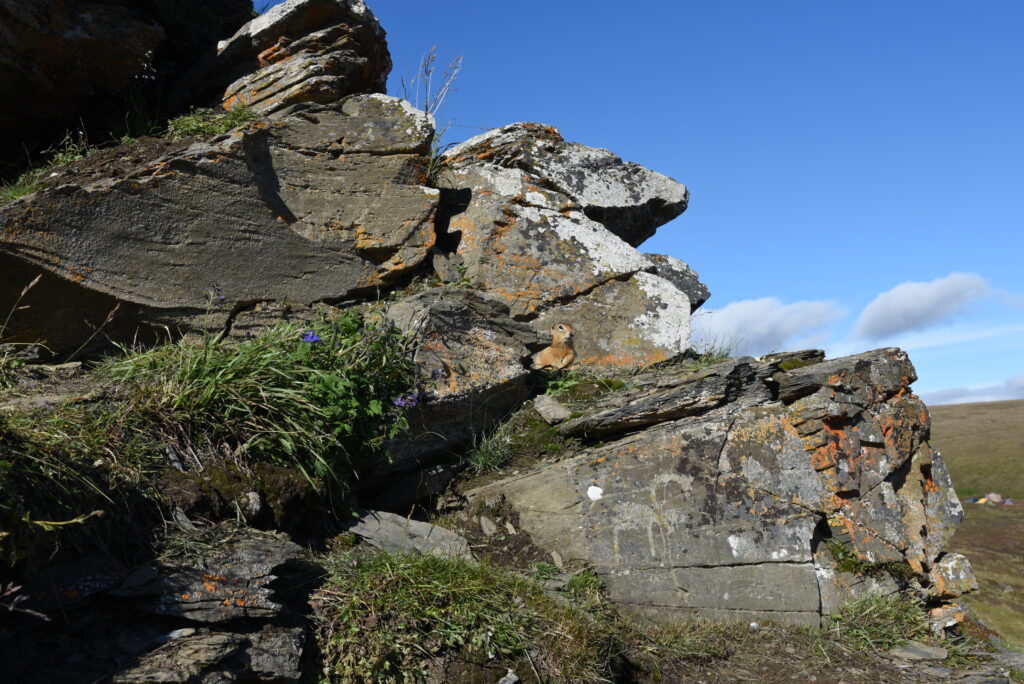
The survey then expanded eastward across the Keeneikuul-Kychakvaam escarpment, a rocky zone stretching for more than 10 kilometers.
Previous expeditions had searched parts of this landscape without finding major new concentrations. This time, systematic mapping produced a different result.
Researchers identified a previously unknown rock-art locality containing nine decorated surfaces. Across the wider Pegtymel area, the number of known and documented surfaces has now reached 690, including 31 that researchers had not recorded before.
More than rock art
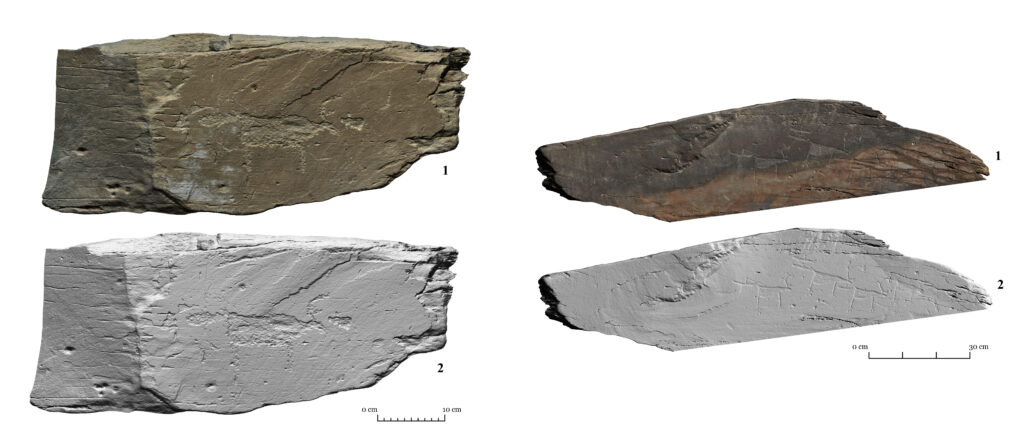
The expedition also searched for artifacts scattered across the surrounding terrain. In the eastern part of Keeneikuul, researchers traced concentrations of archaeological material that may point to another prehistoric activity area.
The pattern suggests that people may once have worked stone and bone east of a hunting camp excavated in 1968 by archaeologist Nikolai Dikov. Researchers have not yet confirmed the presence of another campsite, but the finds strengthen the idea that Pegtymel formed part of a broader cultural landscape rather than an isolated collection of carvings.
Dikov began investigating the Pegtymel petroglyphs in 1967. Archaeologists from the Institute of Archaeology have continued systematic research there since 2005.
Building a digital Arctic archive
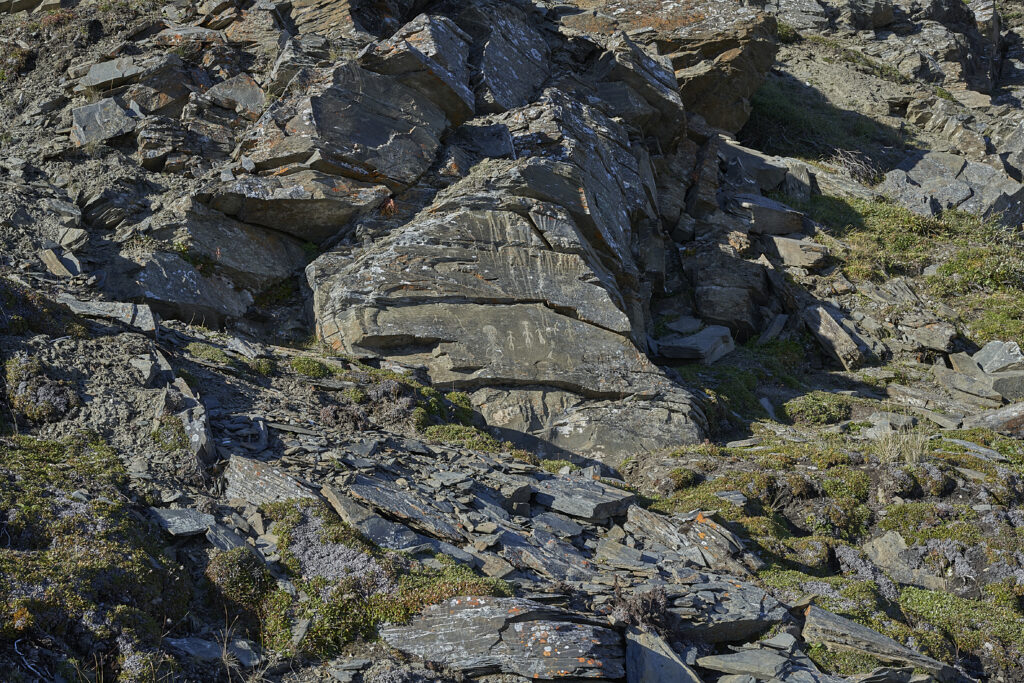
The most important result of the 2026 season may be the completion of the site’s digital record. Researchers have now documented every Pegtymel petroglyph currently known and fixed their positions with geodetic precision.
The project also includes three-dimensional modeling, detailed mapping and virtual access to parts of the site. These tools could prove especially important at Pegtymel, where the exposed Arctic environment continues to damage the rock surfaces.
The new data will help archaeologists refine the boundaries of individual rock-art localities and support future conservation work.
Researchers also hope to create a public virtual museum, allowing people to explore one of Eurasia’s most remote rock-art landscapes without traveling to Chukotka.
For a site this isolated, digital preservation is becoming almost as important as discovery itself.