Archaeologists in northwestern China have uncovered a vast late Warring States-period mausoleum whose scale and layout place it among the highest-ranking Qin royal burials identified around ancient Xianyang. The architecture alone makes the site important, but the woman who may have been buried there gives the discovery a much larger historical dimension.
Researchers from the Shaanxi Academy of Archaeology believe the Shangzhaoyao Qin Mausoleum may have belonged to Queen Dowager Huayang, one of the most influential women at the Qin court before the rise of China’s First Emperor. No inscription has yet confirmed her identity, but the tomb’s date, design, and relationship with nearby royal cemeteries make her the leading candidate.
If that interpretation proves correct, archaeologists may have found the burial place of a woman whose decision to adopt a relatively obscure Qin prince helped reshape the royal succession and, indirectly, the path that eventually brought Qin Shi Huang to the throne.
A Royal Cemetery Beside Xi’an Xianyang Airport
The site first drew archaeological attention in 2018 during work connected with the expansion of Xi’an Xianyang International Airport. Further excavation and survey clarified its scale and organization, and researchers named the complex after the nearby former village of Shangzhaoyao.
The mausoleum occupies a nearly square area about 600 by 580 meters and follows a carefully ordered plan with inner and outer boundaries. At its center lies a monumental tomb with four sloping passageways extending from the burial chamber, creating a plan that resembles the Chinese character “亚.” This tomb form belonged to the highest levels of Qin funerary architecture during the late Warring States period.
Archaeologists have identified 45 accompanying tombs, 15 associated burials and 62 sacrificial pits across the cemetery. Some subsidiary graves had their own chariot-and-horse pits or separate boundary ditches, showing that the complex functioned as an organized royal funerary landscape rather than a single monumental grave.
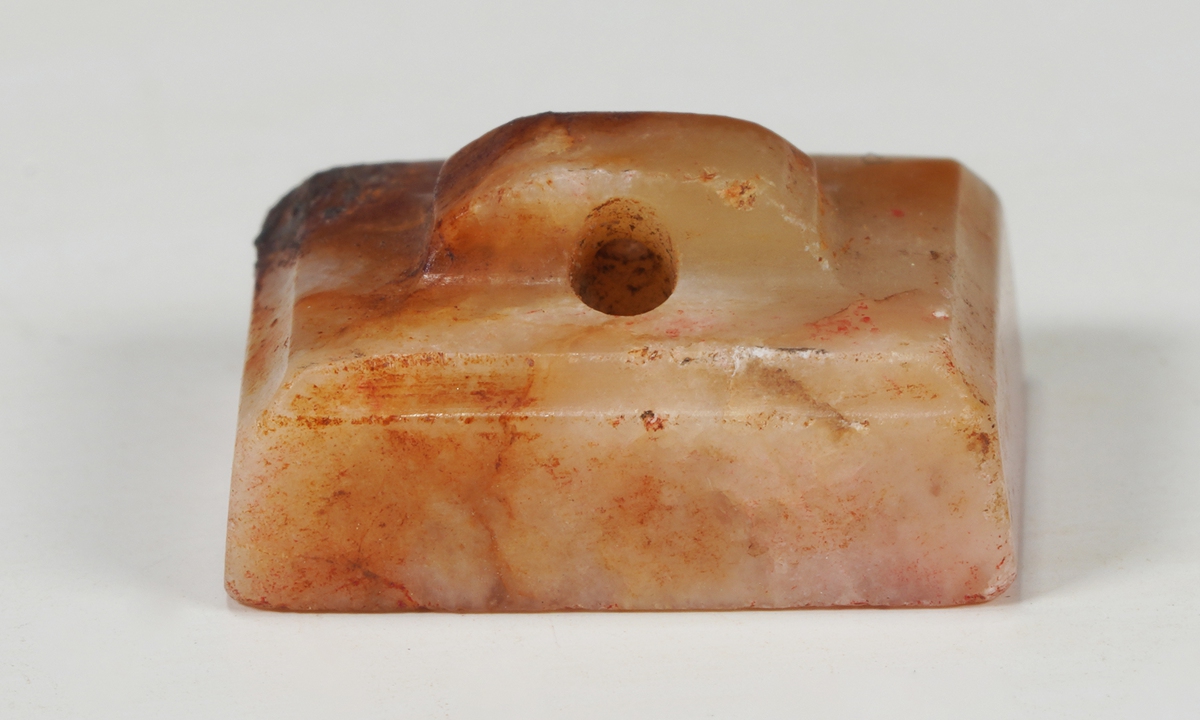
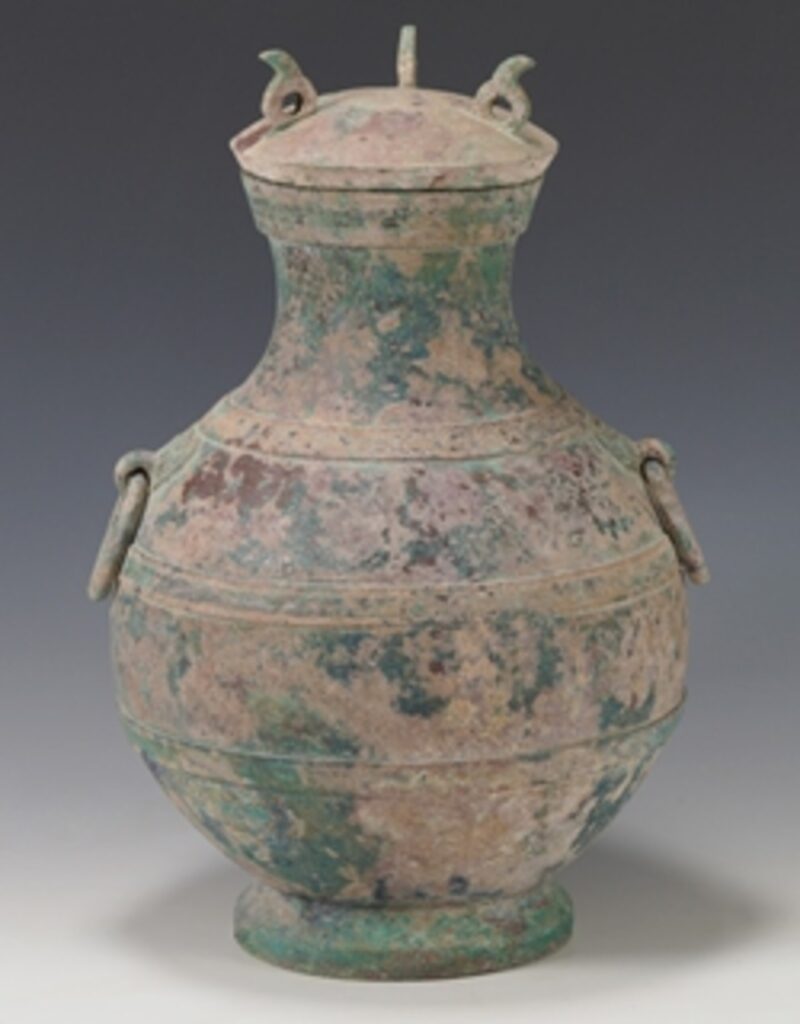
Excavations also produced 258 objects or groups of objects made from pottery, bronze, iron, lead, jade, glass and bone. Bronze ritual vessels, jade pieces and other high-status materials fit the cemetery’s elite character, while stamped inscriptions on pottery may offer additional evidence about Qin administration and craft production.
Why Archaeologists Suspect Queen Dowager Huayang
The strongest argument for Huayang comes from comparison rather than a single spectacular find.
The Xianyang region already contains several known Qin royal cemetery complexes, including Zhoulingzhen, Yangjiagou, and Sijiazhuang. Shangzhaoyao lies only about 2.3 kilometers from Sijiazhuang and shares important similarities with it in overall planning and tomb architecture.
Researchers have compared the cemeteries through their location, scale, burial forms, and chronology, then tested those patterns against historical records and known Qin royal genealogy. That process has led them to Queen Dowager Huayang as the most plausible occupant of Shangzhaoyao, although the identification remains archaeological rather than epigraphically proven.
Radiocarbon dates from human remains in the accompanying tombs fall between 389 and 208 BCE, placing the cemetery comfortably within the period when the Qin state transformed from one of several competing kingdoms into the power that would eventually unify China.
The Woman Behind a Crucial Qin Succession
Huayang’s importance lies in a court decision made long before Qin Shi Huang became emperor.
She was the principal wife of Lord Anguo, who later ruled briefly as King Xiaowen of Qin, but she had no son of her own. Among Anguo’s many sons was Yiren, a prince living in Zhao as a political hostage whose chances of inheriting the Qin throne initially appeared limited.
The merchant and political strategist Lü Buwei saw an opportunity in Yiren and worked to improve his position at the Qin court. Historical accounts describe how Huayang eventually adopted Yiren as her son, giving him the support he needed to enter the succession.
Yiren later became King Zhuangxiang of Qin. His son, Ying Zheng, inherited the throne in 247 BCE and eventually conquered the remaining rival states before proclaiming himself Qin Shi Huang in 221 BCE.
Huayang therefore stands at a critical point in the dynasty’s political history. Her adoption of Yiren did not create the Qin Empire by itself, but it helped determine the line of succession from which China’s First Emperor emerged.
Forty-Five Women Around the Main Tomb
One of the most unusual details from Shangzhaoyao comes from the accompanying burials in the northern part of the cemetery.
Researchers examined remains from 45 tombs. Among the 33 individuals whose sex could be determined, all were female, and many appear to have been around 45 to 50 years old when they died.
Archaeologists have suggested that these women may have belonged to the palace household or worked in connection with the royal burial establishment. Their presence gives the cemetery a more personal dimension, revealing a community of people whose lives and deaths remained tied to the royal court.
The 62 sacrificial pits reinforce the ceremonial character of the complex, although excavators did not report surviving sacrificial offerings inside them. Together with the chariot pits, secondary graves and carefully divided spaces, they show how extensively Qin elites organized the landscape around royal death.
From Royal Mausoleum to Imperial Tradition
Shangzhaoyao may also help archaeologists understand how Qin royal burial practices changed shortly before the creation of the empire.
Researchers have suggested that Shangzhaoyao and the nearby Sijiazhuang complex could represent a system in which a king and queen occupied neighboring but independent mausoleums. If further excavation supports that interpretation, the two sites may document an important stage in the development of Qin royal funerary planning.
Only a few generations later, Qin Shi Huang would create an imperial burial landscape on a scale never previously attempted in China, complete with the vast underground world now famous for the Terracotta Army. The First Emperor’s mausoleum did not appear in isolation; it grew from generations of Qin experimentation with hierarchy, ceremony and monumental burial space.
Global Times recently drew attention to the Shangzhaoyao findings, but the archaeological importance of the site goes well beyond the possible identification of a famous royal woman. Whether or not researchers ultimately confirm Queen Dowager Huayang as its occupant, the cemetery offers a rare view of the court, funerary traditions, and political world from which China’s first empire emerged.