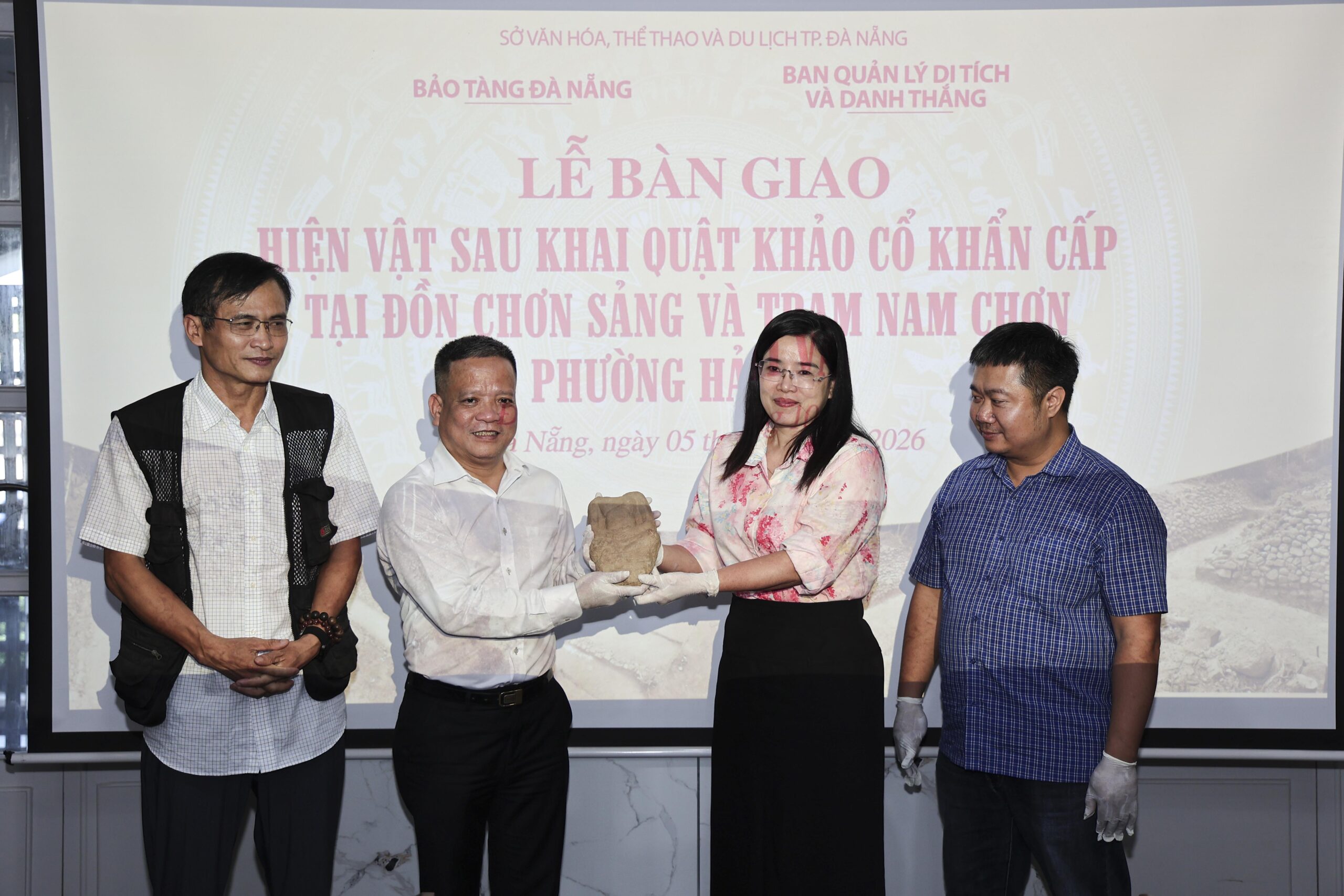
A sandstone figure found beneath Vietnam’s Hai Van Pass may turn out to be one of the most important Champa discoveries yet made in Da Nang.
Archaeologists uncovered the object at Chon Sang Fort, a much later military site associated with the Nguyen Dynasty. Yet the sculpture itself appears to belong to the 8th–9th centuries, placing it roughly a thousand years before the fortifications surrounding it.
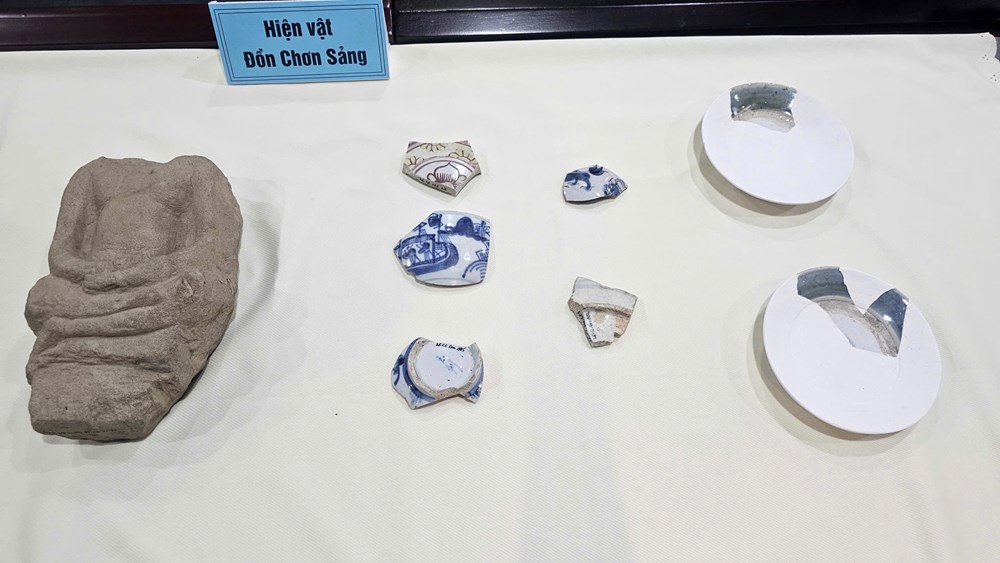
What makes the find especially intriguing is not only its age. The front shows a seated figure in a meditative pose, while markings on the reverse may represent Cham writing that researchers have not yet deciphered.
A much older object in a later fortress
The relief emerged from excavation pit H2 during a 45-day archaeological campaign at Chon Sang Fort and nearby Nam Chon Station. Together, the two sites formed part of a later defensive landscape controlling the route through Hai Van Pass and the northern approach to Da Nang.
Researchers had been investigating the architecture and military history of these sites when the much earlier sandstone piece appeared. Its style and possible inscription immediately placed it outside the main Nguyen-period context of the excavation.
Dr. Phạm Văn Triệu of Vietnam’s Institute of Archaeology, who led the work, said specialists provisionally date the piece to the 8th–9th centuries. He also described it as the earliest Champa relief so far identified in the former Da Nang area.
Who were the Champa?
The Champa were a major civilization that flourished across parts of central and southern Vietnam for more than a millennium. Their kingdoms developed strong maritime connections and left behind distinctive brick temples, sandstone sculpture, and inscriptions.
Champa religious life drew heavily on Hindu traditions and later also incorporated Buddhist influences. Monumental sites such as Mỹ Sơn preserve some of the best-known examples of this artistic and religious world, making the Da Nang relief particularly significant if its early date is confirmed.
A figure with a possible inscription
The sculpture’s reverse may prove just as important as its front. Researchers believe the markings could represent Cham script, although specialists still need to examine them before making any firm identification.
That uncertainty matters because the artifact’s original context remains unresolved. Archaeologists cannot yet say whether it once belonged to a Champa religious structure nearby, was moved from another location, or was reused centuries later at the site.
The find therefore raises as many questions as it answers. Rather than proving the existence of an 8th-century Champa sanctuary at Chon Sang, it offers a rare clue to an earlier cultural landscape that may have existed before the later military installations.
One place, many centuries
The excavation produced material from several different periods, reinforcing the idea that the Hai Van corridor remained important across a long span of history. Later ceramics and military-period artifacts show how repeatedly people returned to the same strategic landscape.
A total of 88 artifacts from Chon Sang Fort and Nam Chon Station have now been transferred to the Da Nang Museum for conservation and further study. The sandstone relief, however, is likely to attract the most attention.
If the proposed date and possible Cham inscription are confirmed, the small sculpture could push Da Nang’s known Champa record further back than any comparable relief found there so far.