Archaeologists excavating one of Norway’s most remarkable prehistoric landscapes have uncovered the remains of a large longhouse covering roughly 300 square meters, along with traces of at least six other buildings.
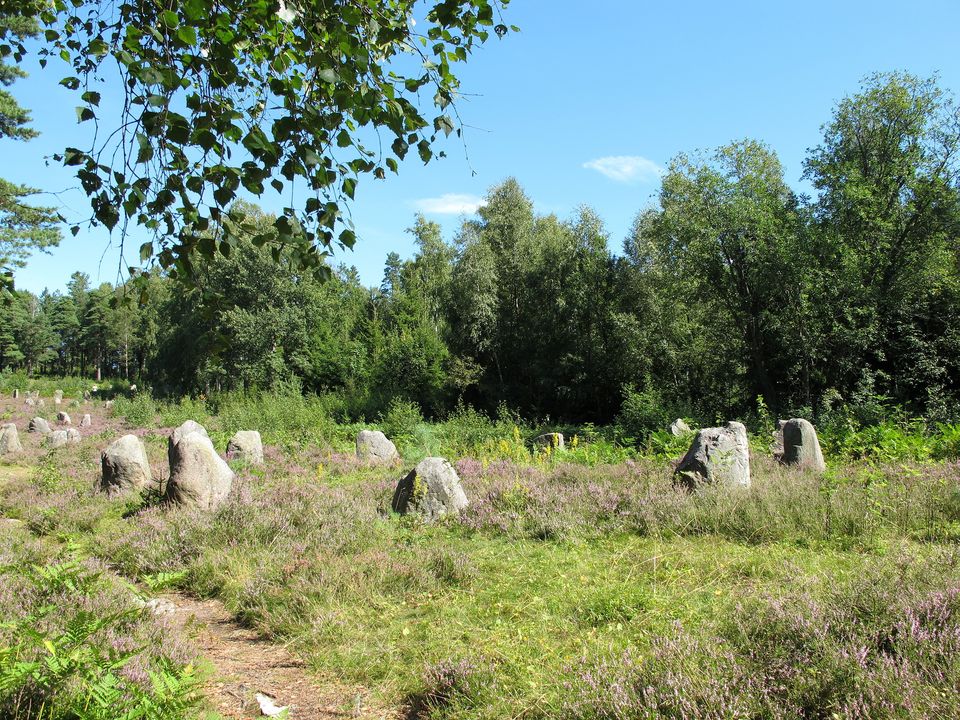
The discoveries come from the Hunn archaeological site in Fredrikstad, southeastern Norway, an area already known for burial mounds, stone circles and evidence of human activity spanning several prehistoric periods. The newly exposed houses add a more domestic side to that landscape, revealing where people may have lived, stored food and kept animals close to places later used for burial and ritual.
A house about 30 meters long
The largest structure measured approximately 30 meters long and 10 meters wide, giving it an estimated footprint of around 300 square meters. Archaeologists have so far identified at least seven houses across the excavation area, several of which appear to have been built using similar construction methods.
Jakob Jan Edvin Kile-Vesik, an archaeologist with the Museum of Cultural History at the University of Oslo and excavation leader at Hunn, said the largest structure would have been a residential building capable of housing an extended family.
That could have meant several generations living under the same roof rather than only parents and children. Parts of the building may also have served as storage areas or space for livestock, a common feature of prehistoric longhouses in northern Europe.
Another substantial building uncovered nearby has an estimated footprint of around 165 square meters.
Only the footprint survives
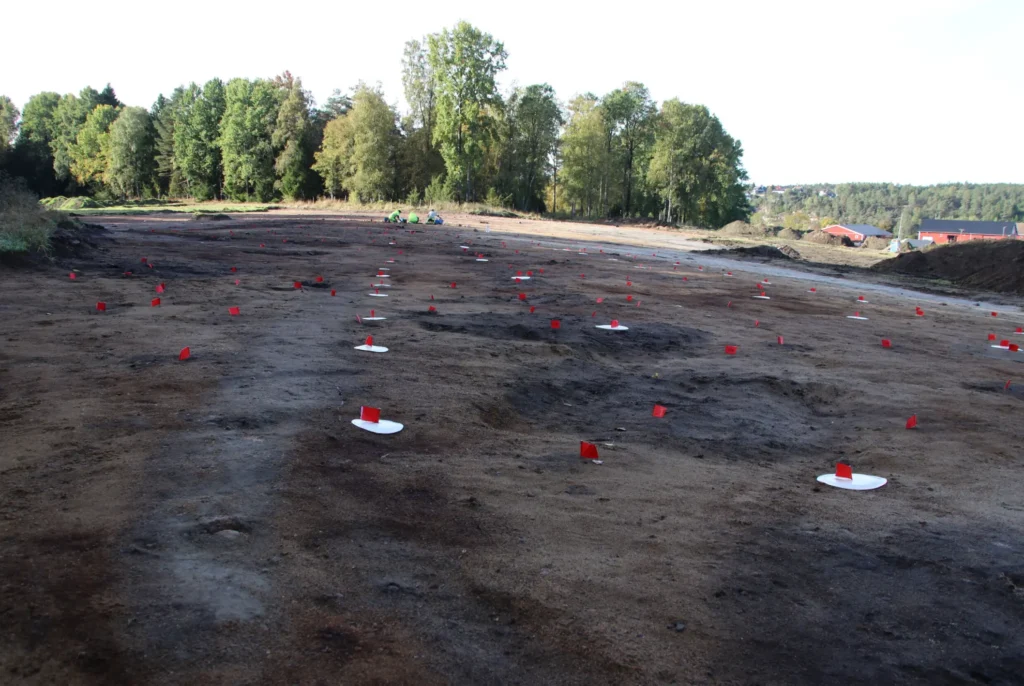
The timber structures themselves disappeared long ago. What survives beneath the cultivated soil are the marks left by posts and other structural elements, preserved as differences in the soil.
At the largest house, archaeologists identified four rows of postholes. They indicate a three-aisled longhouse, in which rows of internal posts helped support the roof and divided the interior into separate longitudinal spaces.
A distinct trench also follows the outline of the building. Archaeologists refer to it as a wall trench, although its exact function remains uncertain. It could represent part of the wall construction, but researchers have also suggested that water dripping from the roof or repeated movement around the building may have contributed to the feature.
This type of construction is known in Scandinavia from the Bronze Age onward, including around 2000 BC, but the Hunn house has not yet been securely dated. Archaeologists are therefore avoiding assigning it to a specific period until laboratory results become available.
A landscape used again and again
The position of the house may prove just as important as its size.
Archaeologists have identified possible graves that appear to overlie parts of the house, suggesting that some burial activity may have taken place after the building had already gone out of use. At the same time, the house itself seems to have been constructed over older cooking pits.
If that sequence is confirmed, the same small area could preserve at least three distinct phases of human activity: cooking or settlement activity, the construction and use of the longhouse, and later burial practices.
That fits the wider archaeological picture at Hunn. The site contains more than 100 burial mounds, cairns and stone circles, while earlier discoveries from the surrounding cultural landscape range from the Late Stone Age through the Bronze Age, Roman Iron Age and Viking Age.
Recent investigations have also identified previously unknown stone settings, settlement traces, cultivation layers and evidence associated with early metal production.
Waiting for the date
The excavation is being carried out by the Museum of Cultural History as part of work connected with planned drainage of agricultural land around the protected archaeological area. Earlier geophysical surveys and trial trenches had already indicated that substantial remains survived beneath the fields.
Researchers now expect radiocarbon dating to establish when the large house was occupied. Suitable organic remains such as charcoal, wood or bone could provide the samples needed to narrow down its age.
For now, its scale alone offers a striking glimpse of domestic life at Hunn. Beneath fields cultivated for generations, the postholes still preserve the outline of a building large enough to shelter an extended household and perhaps animals and supplies, long before the landscape took on the monumental character visible there today.