In 2021, a group of teenagers in Rome decided to spend the night inside their school as part of a protest against continued remote learning during the Covid-19 pandemic. What began as an act of teenage defiance ended with an unexpected encounter with ancient Rome.
Beneath the gymnasium of Liceo Scientifico Cavour, just a short walk from the Colosseum, the students found their way through unused basement rooms and came across ancient walls hidden below the school. Their discovery eventually led archaeologists to a remarkably well-preserved Roman residence dating to the middle of the second century AD.
A school legend turns out to be real
Stories about ruins beneath the school had apparently circulated among students for years. After the 2021 occupation, however, some of the teenagers told history and Latin teacher Claudia Marino that they had actually seen something unusual underground.
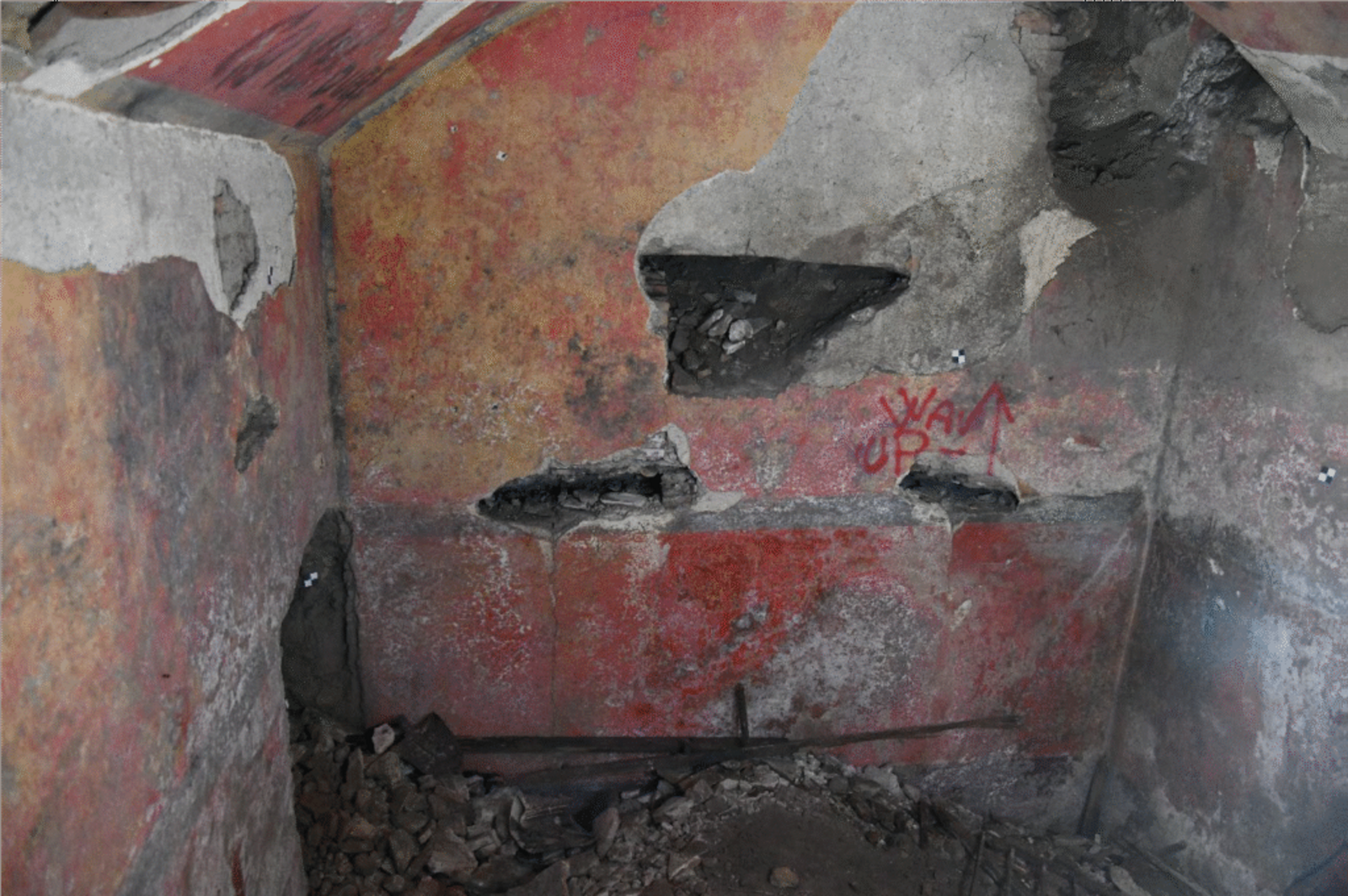
Marino and her colleagues followed their directions to a locked basement door. Beyond an old boiler room, they encountered Roman masonry and rooms decorated with ancient paintings and stucco. Marino then contacted Rome’s archaeological authorities, transforming a school story into a formal investigation.
The structure is now known as the Domus del Liceo Cavour. Archaeologists began the latest excavation campaign in 2025, while work to remove modern debris and investigate the site continued into 2026.
A luxurious Roman home beneath the basketball court
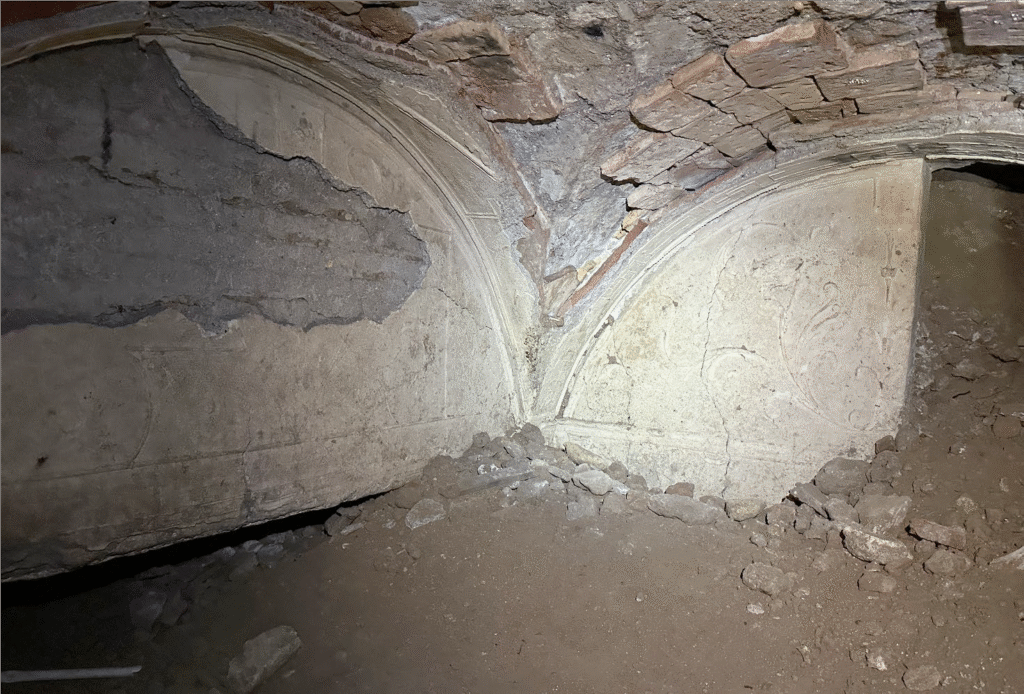
What survives underground is far more substantial than a few isolated walls. The residence belonged to a large, high-status complex constructed around the middle of the second century AD, when Rome stood near the height of its imperial power.
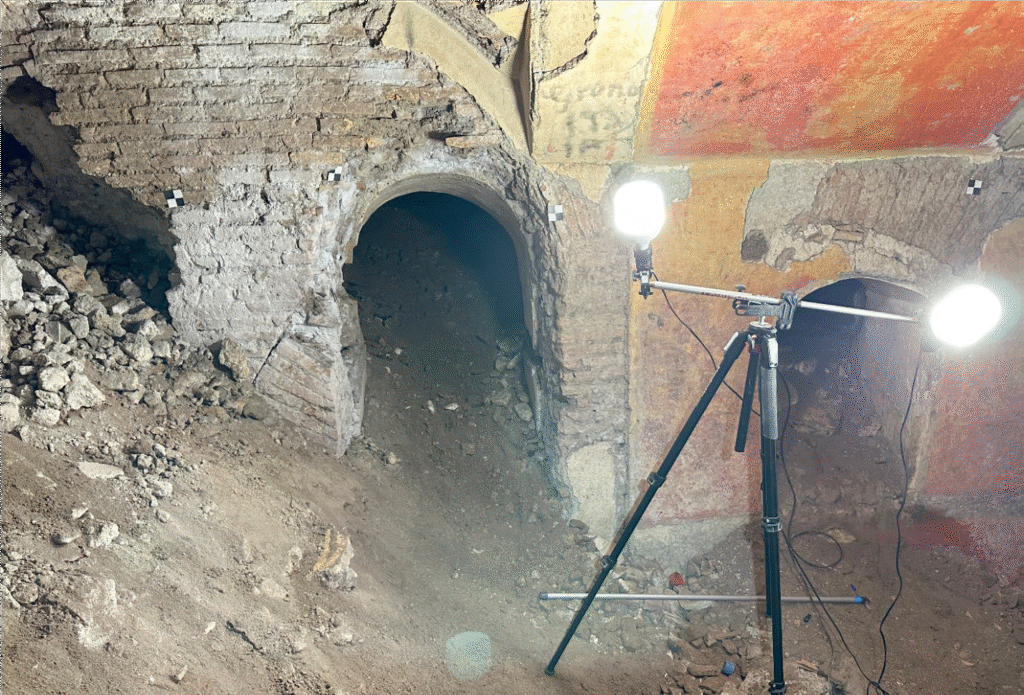
Several rooms remain buried almost to ceiling level, which helped preserve painted walls, vaulted surfaces and elaborate figurative stucco. Archaeologists have also identified decorative mosaics, including geometric and floral elements as well as human figures.
The excavation has produced enough archaeological material to fill dozens of crates. Finds include amphorae used for products such as wine and olive oil, together with drinking vessels and objects belonging to different phases of the building’s history.
The house had already appeared once before
The teenagers were not technically the first people to encounter the Roman residence.
Part of the complex emerged in 1895 during construction work for Via degli Annibaldi. Archaeologists documented the ruins, including a lead water pipe carrying names associated with the occupants, but much of the residence subsequently disappeared from public memory beneath the modern city.
The inscriptions preserve the names L. Fabius Gallus and Umbria Albina, giving researchers a rare possible connection between an archaeological house and people who once lived there.
Its location also makes the discovery particularly interesting. The ancient neighborhood between the Carinae and Esquiline Hill was one of Rome’s prestigious residential districts. Historical sources associate the wider area with figures including Cicero, Pompey and Octavian, yet modern development has left archaeologists with relatively little physical evidence of its luxurious houses.
From teenage trespassing to archaeology
There is another layer to the story. Graffiti found inside the underground rooms shows that other visitors had entered the forgotten spaces long before the 2021 students. Some inscriptions appear to date between the 1920s and 1950s, when a religious community occupied the building, while others may have been left by generations of students.
Archaeologists have so far investigated only part of the Roman residence. The complex appears to extend farther beneath the school, and researchers hope future funding will allow them to continue exploring it.
Eventually, authorities would like the hidden domus to become accessible to students and visitors. A place that survived beneath a school gym for generations may therefore become one of Rome’s more unusual archaeological attractions — rediscovered not by a planned survey, but because a group of teenagers decided to see what was behind a locked basement door.
Cantieri Narranti / Soprintendenza Speciale Archeologia, Belle Arti e Paesaggio di Roma