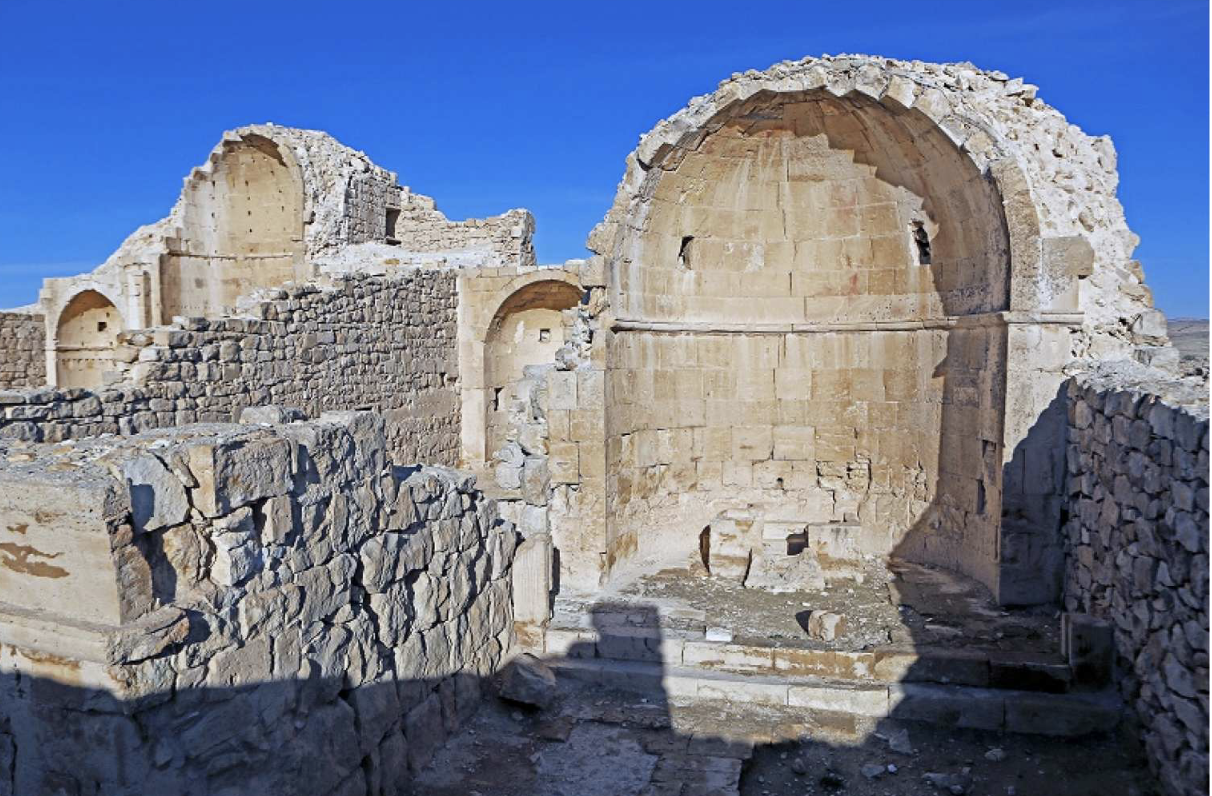
Nearly 90 years after archaeologists photographed a Byzantine church in Israel’s Negev Desert, two forgotten images have revealed an unusual burial tradition with no known parallel in the region. Beneath the floor of a chapel once used for Christian baptisms lay the graves of privileged families, including priests and children whose lives ended nearly 1,400 years ago.
The discovery comes from a new study in Palestine Exploration Quarterly by Emma Maayan-Fanar of the University of Haifa and Yotam Tepper of the Israel Antiquities Authority. Their examination of the photographs has brought new meaning to graves excavated decades ago at Shivta, a Byzantine settlement where three monumental churches once served a thriving Christian community.
Two Photographs That Changed the Story
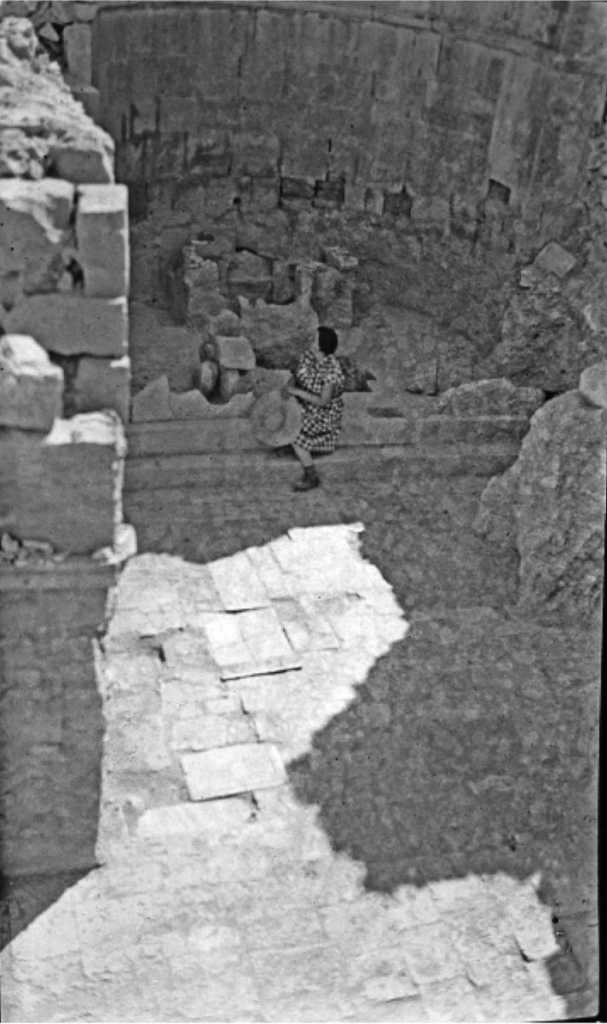
In the 1930s, archaeologist H. D. Colt and his team excavated Shivta’s North Church. They recorded inscriptions on marble tombstones but removed the slabs from their original positions. With no comprehensive excavation report ever published, later generations of researchers struggled to understand how the graves had originally been arranged.
Two photographic negatives preserved in the archives of University College London have now helped solve part of that mystery.
Taken during the 1933–1934 excavations, the images show the baptistery floor before the tombstones disappeared from their original settings. By matching Greek inscriptions, distinctive crosses, and the shapes of marble slabs, the researchers identified the precise locations of three of the seven graves.
The findings revealed something even more remarkable. The baptistery had served as a burial chapel, an arrangement with no known equivalent elsewhere in the Negev or Palestine. A space associated with spiritual rebirth had become a final resting place for some of Shivta’s most influential residents.
A Child Buried Among the Powerful
The seven tombs belonged to nine individuals who died between AD 612 and 679. Six were priests, including one who was also a monk, while others belonged to families whose influence extended into the community’s religious affairs.
One grave tells a particularly personal story. In AD 612, a boy named Abraham died in Shivta. His father, John, held the title vicarius, a position associated with military and administrative authority. Abraham became the first person buried in the baptistery, probably because of his father’s prominence and connections to the church.
Thirty-one years later, another young member of the family, Stephanos, joined him in the same grave. Stephanos was the son of Abraham’s brother George, linking two generations of the family through a shared burial place.
The researchers believe access to the baptistery was largely reserved for priests and particularly privileged relatives who died young. Other members of prominent families received burial places in the church’s entrance hall or courtyard.
The graves suggest that social distinctions continued even after death, with the most prestigious locations reserved for those closest to religious and administrative power.
Three Deaths in Seven Days
The lives recorded on the tombstones unfolded during a period of extraordinary upheaval.
The Byzantine-Sasanian wars devastated parts of the eastern Mediterranean between AD 602 and 628. Soon afterward, the early Islamic conquests transformed the political landscape, while recurring epidemics continued to threaten communities across the region.
Shivta’s burial inscriptions preserve a troubling pattern from those unsettled decades.
On November 5, AD 643, one person buried in the North Church complex died. Three days later, Stephanos, son of George, died on November 8. Another Stephanos, son of Abraham, died on November 11.
Three deaths in a single week raise an obvious question: was an epidemic spreading through Shivta?
The researchers note that approximately one-third of the church’s recorded burials occurred between AD 640 and 646. They suggest that a local outbreak associated with the first plague pandemic, commonly known as the Plague of Justinian, could explain the concentration.
However, the inscriptions cannot establish what killed these individuals. Disease remains a possibility rather than a confirmed cause, and the researchers also consider the wider instability of the period.
A Community That Did Not Disappear Overnight
The last known burial in the baptistery dates to AD 679, decades after Muslim forces took control of the region. It belonged to a priest named Salamanos, whose comparatively crude inscription and locally sourced stone contrast with the expensive marble markers of earlier generations.
His grave suggests that Christian religious life persisted even as Shivta’s social and economic circumstances changed. The researchers argue that the settlement’s decline was gradual, rather than the immediate consequence of a single invasion or catastrophe.
For decades, the names on Shivta’s tombstones survived without a clear connection to their original resting places. Two old photographs have now restored part of that missing context, revealing not only an exceptional burial tradition but also the family ties, privileges, and losses of people who lived through one of the region’s most turbulent periods.
Maayan-Fanar, E., & Tepper, Y. (2026). Old Photographs, New Discoveries: Privileged Burials in the North Church Baptismal Chapel in Shivta, Israel. Palestine Exploration Quarterly, 1–33. https://doi.org/10.1080/00310328.2026.2716943