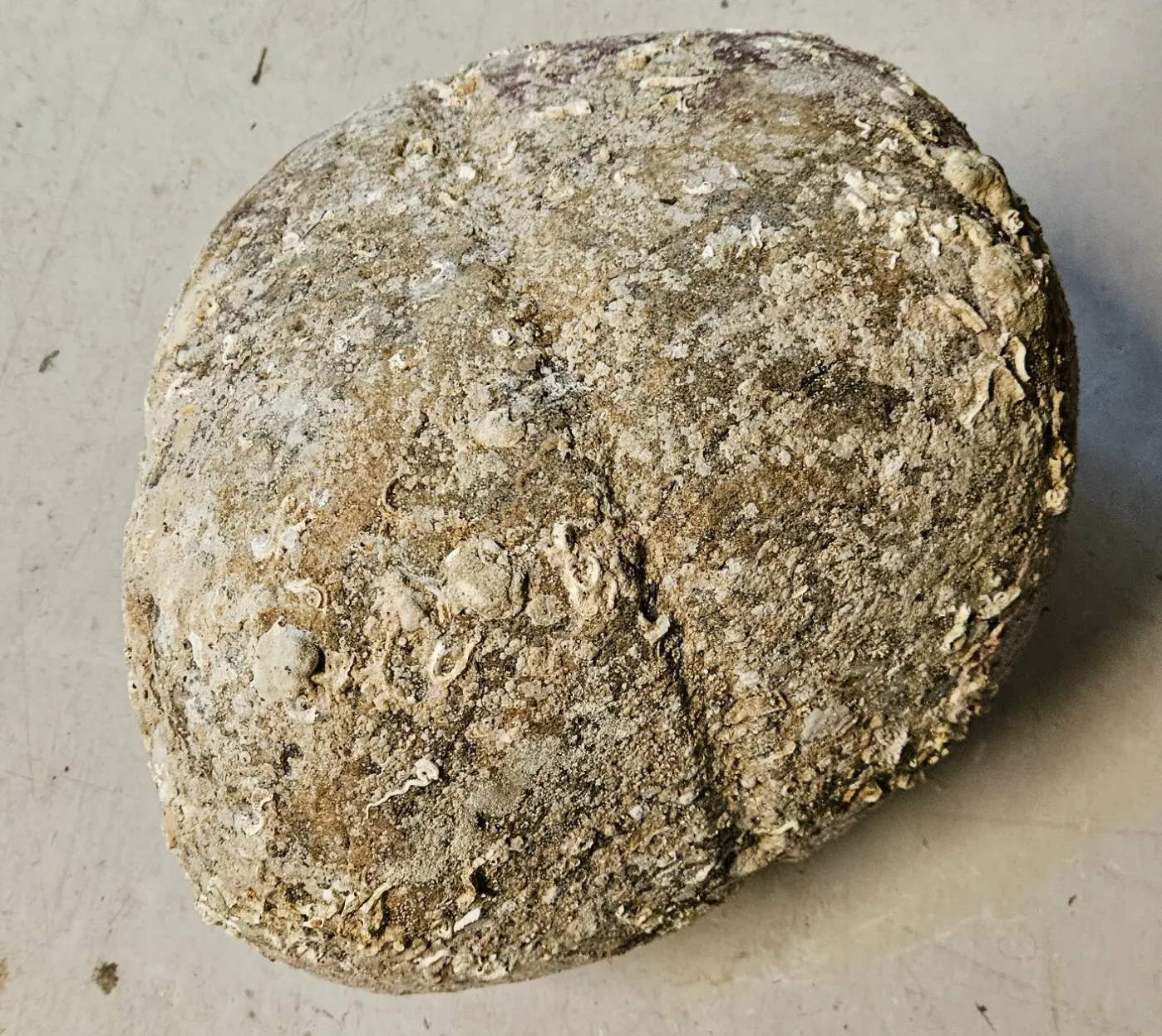
Archaeologists exploring the seabed near a Stone Age quarry in Norway have recovered a massive stone that may have once secured prehistoric boats against powerful currents. If confirmed, the discovery could push the history of anchors back thousands of years.
At first glance, it looks like an ordinary rock. But a stone weighing more than 30 kilograms, recovered from the seabed off Norway’s western coast, has archaeologists considering an extraordinary possibility: it may be the oldest known boat anchor in the world.
The discovery comes from Hespriholmen, a small island about five kilometres offshore, where Stone Age communities risked dangerous sea crossings to obtain greenstone for making axes. Researchers believe the grooved stone may have been used to hold their boats in place while they loaded heavy blocks of rock.
If their interpretation proves correct, the find could provide rare physical evidence of maritime technology dating back more than 5,000 years.
A Strange Stone Beneath a Prehistoric Quarry
Hespriholmen is hardly an inviting destination for sailors. Strong currents, exposed waters, and unpredictable waves make reaching the island difficult even with modern equipment. Yet prehistoric communities repeatedly visited the island between approximately 9,000 and 5,000 years ago.
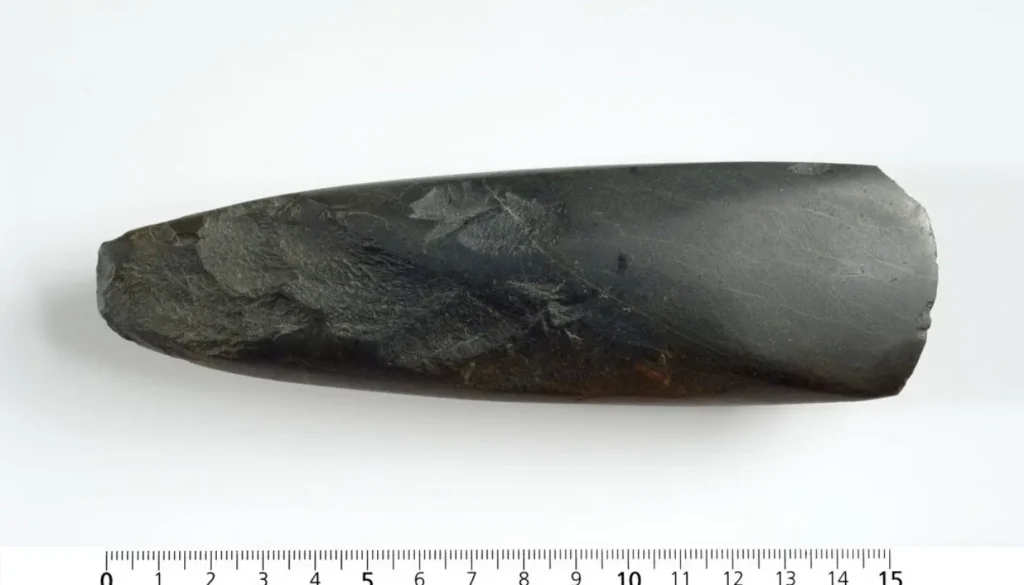
Their attraction was greenstone, a valuable raw material used to manufacture axes. The quarry was first discovered in 1923, but recent underwater investigations have revealed a new dimension to its history.
During a dive last year, archaeologists spotted an unusual stone roughly 20 metres below the surface, resting on a heap of discarded material from the island’s largest quarry. A carefully defined groove ran around its circumference.
When the team returned several weeks ago, they attached a rope to the stone and raised it from the seabed. Its shape immediately drew attention.
Despite weighing more than 30 kilograms, the object was well balanced and could be lifted using a simple rope. Its size also made it unlikely to have served as an ordinary fishing-net weight.
Leif Inge Åstveit of the University Museum of Bergen believes the object was an anchor. Its location among the remains of prehistoric quarrying activity strengthens that interpretation.

Stone Age Sailors Faced Dangerous Waters
The possible anchor raises an intriguing question about life along Norway’s prehistoric coastline: how did people keep their boats steady while loading heavy stone in such difficult conditions?
Hespriholmen was not a settlement where boats could simply be pulled onto a sheltered beach. Quarry workers needed to transport tools and supplies to the island, extract large greenstone blocks and carry their cargo back across open water.
Archaeologists also discovered exceptionally large hammerstones during their recent underwater investigations. These tools, made from particularly heavy rock, had been brought to the island from the mainland.
Their presence suggests that prehistoric quarry workers undertook carefully organized journeys involving substantial loads.
Hein Bjerck, professor emeritus at the NTNU University Museum, was not involved in the excavations but has examined photographs of the find. He considers a Stone Age anchor a plausible interpretation, particularly given the difficulty of keeping a vessel close to the rocky shore.
Such equipment would have been unusual. Prehistoric boats were often hauled onto beaches rather than anchored, but the exposed setting of Hespriholmen may have required a different solution.
Could This Be the World’s Oldest Anchor?
The significance of the discovery extends beyond Norway.
According to the researchers, the oldest securely dated stone anchors currently known come from Bronze Age contexts in the Mediterranean. A genuine Stone Age anchor from Hespriholmen could therefore predate them by thousands of years.
However, the proposed identification and chronology have not yet been established through a peer-reviewed publication. The stone’s association with prehistoric quarry deposits provides important archaeological context, but further research is necessary before it can claim a world record.
The discovery also offers a possible clue to another archaeological mystery: the boats used by Norway’s early coastal communities.
No boats from this period have been discovered in Norway, although archaeological evidence indicates that people regularly travelled by sea. Åstveit believes vessels made from animal skins may have been particularly suitable for the region’s challenging waters, although rafts remain another possibility.
Whatever their design, the vessels were capable of carrying heavy stone across dangerous stretches of open water.
An Island Visited for Thousands of Years
The stone anchor is only one part of a much larger investigation into Hespriholmen’s prehistoric importance.
Using underwater mapping and three-dimensional modelling, archaeologists are reassessing the scale of greenstone extraction on the island. An estimate made in 1987 suggested that quarry workers removed approximately 430 cubic metres of stone, but the researchers now suspect the actual quantity was considerably greater.
Greenstone axes associated with Hespriholmen have been found across parts of western and southern Norway. Some may have circulated as valuable gifts or objects of social importance rather than merely serving as everyday tools.
The island’s quarrying history stretches across thousands of years, suggesting that generations of people returned to this exposed location for a material they considered worth the difficult journey.
And somewhere along that long history, one boat may have departed without its anchor.