More than 9,000 years ago, a freshwater spring in what is now Western Australia disappeared beneath the rising sea. Today, archaeologists believe the site may once have brought Aboriginal communities together, and a collection of ancient stone tools is helping them piece together its story.
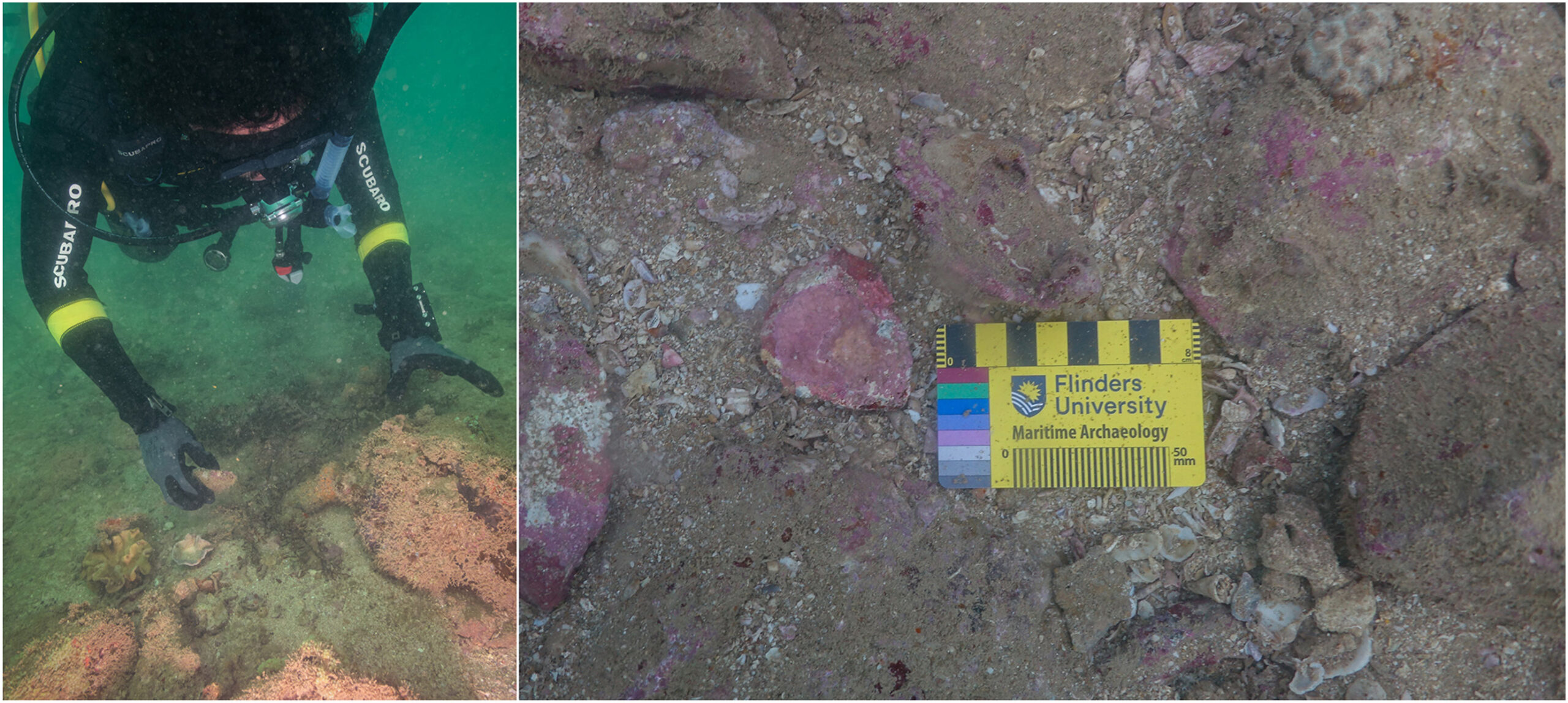
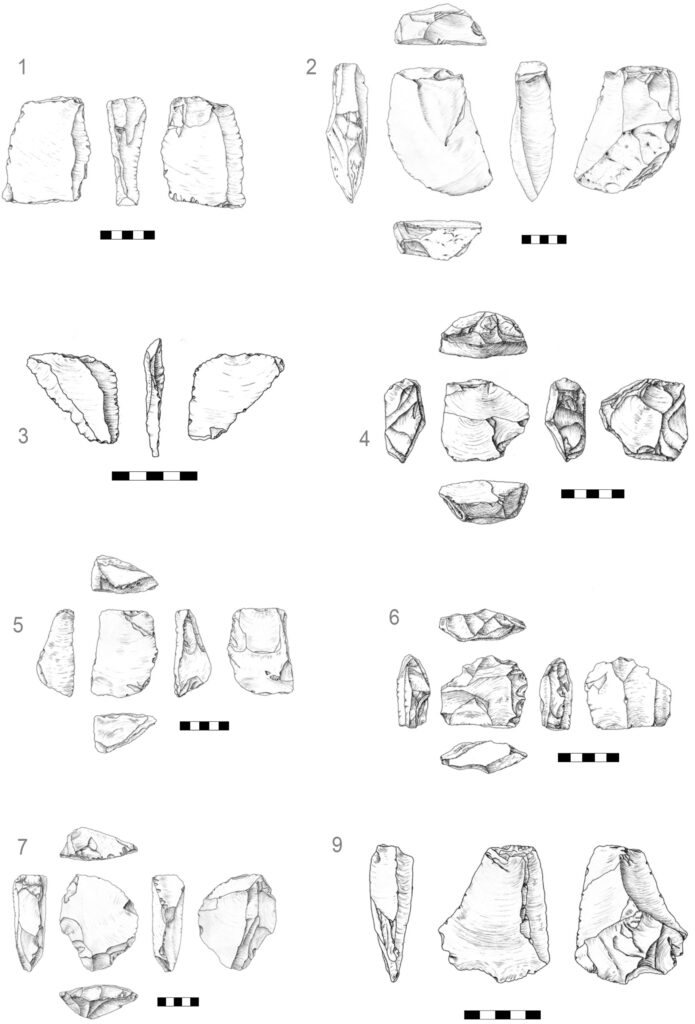
The discovery comes from Murujuga, a region famous for its Aboriginal cultural heritage. Beneath waters reaching depths of 15 metres, researchers have identified two archaeological sites containing 21 stone artefacts. Their findings, published in Quaternary Science Reviews, suggest that the submerged landscape was once used for different activities, from collecting stone to possibly gathering around freshwater.
And the tools could be considerably older than the 9,000 years since the sites were flooded.
A Freshwater Spring With an Unexpected Connection
The most intriguing discovery came from a submerged freshwater spring known as WH2, in Flying Foam Passage.
Archaeologists recovered nine stone artefacts from the site. Four were made from material associated with geological sources near present-day Rosemary Island, approximately 23 kilometres away.
That distance matters. The stones did not originate immediately beside the spring, suggesting that people visiting the area had access to resources from a much wider landscape.
Researchers believe the freshwater source may have been a gathering place for Aboriginal communities. In a region where access to water would have shaped movement across the land, such a location could have attracted people from surrounding areas.
The evidence does not establish whether the stone arrived through direct travel or exchange. Nor does it prove that the spring hosted gatherings. But the combination of freshwater and nonlocal stone makes the possibility worth investigating.
Another Site, Another Clue
The second discovery, Maitland River Hummock, tells a different story.
Located beside the former course of the Maitland River, the site yielded 12 stone artefacts, including flakes and cores associated with tool production.
Unlike the material found near the spring, these stones came from rock sources much closer to the site. The rocky rise may therefore have served as a convenient place to obtain stone and make tools.
Together, the two locations offer a glimpse of how Aboriginal communities may have used a landscape that no longer exists above water.
During the last Ice Age, sea levels were far lower than today. Rivers crossed areas that are now seabed, while freshwater sources and rocky outcrops stood on dry land. As glaciers melted and oceans rose, the coastline gradually moved inland.
Despite spending thousands of years underwater, the artefacts show little evidence of having been carried far from their original locations by ocean currents.
An Ancient Landscape Still Waiting to Be Explored
The investigation also brought Aboriginal community members directly into the research. Murujuga Aboriginal Corporation Rangers trained as scientific divers and participated in the underwater surveys. Two Rangers, Malik Churnside and Richard Variakojis, are co-authors of the study.
Their involvement reflects the continuing cultural importance of Murujuga’s Sea Country to its Traditional Owners.
The discoveries build on earlier underwater archaeological finds reported in 2020, but researchers believe the region may hold much more.
At the height of the last Ice Age, sea levels were as much as 130 metres lower than today. Much of the former coastal landscape remains unexplored, raising the possibility that older evidence of Aboriginal life still lies farther offshore.
Benjamin, J., O’Leary, M., Brooke, L., Wiseman, C., Fairweather, J. H., Van Duivenvoorde, W., McCarthy, J., Reynen, W., Coker, G., Yoshida, H., Wade, V., Stevens, A., Shefi, D., Black, A., Hansen, J. E., Churnside, M., Variakojis, R., McDonald, J., Ulm, S., & Bailey, G. (2026). Underwater archaeological discoveries demonstrate raw material selection and transport of stone artefacts: New evidence from the submerged cultural landscape of Murujuga, Western Australia. Quaternary Science Reviews. https://doi.org/10.1016/j.quascirev.2026.110307