A young woman buried with Phoenician-style ivory, a man laid to rest with a deliberately damaged dagger and a rare Phrygian-style bronze belt, and mysterious ceramic vessels placed beneath the heads of the dead. All were found in a 3,000-year-old tomb in Jordan, where the burial offerings reveal a community with connections extending far beyond the region.
Now, scientists have discovered something even more surprising inside the ancient pottery: chemical traces that may point to exotic spices, including black pepper from India. The findings, published in the Journal of Archaeological Science: Reports, suggest that valuable goods and unusual funerary traditions continued to circulate across the ancient world despite the collapse of powerful Bronze Age kingdoms.
A Young Woman, a Warrior’s Dagger and Unusual Burial Gifts
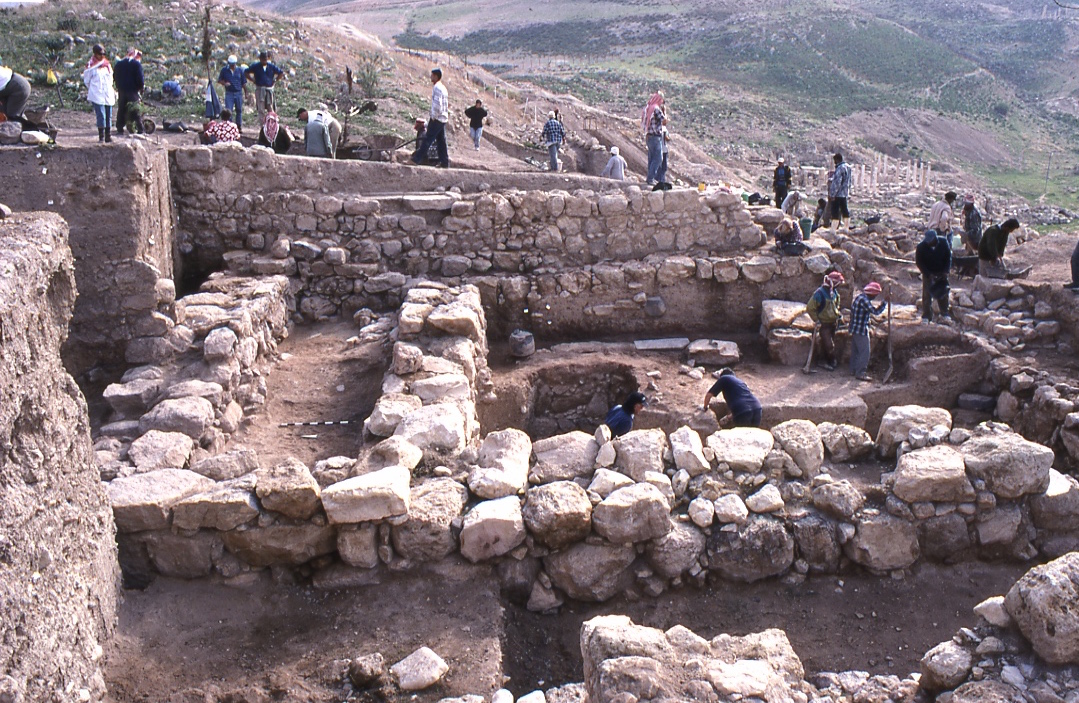
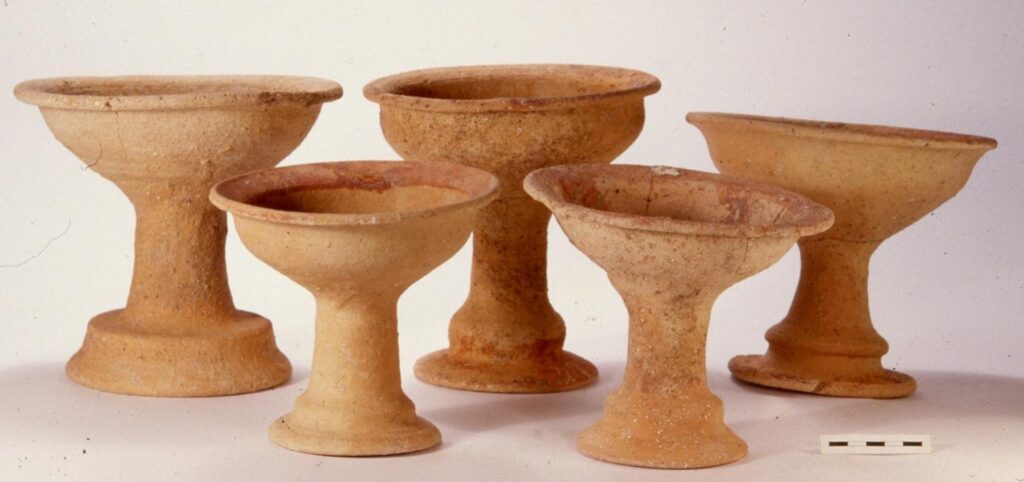
Archaeologists excavated Tomb 89 at Pella, in Jordan’s northern Jordan Valley, in 1987. The undisturbed communal tomb, dating to approximately 1000–900 BCE, contained at least 82 individuals and more than 200 burial objects. Among them were 21 ceramic chalices, some carefully positioned beneath the heads of the deceased.
One young woman had been buried with an ivory ornament depicting a bull calf. Originally carved as a furniture decoration, the piece had been transformed into a chest ornament and accompanied by black glass beads. Its Phoenician-style craftsmanship and the beads’ Mediterranean connections suggest that her possessions reflected influences from beyond Jordan.
Another young man received an equally remarkable burial. Beside him lay an iron-bladed dagger with a bronze hilt and a bronze belt, both deliberately bent or damaged. The dagger had links to Aegean traditions, while the belt represented the only known Phrygian-style example from the early Iron Age Levant. Whether these objects marked his status or played a special role in his funeral remains uncertain.
Did Ancient Burial Offerings Include Indian Black Pepper?
The most unexpected discovery came from seven ceramic chalices that researchers examined at the University of Sydney. Using advanced chemical analysis, they identified organic residues that had survived inside the pottery for roughly three millennia.
Three vessels contained piperine, a compound particularly abundant in black pepper, a spice native to India’s Western Ghats. Two of these vessels had rested beneath the skulls of individuals buried with distinctive possessions, including the young woman with the ivory ornament.
The suggestion of Indian pepper in an ancient Jordanian tomb is striking, but not without precedent. Archaeologists previously found black peppercorns in the mummy of Ramesses II, demonstrating that the prized spice had reached Egypt centuries earlier. The Pella researchers caution, however, that piperine alone cannot confirm the presence of black pepper.
Other compounds may have originated from plants growing in Anatolia, the Caucasus, Iran and the Mediterranean. Their possible presence suggests that long-distance connections survived even as major political and commercial networks weakened.
Fragrant Smoke, Ancient Rituals and Possible Psychoactive Plants
The chalices also reveal something about how people treated their dead. Every one of the 21 vessels displayed burn marks, indicating that they had held substances heated during rituals. Researchers suspect that mourners burned aromatic oils or plant mixtures before leaving the vessels inside the tomb.
Several chemical compounds were consistent with regional aromatic plants, including wormwood. Some wormwood species have psychoactive properties, leading researchers to consider whether the funeral ceremonies involved substances capable of altering perception. The evidence does not establish that mourners deliberately used hallucinogens.
The vessels may also have been reserved for a single ceremony. Their residues lacked certain chemical indicators of repeated heating, suggesting that families could have used the chalices during funerals and then left them permanently with the dead.
For the researchers, another detail deserves attention: some of the most chemically distinctive vessels accompanied individuals buried with objects linked to distant cultures. This raises the possibility that particular offerings reflected social status or personal identity.
Further analysis may establish whether the unusual substances were imported luxuries, locally prepared ritual mixtures, or a combination of both.
Sheaves, P., Peng, K.-Y., Bourke, S., & Crossett, B. (2026). Closer to the gods: Residue analysis of chalices from Tomb 89, Pella, Jordan. Journal of Archaeological Science: Reports, 76, Article 106107. https://doi.org/10.1016/j.jasrep.2026.106107