Long before Roman vineyards spread across Spain, Phoenician sailors were carrying something across the Mediterranean that would change the peninsula’s agricultural history: grapevines.
A new genetic study has traced the ancestry of Spanish grapes back nearly 3,000 years, revealing that vines introduced from the eastern Mediterranean helped establish a winemaking tradition whose genetic legacy survives today.
The findings, published in Current Biology on September 10, 2026, offer a remarkable connection between the ancient Phoenician world and modern vineyards. By examining DNA preserved in archaeological grape seeds, researchers have followed the descendants of those early imported vines through the Iron Age, Roman rule, and the Middle Ages.
The Phoenicians’ Mediterranean Cargo
The Phoenicians are remembered for their seafaring, trade networks, and settlements along the Mediterranean coast. Their contribution to Spanish viticulture, however, has now become clearer through a different kind of archaeological evidence.
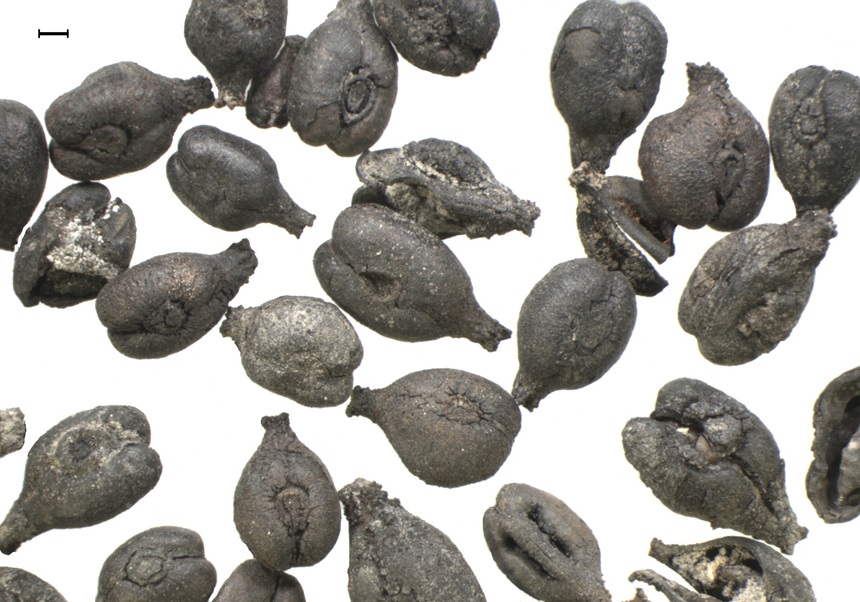
An international team led by researchers from the University of Valencia and Spain’s National Research Council (CSIC) analyzed 28 ancient grape seeds recovered from seven archaeological sites across the Iberian Peninsula and Sardinia.
The oldest domesticated-looking seeds, found in southwestern Spain, date to around 1000 BC. Their genetic signatures closely resemble cultivated grapevines from the eastern Mediterranean, supporting the interpretation that eastern settlers introduced these plants to Iberia.
The findings strengthen the archaeological evidence linking the expansion of viticulture to Phoenician communities established along the peninsula’s southern and eastern coasts. By the late eighth century BC, vineyards and wine production had developed into a commercial activity in these regions.
Yet the story did not end when the first imported vines took root.
The researchers discovered that the eastern varieties soon began crossing with wild grapevines already growing in Iberia. Evidence of this genetic mixing appears in seeds dating to the fourth century BC, suggesting that local populations were developing new varieties centuries before Roman rule.
“The results show that these first grapevines crossed at an early stage with local wild populations,” explained Guillem Pérez-Jordà, a researcher at the University of Valencia.
The resulting hybrids helped establish genetic lineages that would eventually contribute to many traditional Iberian grape varieties.
Ancient Grapes, Modern Vineyards
Perhaps the study’s most intriguing discovery came from comparing ancient seeds with grapes still cultivated today.
Roman-period seeds recovered in Iberia showed close family relationships with both the earliest eastern-derived vines and a medieval specimen genetically matching Pasa Valenciana, a variety that survives in the present day.
Another medieval seed provided evidence of even more remarkable continuity. It was identified as a descendant of Heben, a historically important grape variety whose genetic lineage has been preserved through cultivation for at least 1,100 years.
How could a grapevine survive so long?
Unlike crops that must be grown from new seeds each season, grapevines can be propagated from cuttings. Farmers can take part of an existing vine and grow another plant with essentially the same genetic makeup, preserving a variety without creating a new sexual generation.
This practice allowed certain grape lineages to persist through centuries of changing political powers, farming traditions, and wine markets. The researchers found that some modern cultivated grapes are separated from their ancient ancestors by only a few sexual generations.
A 3,000-Year Legacy Hidden in Grape Seeds
The study does not suggest that today’s Spanish wines taste the same as those consumed by the Phoenicians. Nor does it mean that every modern variety has remained genetically unchanged since the Iron Age.
What it reveals is something more specific: a long history of migration, hybridization, and careful propagation that connects ancient Mediterranean agriculture with living grape varieties.
By combining archaeobotany with ancient DNA, researchers can now trace not only where cultivated plants originated but also how people transformed them after introducing them to new environments.
For Spain, the results place the beginnings of its cultivated grape heritage firmly in the pre-Roman world. The Romans would later expand viticulture across Iberia, but they inherited a tradition whose roots were already centuries old.
Nearly three millennia after Phoenician settlers brought eastern grapevines to the peninsula, traces of that journey remain embedded in the DNA of grapes growing in Spanish vineyards.
Pérez-Jordà, G., et al. (2026). Eastern origin and three-millennia persistence of a founding grapevine lineage in Iberian viticulture. Current Biology. DOI: 10.1016/j.cub.2026.08.039.