A three-line inscription discovered near Naqsh-e Rostam in southern Iran preserves a personal name and a prayer for paradise. Dating to the late Sasanian period, the text offers a glimpse into funerary traditions practiced in the shadow of ancient Persian royal tombs.
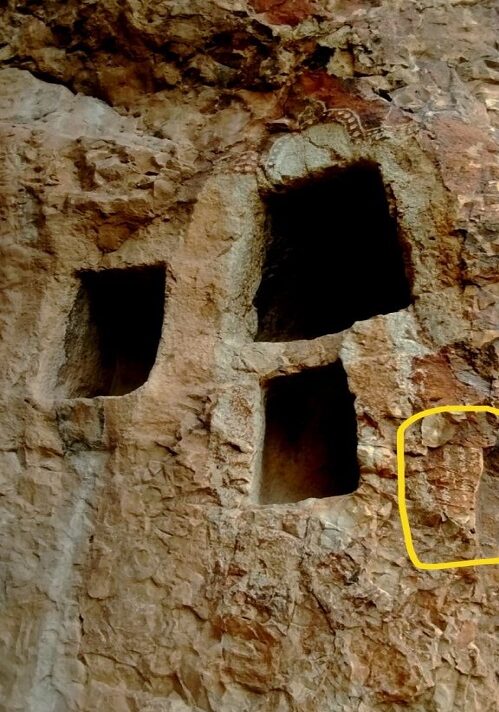
An inscription carved into a rocky hillside near Naqsh-e Rostam in southern Iran has preserved the name of a man associated with a funerary structure roughly 1,400 years ago. The three-line text, written in Pahlavi script, begins with a blessing wishing paradise upon the deceased and names an individual called Farrokh.
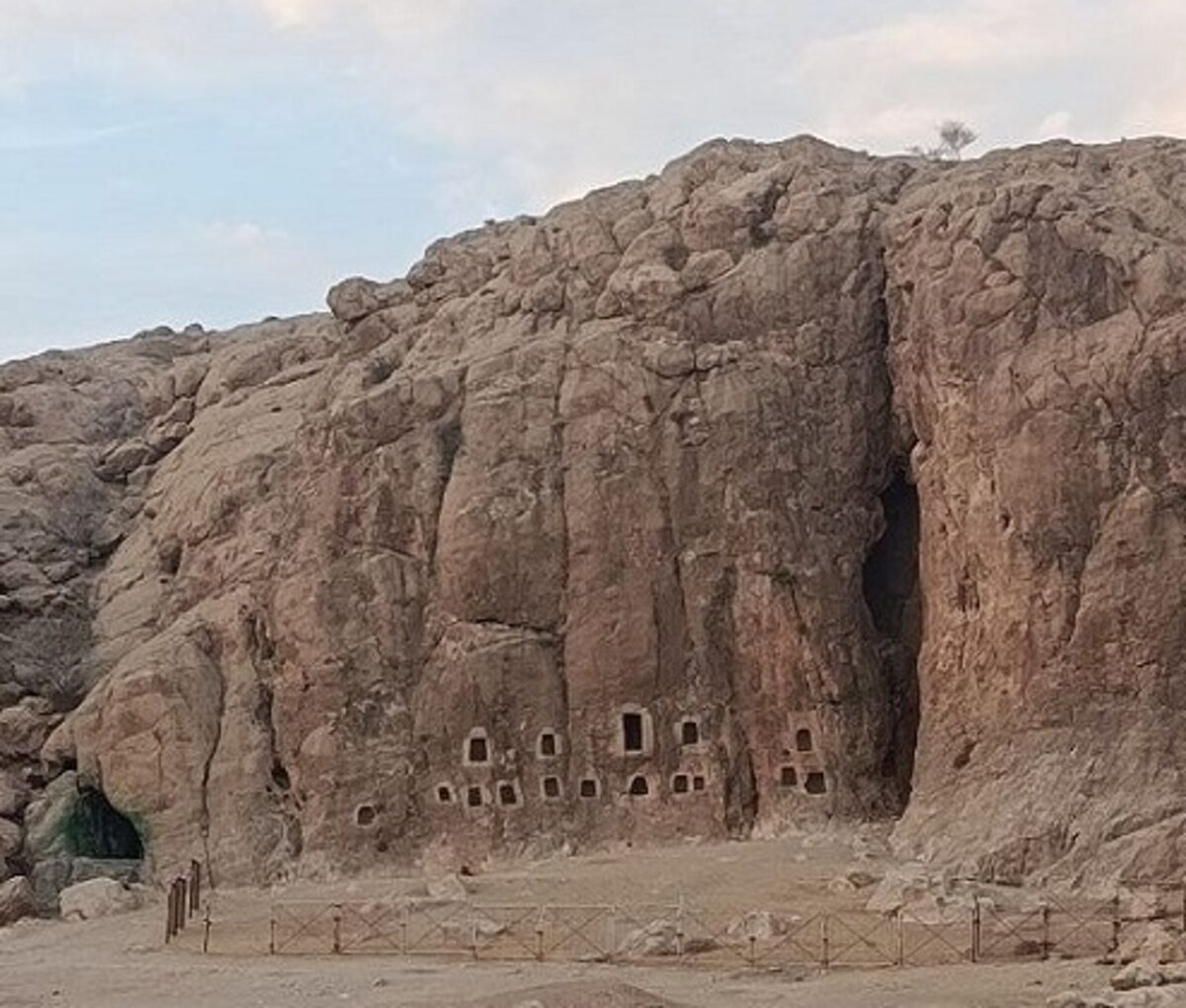
Archaeologist and historian Abolhassan Atabaki identified the inscription during surveys at Darreh-ye Barre’i, also known as Shahzadeh Esmail Rock, approximately 500 meters north of Naqsh-e Rostam in Fars province. The discovery adds another funerary inscription to a landscape where generations of ancient Iranians commemorated their dead.
A Prayer Carved into Stone
According to Atabaki’s account published by the Iranian outlet Amordad, the inscription dates to the late Sasanian period and contains three lines written in Book Pahlavi, a script used for Middle Persian.
His proposed reading begins with wahišt bār bawād, meaning “May paradise be his share.” The following lines name Farrokh and refer to the construction of a daxmag, a funerary structure associated with the dead.
The wording identifies Farrokh with the structure’s construction, although it does not establish whether he was the individual whose remains were placed there. His social position and personal history remain unknown.
The inscription belongs to a group of texts associated with ossuaries, repositories used to preserve human bones after the flesh had decomposed.
The Sasanians and Their Burial Traditions
The Sasanian Empire ruled Iran and extensive parts of the Near East from 224 to 651 CE. Founded by Ardashir I after the defeat of the Parthian Arsacid dynasty, it became one of the Roman and later Byzantine empires’ principal rivals. Its rulers developed a powerful imperial administration, while Zoroastrianism occupied an influential position in religious and political life.
Zoroastrian funerary traditions placed particular importance on protecting elements such as earth and water from contamination by dead bodies. In some communities, the deceased were exposed to the open air until only bones remained. Families then transferred those bones to designated repositories, including niches carved into cliffs.
These structures, commonly called astodans, sometimes carried inscriptions identifying individuals or recording prayers. Around Naqsh-e Rostam, small rock-cut funerary chambers formed part of a burial landscape that continued to develop into the early Islamic period.
New Evidence Beside Ancient Royal Tombs
Naqsh-e Rostam is best known for its monumental tombs of Achaemenid kings, including Darius I, and its impressive Sasanian rock reliefs. Yet the surrounding cliffs also preserve less conspicuous traces of people who lived centuries after the Achaemenid rulers.
Atabaki has now identified five ossuary-related inscriptions during recent investigations, including two in the Darreh-ye Barre’i area. Historian Najmeh Ebrahimi noted that six Pahlavi funerary inscriptions had previously been documented nearby.
Some older inscriptions survive in historical photographs, including images taken by German archaeologist Ernst Herzfeld and preserved in the Smithsonian Institution’s archives. Erosion has severely damaged several texts, making their original wording difficult to recover.
The newly identified inscription offers something unusually personal within this monumental setting: a name, a reference to the construction of a funerary structure, and a wish for paradise. While the royal carvings celebrated imperial power, these modest words preserve a different aspect of Sasanian life—the desire to remember an individual after death.