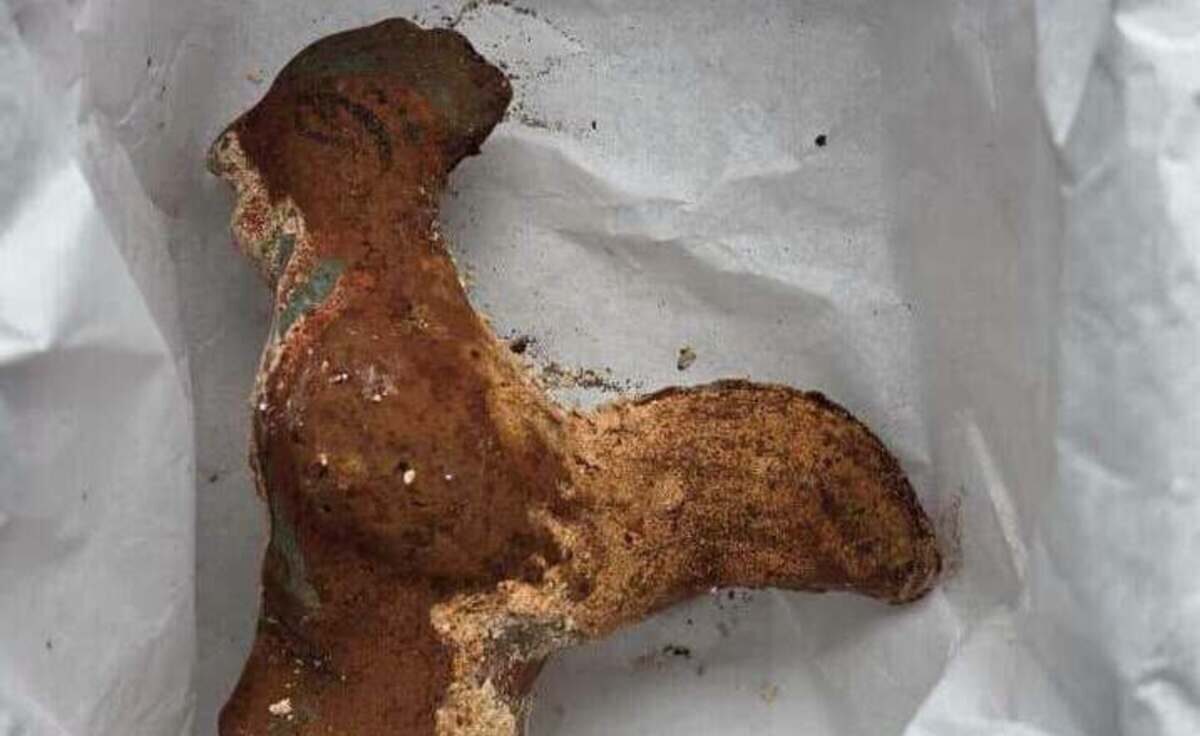
An intact Roman child’s sarcophagus discovered in Romania has preserved something extraordinary: a clay rooster that still rattles after nearly 1,800 years. Alongside the toy, archaeologists found a wheeled horse, protective amulets, and remains of a wooden coffin, offering an unusually intimate glimpse into childhood in ancient Tomis.
The little clay rooster had spent almost 18 centuries inside a stone coffin. Yet when archaeologists lifted it from a Roman child’s grave in Constanța, Romania, they discovered that the tiny pellets inside could still make a sound.
It was an unexpected moment during the examination of an exceptionally preserved burial from the second or third century CE. The child’s name has disappeared from history, but several objects placed beside the body survived remarkably well, including toys that may once have been familiar companions.
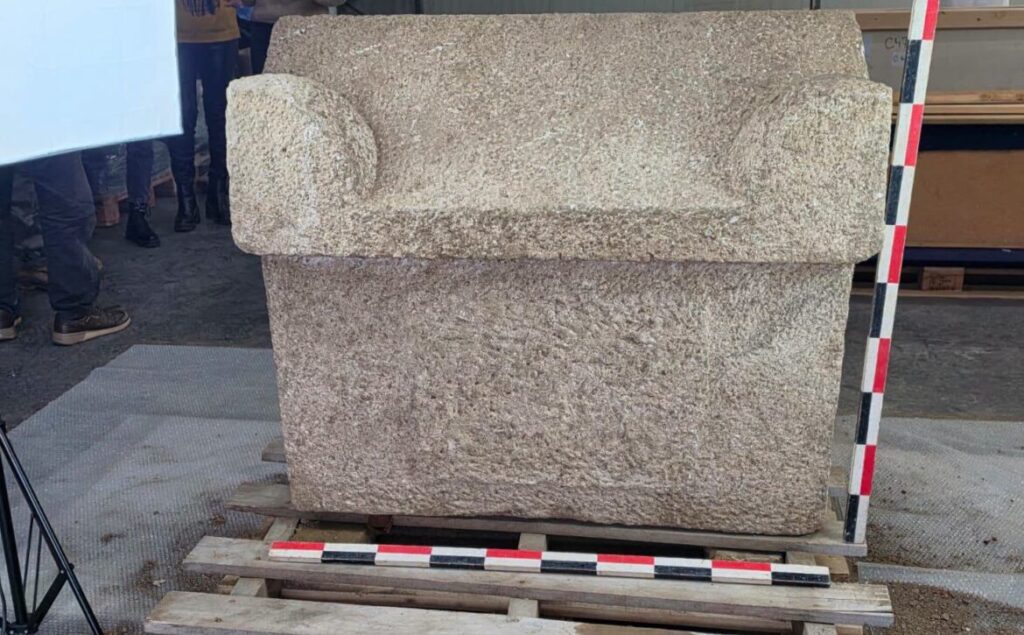
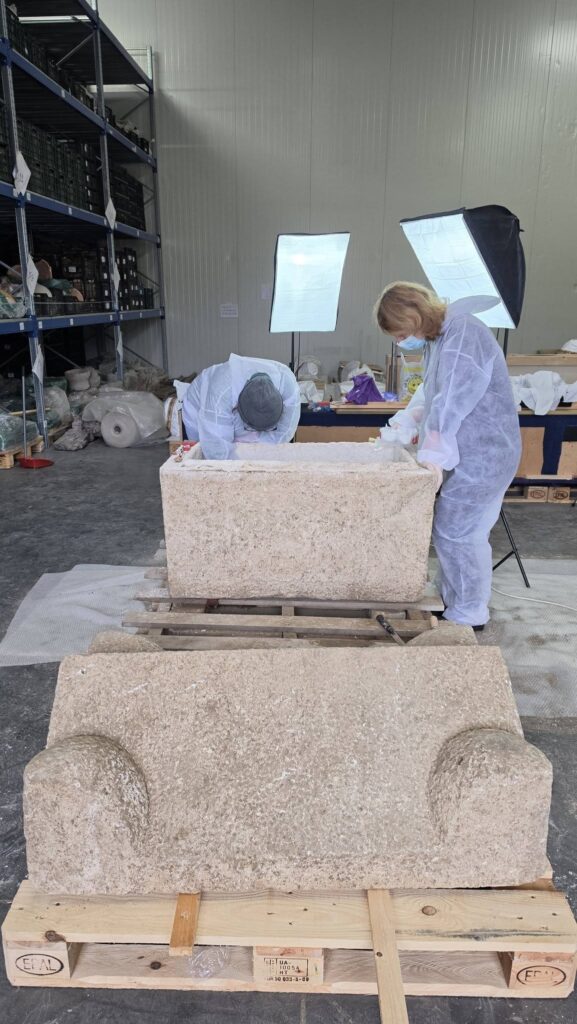
Archaeologists Constantin Băjenaru and Cătălin Nopcea discovered the sarcophagus on October 22 in the Flămânda area of Constanța. Specialists from the National History and Archaeology Museum of Constanța (MINAC) examined its contents on October 27.
A Rooster That Refused to Fall Silent
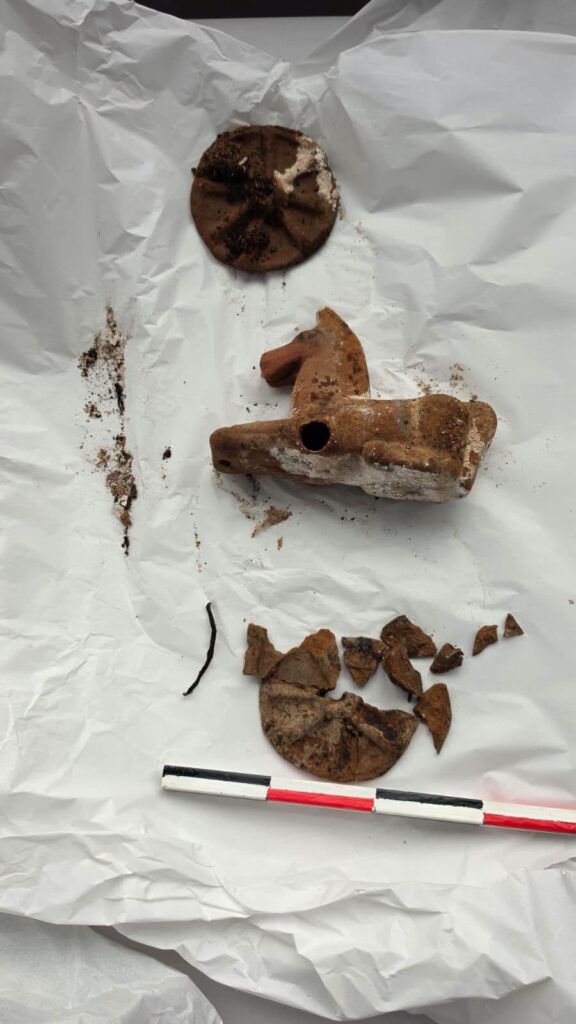
The rooster was not the only toy in the grave. Archaeologists also recovered a small clay horse fitted with wheels. Both objects retain traces of painted decoration, including details of their eyes and facial features.
Museum archaeologist Ana Hamat explained that the rooster’s rattling mechanism became apparent only when researchers moved the object. Its surviving pellets revealed that it was more than a decorative figurine.
The discovery also complicated the team’s initial estimate of the child’s age. Based on the sarcophagus’s dimensions, archaeologists first considered an age of around four or five. The presence of rattling toys led them to suspect a younger child, although anthropological examination will be needed to establish the age more reliably.
The grave contained two bronze bracelets and two bullae, protective pendants associated with freeborn Roman boys. These objects suggest the child may have been male, but researchers have not yet confirmed the biological sex.
A Coffin That Protected More Than Bones
The stone sarcophagus remained undisturbed thanks partly to two lead clamps securing its lid and mortar sealing the joint. These barriers helped protect materials that rarely survive so well in ancient burials.
Inside was a wooden coffin with remarkably preserved side panels. Its carefully made dovetail joints offer a glimpse of Roman carpentry, while surviving burial textiles provide evidence of how the child was prepared for burial.
Archaeologists also recovered floral remains and small bundles made from folded leaves. Their precise composition remains uncertain, and specialists intend to examine them in the laboratory.
The sealed bullae present another question. Rather than opening the pendants and risking damage, the museum plans to investigate their contents using non-invasive techniques.
An Ancient City, an Unknown Child
The sarcophagus lay near the northern edge of Tomis’s Roman necropolis, approximately 1.5 kilometers from the ancient city, close to a road leading toward Histria.
Tomis began as a Greek settlement on the Black Sea coast before developing into an important Roman urban center. During the second and third centuries CE, it formed part of the province of Moesia Inferior and maintained connections with other communities through maritime trade and roads.
Băjenaru noted that small children’s sarcophagi are exceptionally rare at Tomis. The elaborate burial and associated objects suggest that the family possessed financial resources, although its identity remains unknown.
Researchers have yet to determine the child’s precise age, cause of death, or the full significance of the grave goods. Further study of the remains, textiles, wood, and plant material may provide additional answers.
For now, the most striking survivor is also the simplest: a small clay rooster whose rattling sound can still be heard nearly two millennia after it was placed in a child’s grave.
National History and Archaeology Museum of Constanța (MINAC)