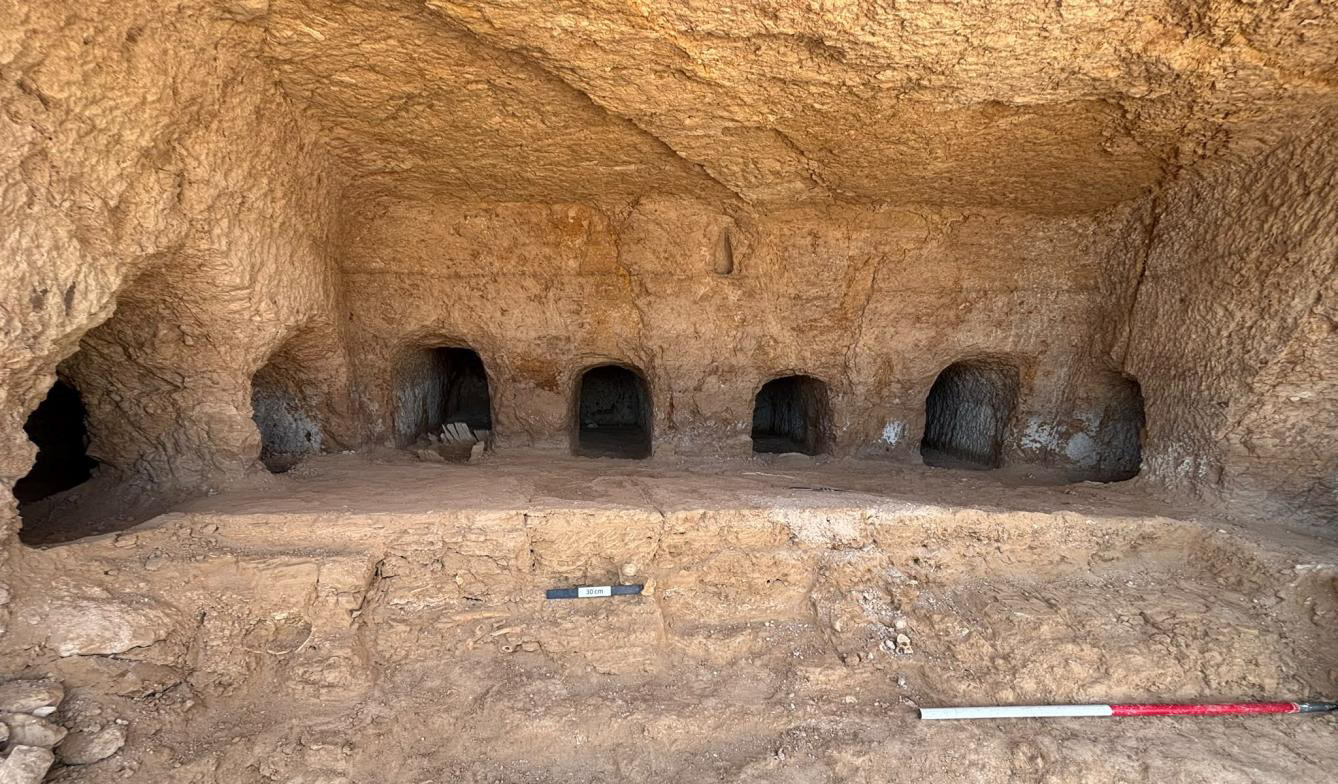
Nearly 2,000 years after wealthy families sought refuge from the heat of Jerusalem in the greener surroundings of Jericho, archaeologists have discovered three monumental tombs that may have belonged to some of the region’s most privileged residents.
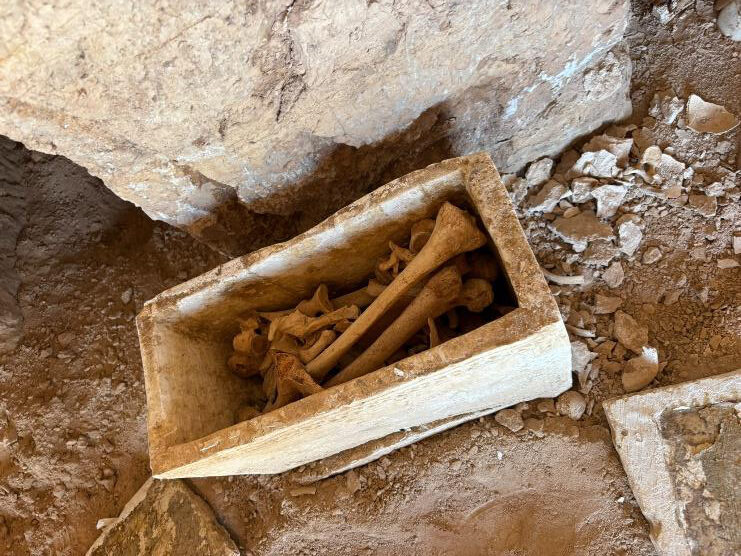
The burial chambers, carved into a limestone cliff near the ancient city in Palestine, contain wooden coffins, decorated limestone burial containers, fragments of fabric, and human remains. Their scale and contents suggest a possible connection to Jerusalem’s aristocracy during the Herodian period, although researchers have yet to identify the people buried inside.
The discovery comes from a joint archaeological mission involving Sapienza University of Rome and the Palestinian Ministry of Antiquities and Tourism, which have worked together at ancient Jericho since 1997.
Inside the Tombs of Ancient Jericho
The three tombs stand at Khirbet Thaniyah, a few hundred meters northwest of Tell es-Sultan, at the foot of the Mount of Temptation.
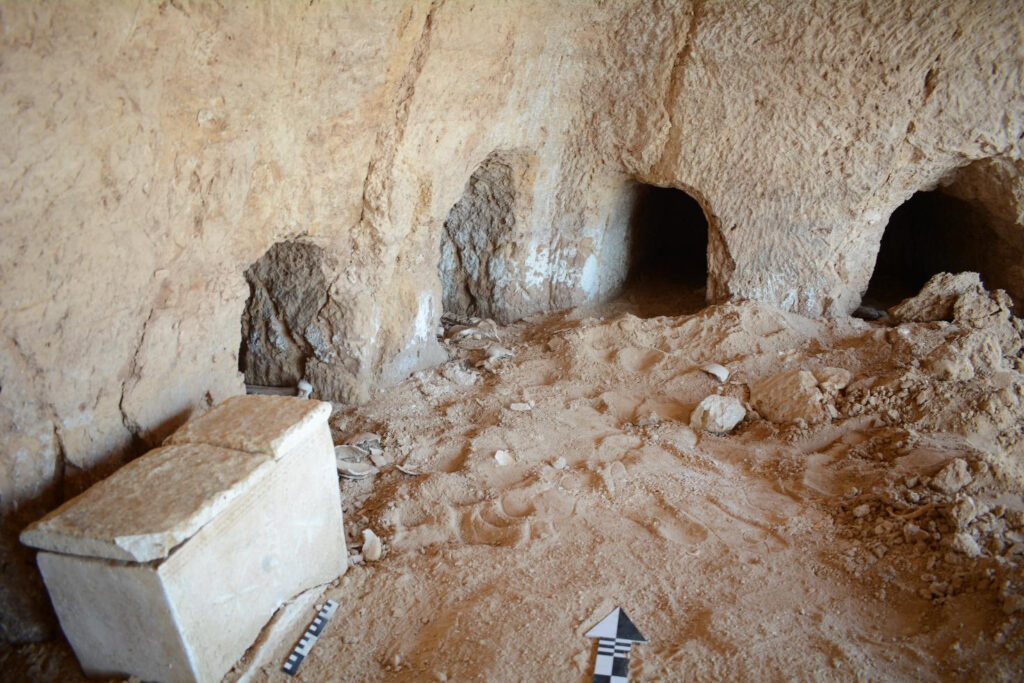
Each follows an architectural plan centered on a burial chamber, with niches extending into the surrounding limestone walls. Some tombs once had monumental facades, and archaeologists have recovered fragments of one such decorated entrance.
Inside, researchers encountered evidence of different burial practices. Wooden coffins initially held the deceased, while later burials involved finely decorated limestone containers. According to the excavation team, the use of wooden coffins continued until around AD 6.
The surviving fragments of fabric are among the discoveries that could prove particularly informative. Alongside the wooden coffins and other burial objects, they may help researchers understand how people prepared their dead for burial and what materials they considered important enough to place in the tombs.
Excavations remain underway, and specialists have yet to complete their examination of the human remains and associated finds.
A City of Winter Palaces and Wealthy Families
During the first century BC and the first century AD, Jericho occupied an important place in the political and economic landscape of Judea. The city ranked second only to Jerusalem and attracted rulers seeking a more comfortable winter residence.
The Hasmonean kings and later Herod the Great constructed winter palaces in Jericho. Wealthy Jerusalem families also maintained estates producing dates and balsam, valuable products that contributed to the area’s prosperity.
Some of these families chose the region as their final resting place.
Herod himself died in Jericho in 4 BC. The city subsequently experienced major political changes, including the establishment of Roman provincial rule in AD 6 and its occupation by Vespasian’s forces in AD 68.
The newly discovered tombs belong to this period of wealth and upheaval.
For archaeologists, the most intriguing possibility is that the people buried at Khirbet Thaniyah belonged to the same social circles described by the first-century historian Flavius Josephus.
“These tombs bring us face to face with the families described by Flavius Josephus: their burials, the wood of their coffins, and their textiles,” said Lorenzo Nigro, director of Sapienza’s archaeological mission.
Further examination of the skeletons, wooden remains, and textiles may help establish who occupied the tombs and how their burial customs changed over time. For now, their identities remain unknown, but the chambers preserve physical evidence of a society whose wealthy families helped shape Jericho’s place in the ancient world.