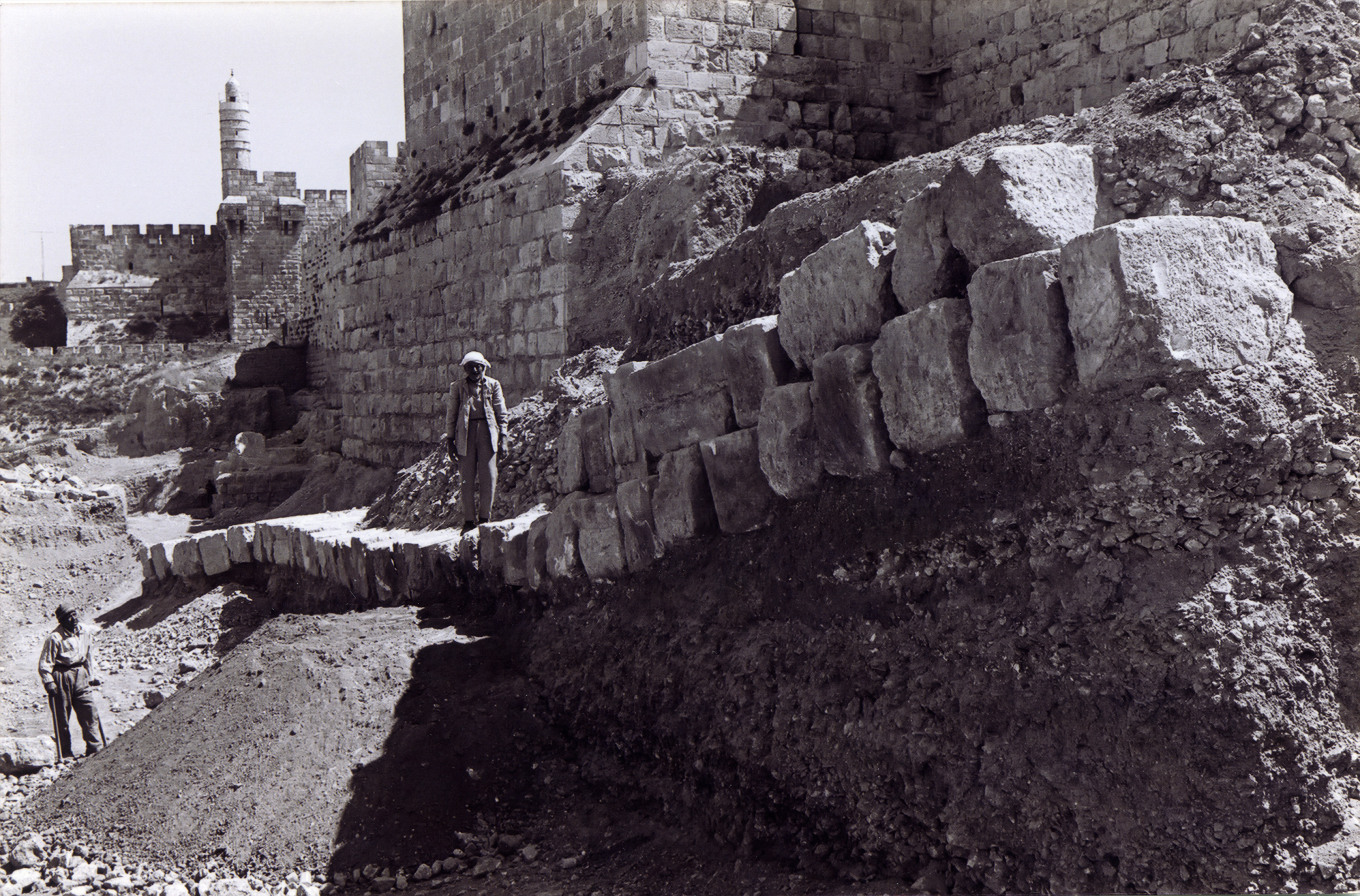
Nearly 50 years after archaeologists uncovered a series of ancient walls and a stone-built road in Jerusalem, those remains may finally help locate the military headquarters of one of Rome’s most important legions. A new study suggests that structures discovered during excavations in the 1970s formed the southwestern corner of a Roman camp established after the destruction of Jerusalem in AD 70.
The research, published on November 20, 2026, in the Journal of Roman Archaeology, could resolve a longstanding question about the location of Legio X Fretensis, the Tenth Roman Legion. Archaeologist Shimon Gibson of the University of North Carolina at Charlotte believes the newly reassessed evidence may reveal the camp’s western boundary, stretching approximately 285 meters across Jerusalem’s ancient Western Hill.
Rome’s Soldiers in a Conquered City
In AD 70, Roman forces commanded by Titus captured Jerusalem after a devastating siege. Much of the city lay in ruins, including the Second Temple, but Rome needed a permanent military presence to maintain control over the region.
The Tenth Legion remained in Jerusalem, occupying a strategically important position overlooking the former city. Yet despite its presence for more than two centuries, archaeologists have struggled to determine precisely where its military camp stood.
The ancient historian Flavius Josephus provided a crucial clue. He recorded that Titus spared three monumental defensive towers—Phasael, Hippicus, and Mariamne—along with part of Jerusalem’s western wall, creating a protected position for the Roman garrison.
Historians generally placed the camp somewhere around today’s Armenian and Jewish Quarters, but the absence of clearly identifiable defensive walls left its size and boundaries uncertain.
The Evidence Was Found in the 1970s
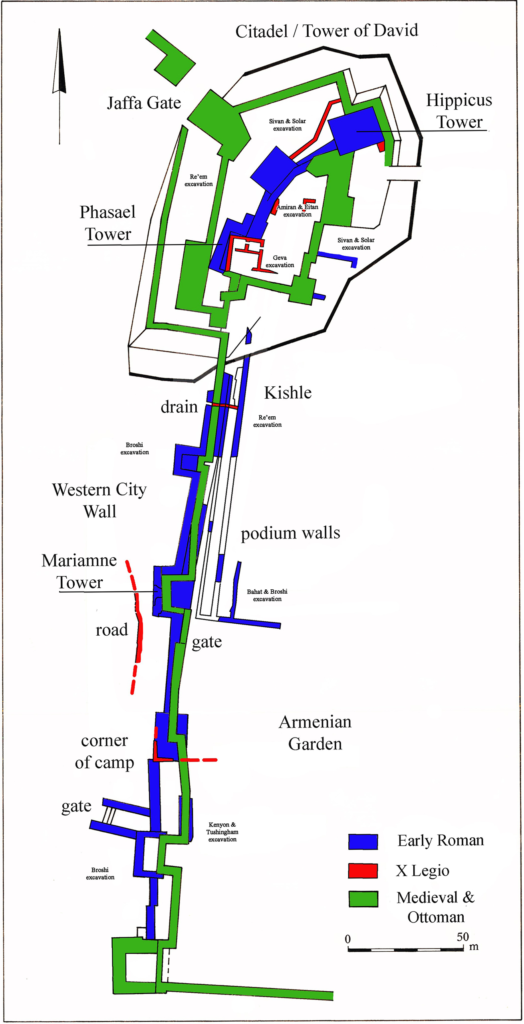
Gibson returned to excavation records from 1975–1978, when archaeologist Magen Broshi investigated an area south of Jerusalem’s present-day Citadel.
Among the remains were two substantial walls, identified as W31 and W32, which joined to form a corner. One measured approximately 9.5 meters in length, while the other extended 7.6 meters. Both stood on the remains of an earlier defensive tower destroyed during the Roman conquest.
Pottery associated with the structures suggests that builders constructed them after AD 70 and possibly before AD 130, placing them within the early decades of the legion’s occupation.
The excavations also uncovered a sloping road, preserved for nearly 38 meters, with large stone blocks and reused column drums incorporated into its edge. Gibson proposes that the road may have approached an entrance in the military camp’s western wall.
Together, these features suggest that Roman builders incorporated material from Jerusalem’s destroyed fortifications into a new military installation.
A Camp for Thousands of Soldiers
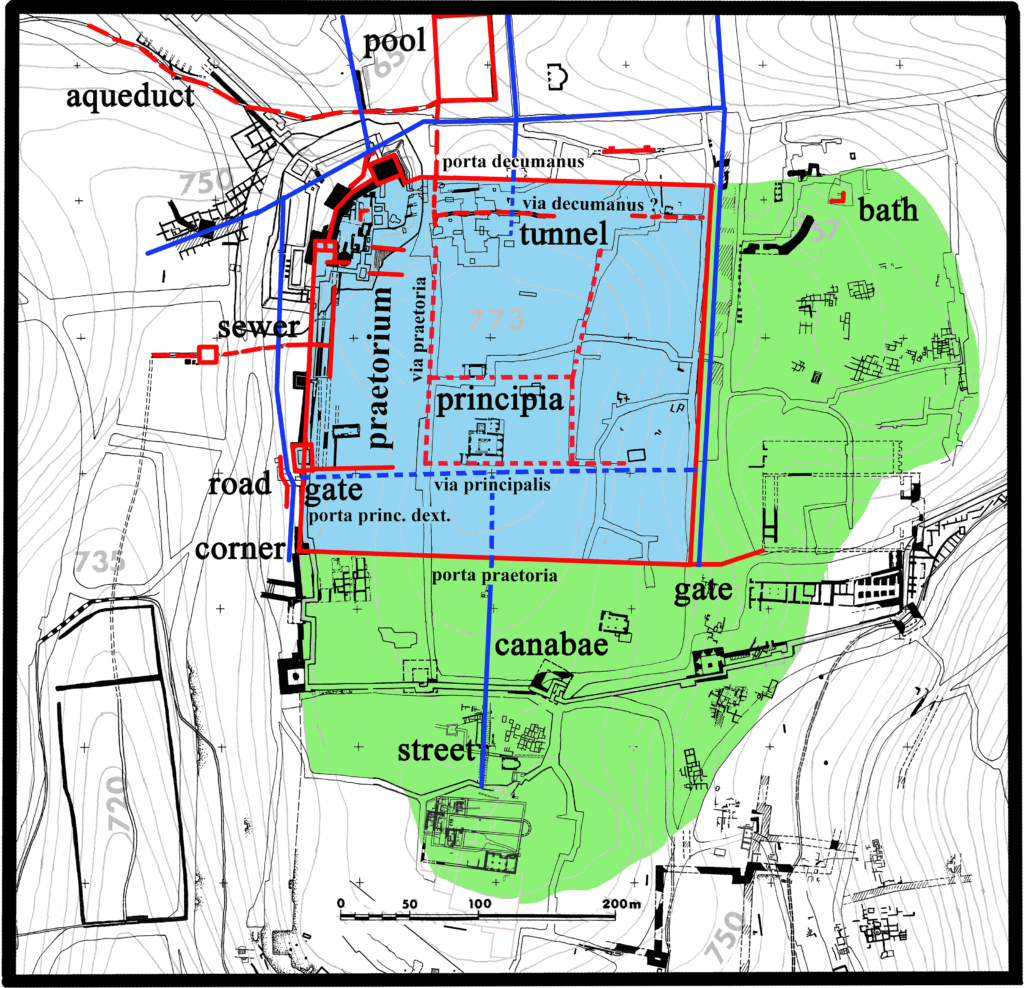
By connecting the excavated corner to a surviving Herodian tower in the Citadel, Gibson reconstructed a possible western defensive wall approximately 285 meters long.
If the camp followed a roughly square layout, it may have covered 8.12 hectares, equivalent to about 20 acres. That would make it large enough to accommodate an estimated 1,800 to 2,200 soldiers and military specialists.
The figure is considerably smaller than the full strength of a Roman legion. Gibson suggests that Jerusalem functioned as the legion’s administrative and military headquarters, while additional troops occupied positions throughout Judaea.
The proposed reconstruction also includes part of Herod the Great’s former palace complex, which Roman commanders may have adapted for military administration. Beyond the camp’s walls, a civilian settlement known as the canabae likely developed, providing accommodation and services for people connected with the garrison.
These conclusions remain provisional. Archaeologists have not yet established the camp’s complete eastern and southern boundaries, and further excavations will be necessary to confirm Gibson’s proposed layout.
Why Did the Camp Disappear?
One of the study’s intriguing questions concerns the disappearance of such a substantial military installation.
Although Legio X Fretensis remained associated with Jerusalem for more than two centuries, relatively little of its permanent headquarters has survived. Gibson considers the possibility that Roman authorities dismantled parts of the camp when the legion transferred to Aila, near modern Aqaba, in the late third century AD.
Later building projects may have removed additional remains, reusing Roman stonework as Jerusalem developed during the Byzantine period.
The walls documented during Broshi’s excavations could therefore represent an important surviving section of a military complex that once dominated the western side of the city. Rather than announcing the discovery of an entirely new fortress, Gibson’s study gives previously recorded remains a new archaeological significance, bringing researchers closer to understanding how Rome established its military presence in Jerusalem after AD 70.
Gibson, S. (2026). Solving the location of the camp of Legio X Fretensis in Jerusalem. Journal of Roman Archaeology, 1–26. doi:10.1017/S1047759426100944