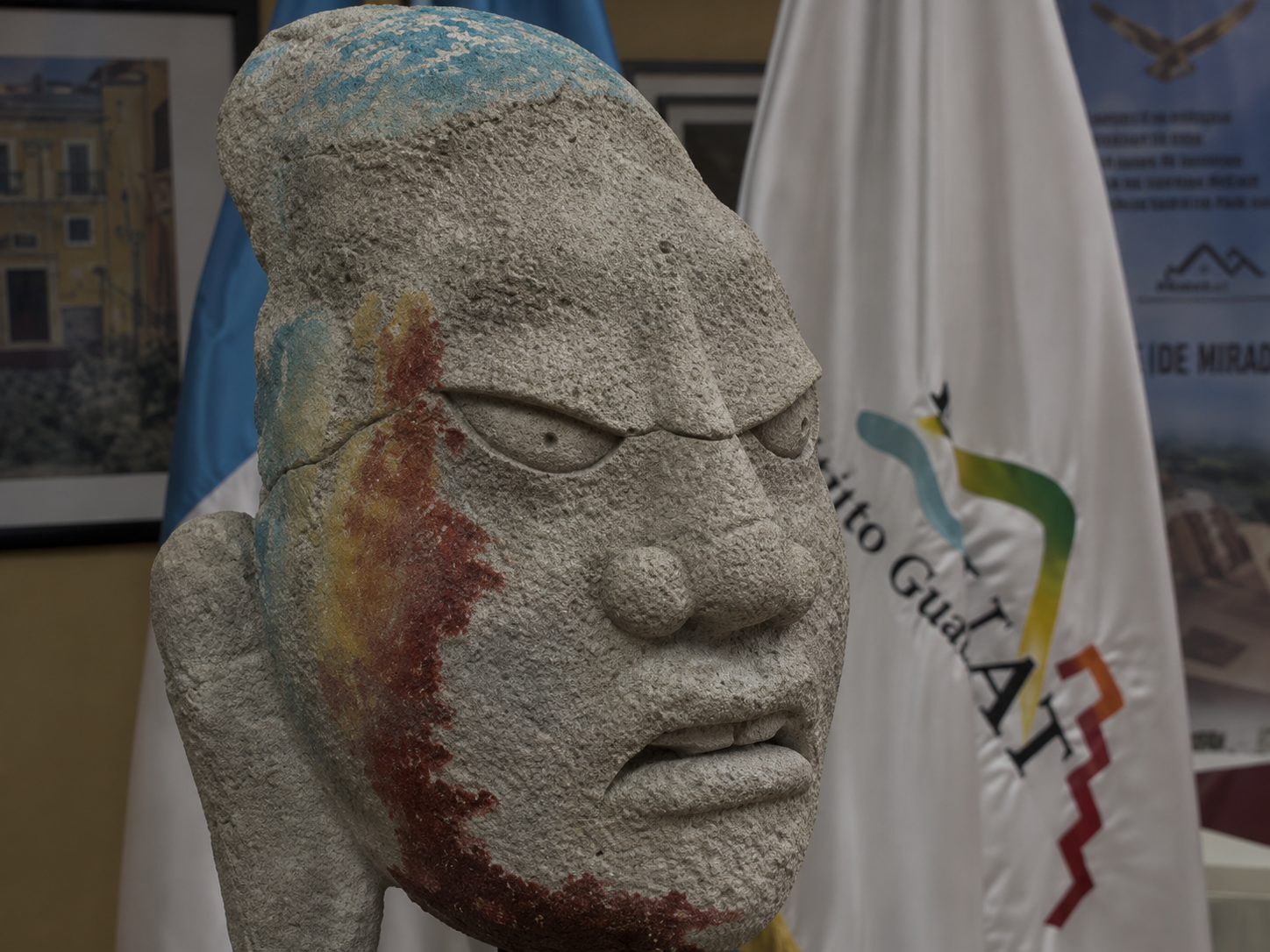
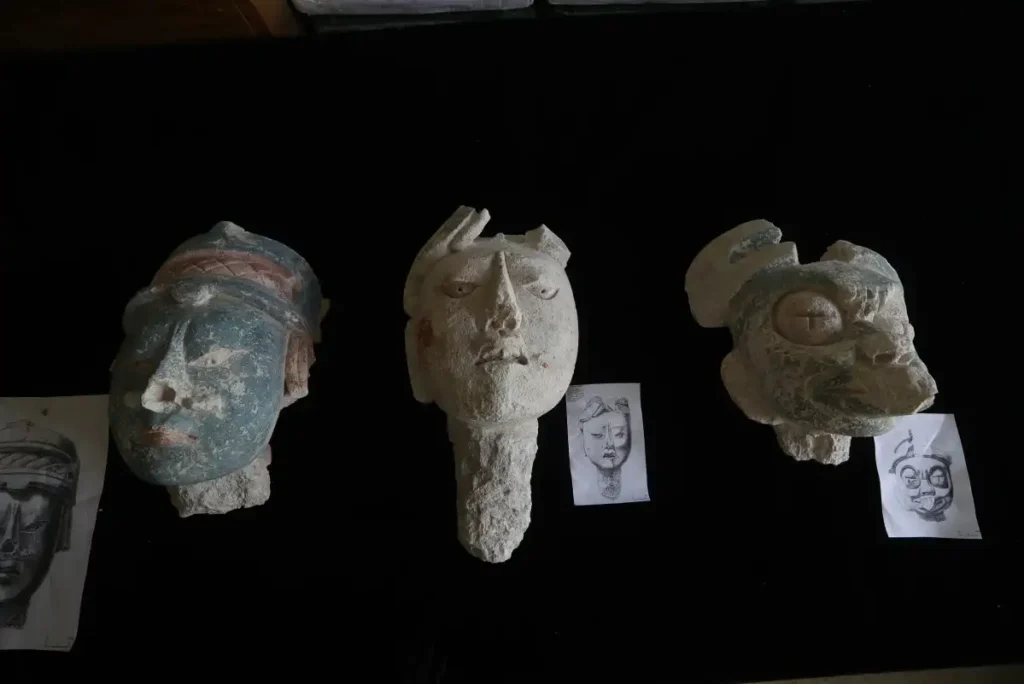
Deep in the rainforests of northern Guatemala, archaeologists have uncovered three more sculptures at the ancient Maya city of El Mirador, adding to an extraordinary collection of painted faces depicting gods, supernatural beings, and possibly members of the ruling elite.
The new discoveries, made during the 2026 excavation season, bring renewed attention to a remarkable building where researchers have recovered more than 30 stucco sculptures over the past decade. Some have striking expressions, others elaborate headdresses, and several retain traces of the brilliant colors that once decorated Maya architecture.
A Gallery of Faces from the Maya Past
The sculptures come from an area known as Casa del Coral, near El Mirador’s enormous La Danta complex. There, archaeologists investigating a relatively modest structure discovered an unexpected concentration of sculpted heads.
The building eventually earned a fitting name: Edificio de los Rostros, or Building of the Faces.
Among the previously recovered figures are representations associated with the Maya Death God, the Maize God, and a supernatural paddler believed to carry the dead into the afterlife. Other faces may portray powerful individuals, including members of the ancient city’s ruling families.
One particularly intriguing sculpture has been called La Princesa Azul, or the Blue Princess. Its delicate features, blue coloring, and water lily imagery have led researchers to explore possible connections with water symbolism and royal identity.
These identifications remain interpretations rather than established facts. The precise identities of many figures are still being investigated.
The Colors Behind the Faces
Although centuries have passed, the sculptures preserve evidence of a remarkably colorful artistic tradition.
Maya artists used pigments including blue, red, orange, black, and, in some examples, yellow. Their work combined carefully modeled facial features with elaborate ornamentation, giving individual figures distinctive expressions and personalities.
The sculptures date to the Late Classic period, around AD 600–800, when El Mirador experienced a later phase of occupation following its much earlier rise as a major Maya center.
Their preservation has been far from straightforward. Many older discoveries were recovered from collapsed architectural debris in an area disturbed by looters, leaving researchers uncertain about the figures’ original arrangement.
A Building with a Ceremonial Past?
The sculptures were not the building’s only unexpected discoveries. Archaeologists also recovered more than 35 ceramic vessels, including containers that may have held liquids or fermented drinks.
Their presence has raised the possibility that the structure served a ceremonial purpose. Figures connected with death, the supernatural world, and prominent individuals suggest that ritual activities may have taken place there.
Yet the building’s original function remains unresolved.
For conservator Lilian Vega de Zea, another challenge lies in preserving the sculptures themselves. Many arrived in fragments, with roots and soil embedded in their fragile surfaces. Restoring a single head can require months of painstaking work.
The three sculptures recovered in 2026 have yet to undergo further conservation, and their individual identities have not been announced.