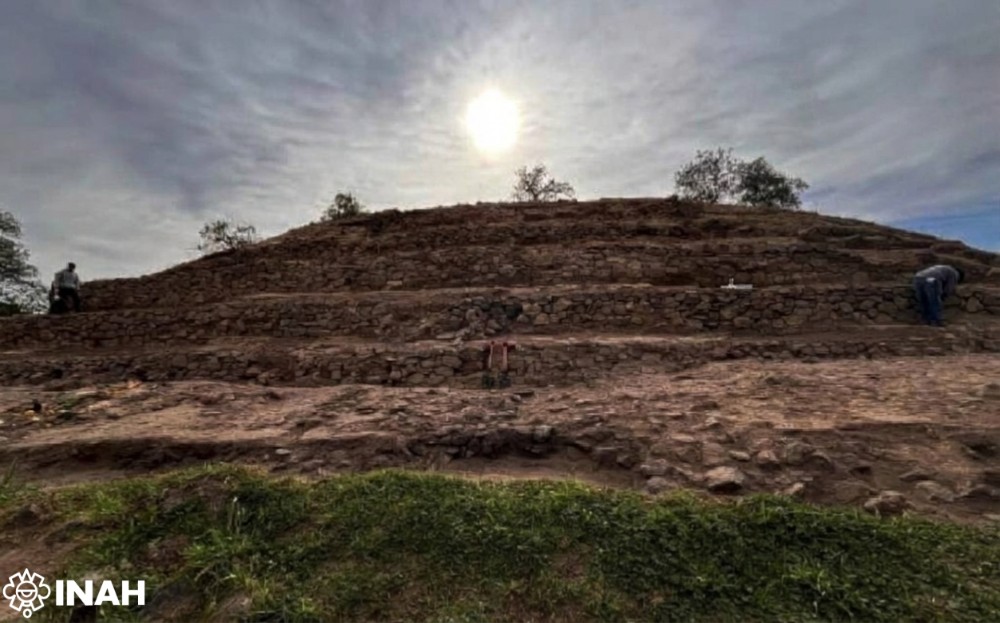
More than 2,500 years ago, people living in the mountains of central Mexico watched the rising Sun from a monumental complex built to follow its movements across the sky. Archaeologists have now confirmed that the ancient structures at Teteles de Ávila Castillo functioned as a solar observatory, the first of its kind recorded outside the traditional Maya region, according to Mexico’s National Institute of Anthropology and History (INAH).
Long before modern calendars, ancient communities depended on the changing position of the Sun to recognize important moments of the year. At Teteles de Ávila Castillo, in the Sierra Norte mountains of Puebla, that knowledge appears to have shaped an entire ceremonial complex.
Comparable astronomical structures are best known from Maya sites in Guatemala, Belize, and southeastern Mexico. Yet this observatory stands far beyond that traditional geographical heartland, raising intriguing questions about how astronomical knowledge spread across ancient Mesoamerica.
An Ancient Observatory Hidden in Monumental Architecture
The observatory forms part of Tetelihtic, a ceremonial settlement whose history stretches back to approximately 900 BCE. Researchers identified its astronomical role by studying the orientation of its pyramidal buildings and comparing their arrangement with similar structures elsewhere in Mesoamerica.
The complex consists of a large quadrangular courtyard positioned between two monumental platforms. On the eastern side stands an elongated structure measuring 90 meters from north to south and 40 meters across. Opposite it, a smaller western platform measuring 46 by 27 meters provided a location from which ancient observers could follow the Sun’s movements.
Together, these buildings formed what archaeologists call an E-Group, an architectural arrangement particularly associated with early Maya ceremonial centers. According to project director Alberto Diez Barroso Repizo, the Puebla complex is comparable to the famous observatory at Uaxactún in Guatemala but approximately twice its size.
Both complexes date to the Middle Preclassic period, between 1000 and 600 BCE. INAH describes the Teteles observatory as the first recorded example of its kind outside the Maya region, although other astronomical architectural traditions existed elsewhere in Mesoamerica.
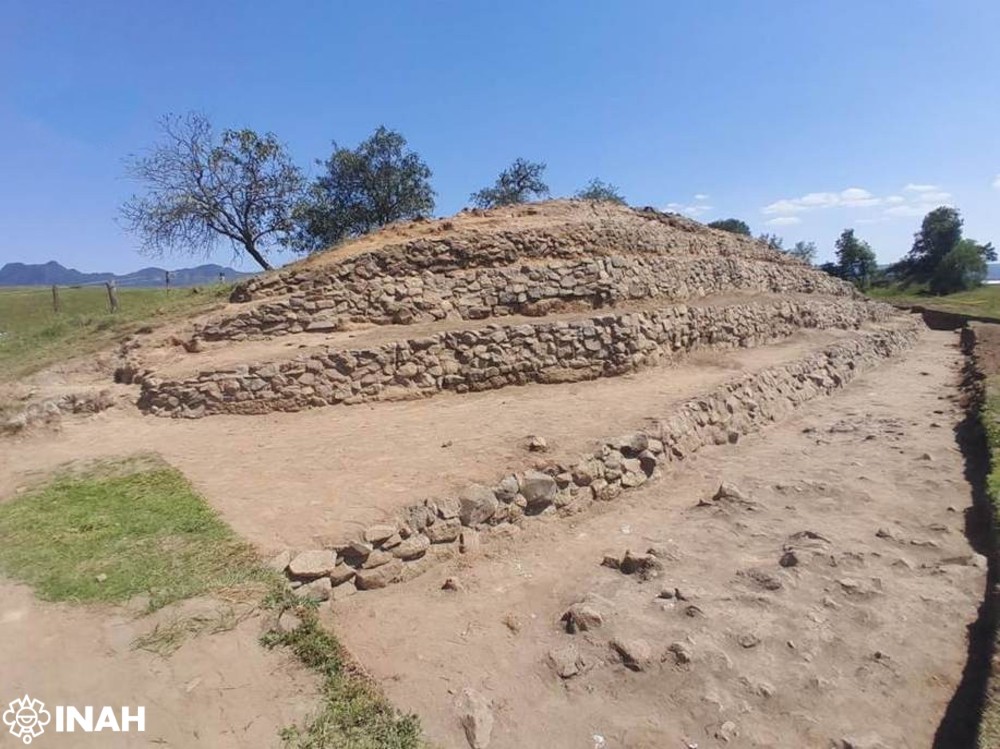
A Calendar Written Across the Horizon
What makes the observatory especially fascinating is how its builders used architecture to mark the passage of time.
Rather than simply arranging monuments around a ceremonial courtyard, they positioned the structures to follow the changing location of sunrise. As the Sun moved along the eastern horizon throughout the year, its appearance in relation to the buildings helped identify significant calendar dates.
According to Diez Barroso, the long eastern platform marked the beginning of the Mesoamerican calendar in February and the harvest season in October. Observations from the eastern structure also revealed alignments associated with the equinoxes and solstices.
For communities dependent on agriculture, recognizing seasonal changes was essential. A carefully arranged solar observatory could connect the farming year with ceremonial activities, allowing religious gatherings and agricultural practices to follow a shared understanding of time.
The observatory therefore offers evidence of a society that incorporated astronomical knowledge into both monumental architecture and the organization of communal life.
Why the Discovery Matters Beyond the Maya World
The most famous example of this architectural tradition survives at Uaxactún, in Guatemala’s Petén region, where a western pyramid faces a series of buildings along an eastern platform. Similar E-Group arrangements occur at Maya archaeological sites such as Ceibal and Tikal, as well as in parts of present-day Belize.
The identification of an astronomically functioning complex in Puebla expands the geographical discussion surrounding these monuments. It suggests that related architectural ideas and methods of tracking the Sun were not restricted to the best-known Maya ceremonial centers.
The discovery may also provide clues about connections between the Maya and Huastec peoples. The Huastec language belongs to the Mayan language family, and researchers have long investigated the historical relationships between populations living around the Gulf of Mexico and those farther south.
Diez Barroso believes the Teteles complex could contribute evidence to these discussions, potentially reflecting cultural relationships that developed during the first millennium BCE. However, the architectural similarities alone cannot establish who built the observatory or how those connections developed.
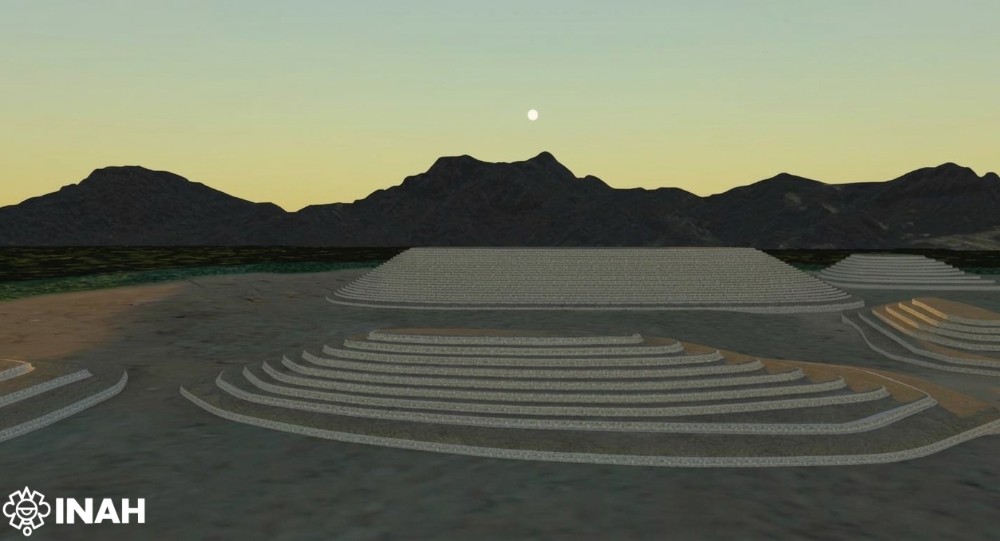
Digital reconstruction of the ancient ceremonial complex at Teteles de Ávila Castillo, illustrating the arrangement of monumental platforms associated with solar observations. Credit: Alberto Diez- INAH.
A Sacred Place That Outlived Its Builders
Tetelihtic remained active for centuries, from approximately 900 BCE until around AD 100. As larger centers such as Cantona, Cholula, and Teotihuacan rose to prominence, the settlement experienced a period of partial abandonment.
Yet people did not immediately forget the ceremonial complex. Archaeologists have identified offerings dating between AD 100 and 600, suggesting that religious activities continued after the settlement’s original period of occupation.
A later Totonac offering, dating to approximately AD 600–900, points to another episode of ritual activity. Researchers are examining whether the original inhabitants were connected to ancestral communities that later contributed to Totonac cultural developments in Puebla and Veracruz.
The investigation has also raised questions about possible celestial symbolism beyond the Sun. Diez Barroso has suggested that the alignment of a major structure with Canopus, one of the brightest stars in the night sky, may have held religious significance, although this interpretation remains hypothetical.