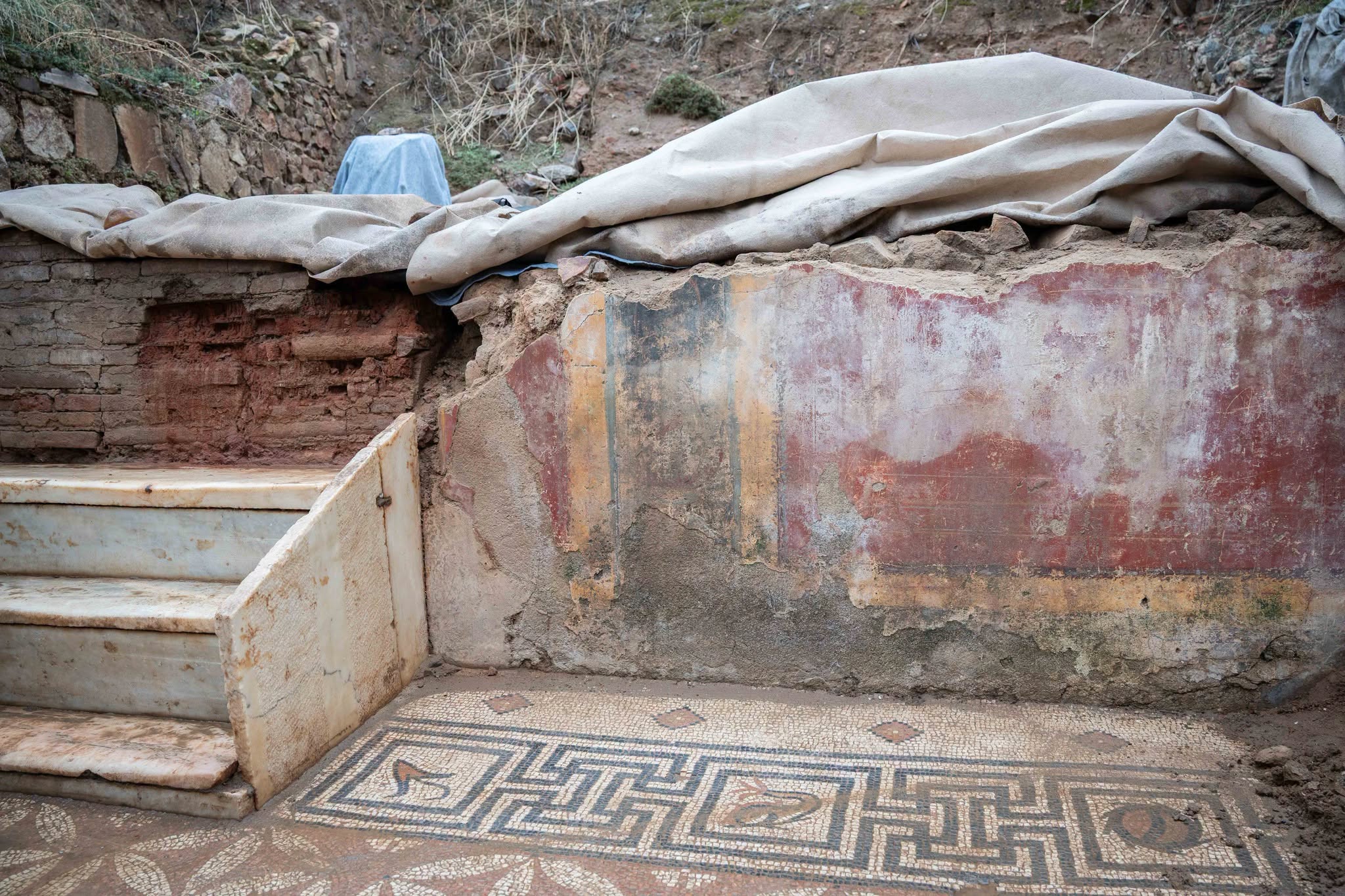
Peacocks, hunting animals and mythical creatures once decorated the walls of a wealthy Roman family’s home in western Spain. Nearly 2,000 years later, archaeologists have discovered the remarkably preserved paintings in Mérida, revealing a colorful world of nature, mythology and luxury that the house’s owners enjoyed.
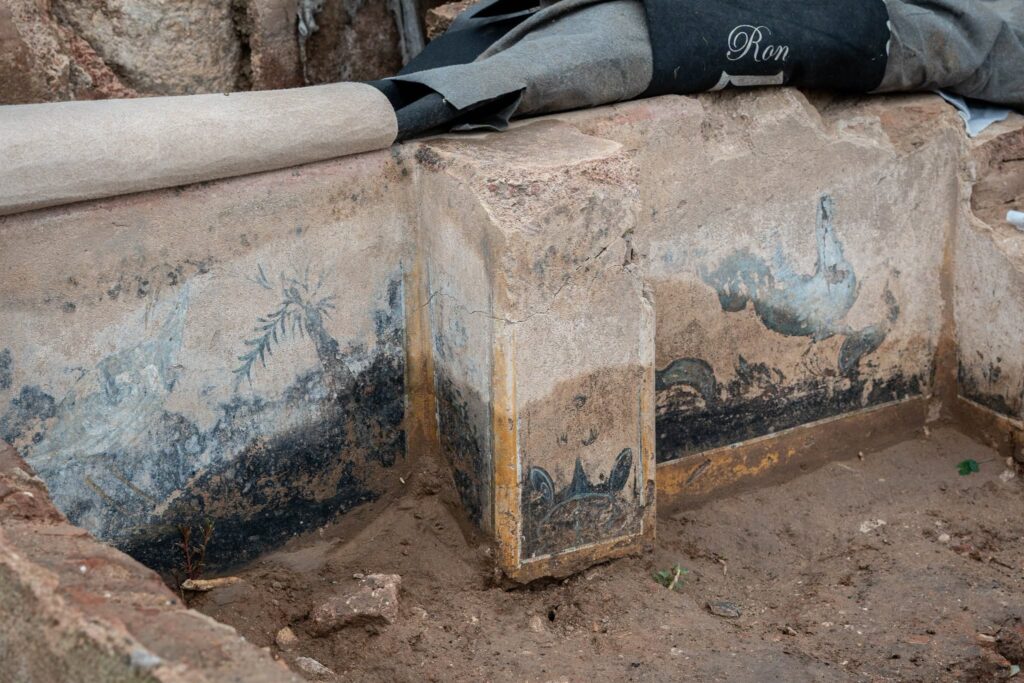
The discoveries come from Huerta de Otero, a sprawling Roman residence already famous for its elaborate Medusa mosaic. Now, paintings of birds, a predator chasing two deer and a satyr associated with Bacchus, the Roman god of wine, are giving archaeologists a better idea of what life inside this impressive home might have looked like.
A Roman Home with a Taste for the Extraordinary
The paintings decorated a peristyle, an open courtyard surrounded by columns that formed an important part of wealthy Roman homes. Some covered the courtyard’s interior walls, while others adorned its outer surfaces.
Archaeologist José Vargas, who oversees excavation work through Mérida’s Barraeca training program, described scenes featuring peacocks, cranes, and other birds. One painting depicts a feline predator pursuing two deer, while another features a satyr, a mythological companion of Bacchus often associated with wine and celebrations.
The combination of wildlife and mythology suggests that the homeowners wanted more than plain walls. Their courtyard offered visitors a carefully decorated setting filled with familiar stories and images from the Roman world.
According to the Mérida City Council, the paintings rank among the best-preserved examples discovered in the city in recent decades. Some still retain their original colors and decorative details despite centuries beneath the ground.
Medusa Was Already Waiting Inside
The new paintings are not the first extraordinary artwork discovered at Huerta de Otero. In 2023, archaeologists uncovered a large mosaic depicting Medusa, the snake-haired figure from Greek mythology whose gaze could turn people to stone.
The mosaic decorated one of the residence’s principal rooms, while the newly discovered paintings surrounded a nearby courtyard. Together, they suggest a home whose owners invested heavily in elaborate decoration, from the floors beneath their feet to the walls surrounding their guests.
The family’s identity remains unknown. Yet the scale of the residence and its expensive artwork point to people with considerable wealth and social standing in Roman Mérida.
A City Built for Rome’s Veterans
The house stood in Augusta Emerita, the Roman city that Emperor Augustus founded in 25 BCE for military veterans. The settlement later became the capital of Lusitania, one of Rome’s important provinces on the Iberian Peninsula.
Today, Mérida is celebrated for its Roman theater, amphitheater, monumental bridge and other ancient structures. Its archaeological ensemble has held UNESCO World Heritage status since 1993, but discoveries inside private homes tell a different story from the city’s grand public monuments.
At Huerta de Otero, that story is still taking shape. The property covers more than 5,000 square meters, yet archaeologists have explored only about 15 percent of it.
A Surprise Behind an Old Excavation
Archaeologists first excavated parts of Huerta de Otero in 1976, but work resumed in 2019 through the city’s Barraeca archaeological training program. This year’s team returned to a strip of earth that earlier excavators had left between the Medusa mosaic room and the columned courtyard.
Removing that earth exposed the painted walls and helped establish the connection between the two spaces. The discovery also showed that the home’s elaborate artwork extended beyond the room containing its famous Medusa mosaic.
Excavations are scheduled to continue in January 2027, giving researchers another opportunity to explore the largely untouched residence.