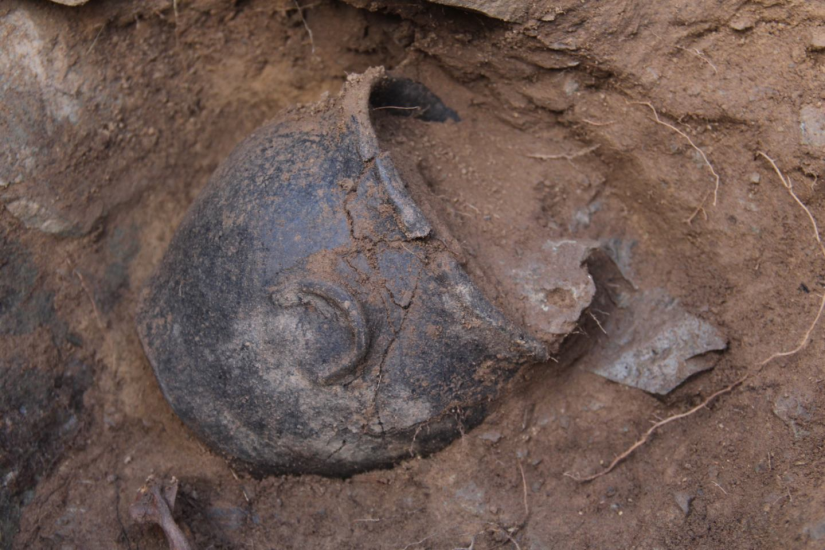
Archaeologists excavating a Mongol Empire-period cemetery in northern Mongolia have recovered a vessel containing öröm, a traditional concentrated dairy product, preserved for roughly 700 years in permafrost.
The discovery was made at Gol Mod in Arbulag district of Khövsgöl Province during excavations carried out in May by a joint team from the Institute of Archaeology of the Mongolian Academy of Sciences and the University of Michigan. The frozen conditions that protected the vessel also preserved a rare trace of food production and consumption from the era of the Mongol Empire.
Mongolian reports initially described seven burials investigated between May 12 and 25, 2026. The research was led by archaeologist Jamsranjav Bayarsaikhan of the Mongolian Academy of Sciences, working with University of Michigan archaeologist Bryan Miller.
A dairy product survived where most organic material disappeared
The most unusual find came from a burial affected by permafrost. Mongolian accounts describe a porcelain vessel containing өрөм — öröm, a high-fat dairy product traditionally made by heating milk and collecting the rich layer that forms as it cools.
That distinction matters. Some foreign-language reports have translated the substance as “cheese,” but öröm is not cheese in the usual sense. The Food and Agriculture Organization describes it as a concentrated Mongolian milk product made by heating milk and collecting the surface layer formed during cooling. It is commonly rendered in English as clotted cream or concentrated cream.
According to Bayarsaikhan, the burial containing the dairy vessel had suffered ancient disturbance. Human remains and parts of the funerary deposit had been damaged, but archaeologists found part of the vessel protected behind a large flat stone in a boxed-off section of the grave.
The cold ground had done what ordinary burial conditions rarely do: protect an organic food product for centuries.
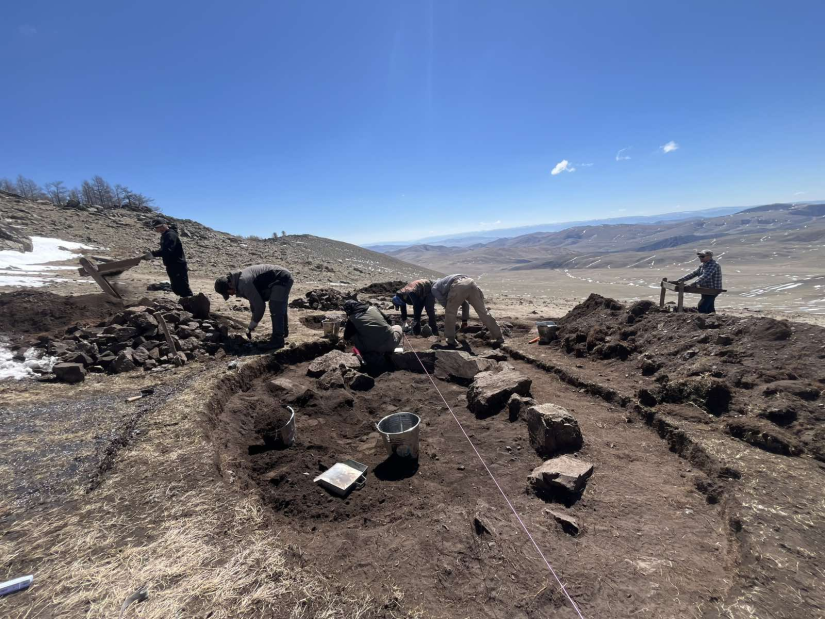
Most of the burials investigated by the team had been robbed in antiquity. Credit: Institute of Archaeology of the Mongolian Academy of Sciences
Not the first frozen dairy discovery in Mongolia
For Bayarsaikhan and his colleagues, the find has an important precedent.
In 2019, archaeologists working at Khorig Mountain, also in Khövsgöl Province, recovered öröm and clarified butter preserved in permafrost from Mongol-period graves. Bayarsaikhan described the Gol Mod vessel as only the second discovery of this kind in Mongolia.
Those earlier burials later produced much more than visually preserved food.
A 2023 study published in Communications Biology analyzed proteins trapped in dental calculus from elite individuals buried at Khorig. Researchers identified direct evidence that people there consumed yak milk during the 13th and 14th centuries, alongside dairy products from other livestock. The study showed how unusually well Mongolia’s frozen burial environments can preserve biological traces of diet.
The Khorig research also documented large vessels containing preserved butter or fat and wicks, suggesting that some dairy fats were used as lamps rather than food.
That makes laboratory analysis of the Gol Mod material especially important. Its appearance may identify it culturally as öröm, but biochemical testing could eventually reveal which animals supplied the milk and how the product was processed.
A rare intact woman’s grave nearby
The dairy vessel was only part of a much larger discovery at Gol Mod. Most of the burials investigated by the team had been robbed in antiquity. Bayarsaikhan said traces of old looting were visible during excavation and estimated that nearly 90 percent of the monuments examined showed evidence of disturbance.
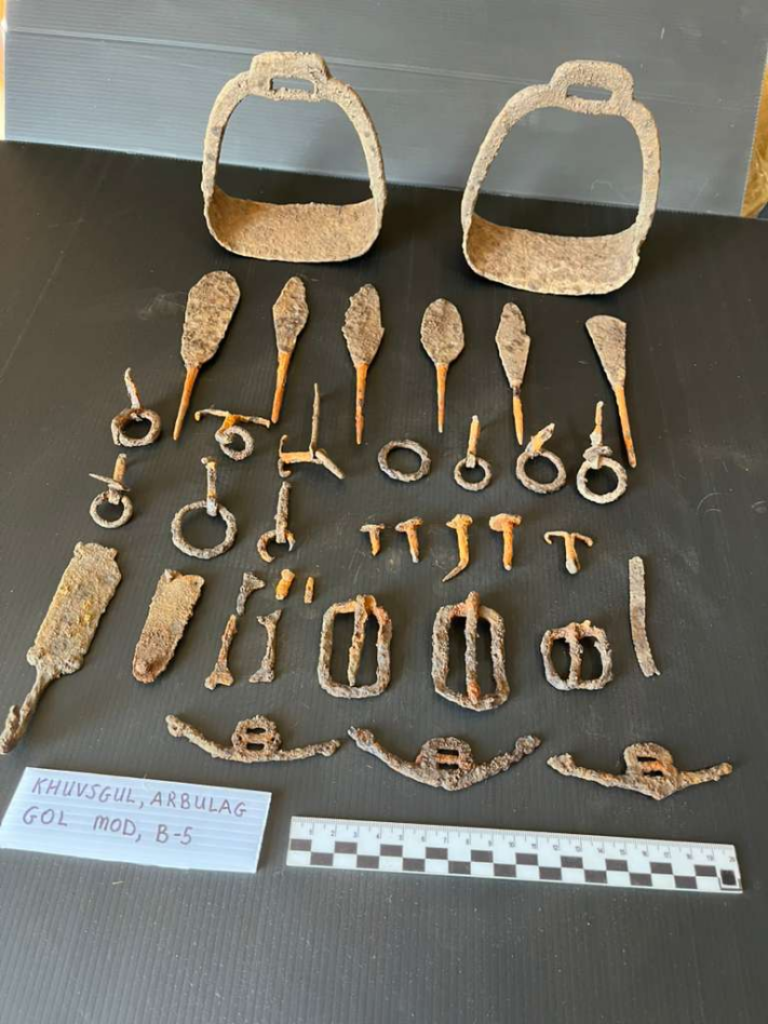
One grave, however, remained comparatively intact. It contained the remains of an older, tall woman buried with an unusually complete collection of riding equipment. Archaeologists recovered a saddle, stirrups, a bridle and other horse gear, along with ornaments and sheep remains associated with the burial.
A later field report from the University of Michigan adds further detail. It describes the woman’s grave as containing gold and silver earrings, decorated riding equipment, gilded silver ornaments and offerings of sheep. The report emphasizes that completely undisturbed Mongol-period elite graves are exceptionally rare.
The presence of elaborate horse equipment should not automatically be interpreted as evidence that the woman was a warrior. What it does show is that horses, riding equipment and displays of wealth could form an important part of elite female burial practice during the Mongol Empire.
One site, slightly different accounts
The preliminary nature of the discovery is also visible in the reports released so far.
Mongolian announcements issued immediately after the May excavation said seven Mongol Empire-period burials had been investigated. A University of Michigan field update published on July 30 later reported eight tombs excavated at Gol Mod.
There is also a difference in how the preserved dairy find has been described. Mongolian sources refer to a vessel containing öröm, while the later Michigan account reports an imported Chinese wine jar from a permafrost grave that had been reused as a candle and still contained remnants of butter.
Whether these accounts describe separate deposits or different stages in the interpretation of the same burial material should become clearer as conservation and laboratory work progresses.
For now, the Gol Mod discoveries offer something archaeology rarely preserves: not only saddles, ornaments and grave architecture, but the remains of a dairy tradition practiced during the Mongol Empire and protected beneath frozen ground for around seven centuries.