More than 6,000 years ago, communities living near the Black Sea were already transforming gold into jewelry, ornaments, and symbols of status. Some of the earliest and most spectacular evidence comes from the Varna Chalcolithic Necropolis in Bulgaria, where thousands of gold objects were buried centuries before the first pyramids rose in Egypt.
The cemetery was discovered by accident in 1972 in Varna’s western industrial zone. Excavator operator Raycho Marinov encountered metal objects and flint tools during construction work, triggering archaeological investigations that revealed a vast Late Copper Age burial ground dating roughly to 4600–4350 BC.
A cemetery filled with prehistoric gold
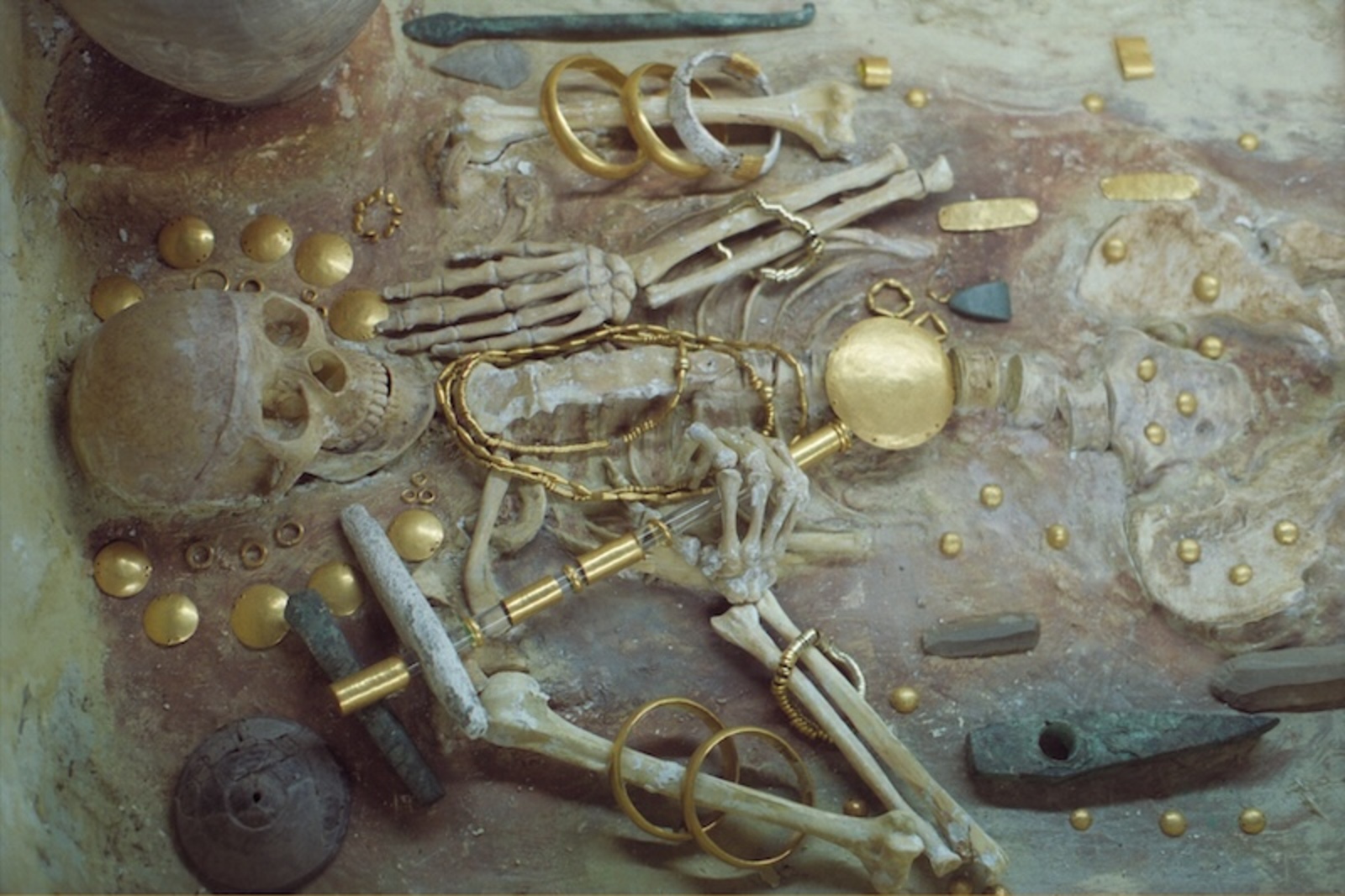
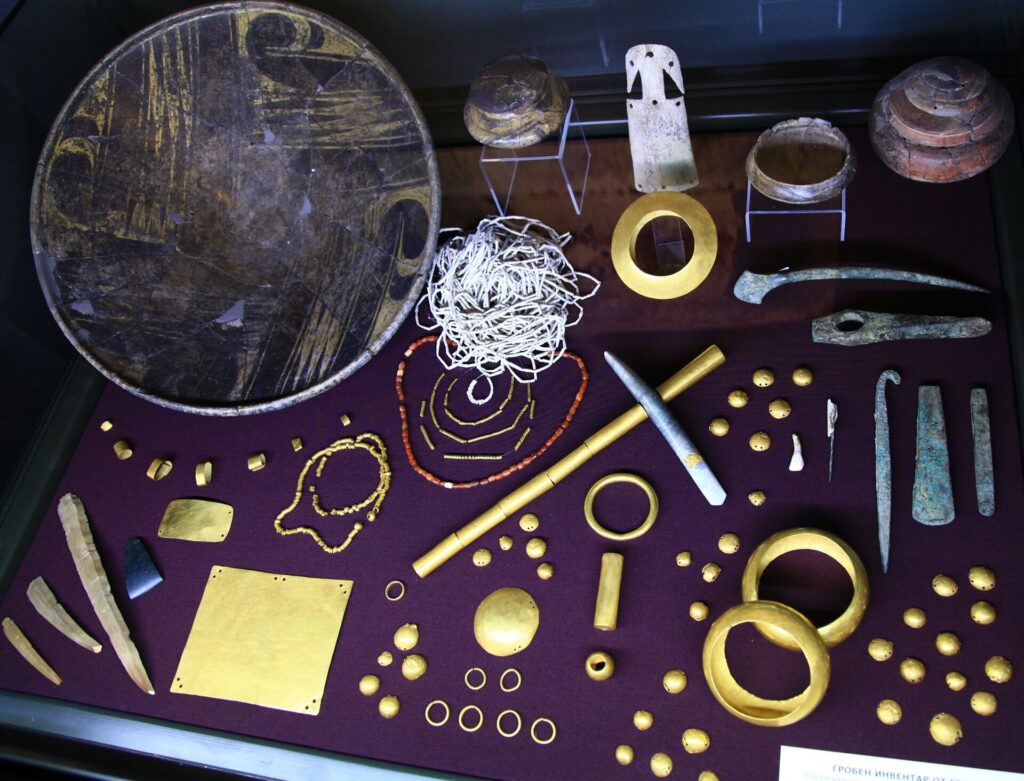
Excavations at Varna uncovered hundreds of graves containing pottery, copper tools, flint blades, shell ornaments and an extraordinary quantity of gold. More than 3,000 gold objects weighing over six kilograms have been recovered, making Varna the earliest known major assemblage of worked gold anywhere in the world.
But the gold was distributed remarkably unevenly. Only some graves contained gold objects, while a handful held enormous concentrations of precious goods. This difference has turned Varna into one of archaeology’s most important sites for tracing the emergence of social hierarchy in prehistoric Europe.
The most famous example is Grave 43. It contained the remains of an adult man buried with an exceptional collection of gold ornaments and other prestige objects. Beads, bracelets, appliqués and decorative pieces surrounded the body, alongside weapons and tools, suggesting that the man occupied an unusually powerful position within his community.
Gold was more than simple wealth
The significance of Varna goes beyond the quantity of precious metal. Archaeologists believe the cemetery records a society in which status, ritual authority and access to valuable resources had already become strongly differentiated.
Some of the richest graves contained no human remains at all. These symbolic burials, often described as cenotaphs, still received elaborate offerings. The pattern suggests that gold had sacred and social meanings rather than functioning simply as accumulated wealth.
Varna also belonged to a much wider world. Mediterranean Spondylus shells found in the cemetery and copper linked to ore sources elsewhere in present-day Bulgaria point to exchange networks extending far beyond the Black Sea coast.
Was Varna really the first?
There is one important qualification to the familiar claim that Varna produced “the world’s oldest gold.” A tiny gold bead discovered at Tell Yunatsite in southern Bulgaria has been proposed as slightly older, although its precise dating remains uncertain.
Varna’s distinction is therefore even more remarkable in another sense: it preserves the earliest securely dated large concentration of worked gold, embedded within a cemetery that also documents profound differences in status and power.
Today, many of the finds are displayed at the Varna Archaeological Museum. What began as an accidental construction discovery in 1972 ultimately revealed a society working gold on an extraordinary scale thousands of years before the famous civilizations of Egypt and Mesopotamia emerged.